Skip to content


Solar energy is central to sustainable innovation because it provides abundant, low‑carbon power driven by the sun. As the climate crisis deepens, understanding how is solar energy released helps homeowners, businesses, and policymakers make better choices. Sunlight reaches Earth as electromagnetic radiation, and modern systems — chiefly solar panels using the photovoltaic (PV) effect and solar thermal collectors — capture that sunlight and convert it into usable electricity or heat.
Solar energy harnessing relies on mature, improving technologies. Typical rooftop solar panels carry warranties for about 25–30 years and commonly produce useful energy for decades as degradation rates are low (check manufacturer specs and third‑party test data). New materials, higher recycling rates, and better manufacturing are reducing lifecycle impacts. The same basic PV technology also powers satellites and spacecraft in space applications, demonstrating solar’s versatility.
Key Takeaways
- Solar energy produces almost no operational greenhouse‑gas emissions, making it a leading renewable power source for lowering carbon footprints (lifecycle emissions vary by technology and manufacturing).
- High‑quality solar panels typically last 25+ years; warranties and degradation rates provide realistic lifetime expectations.
- Photovoltaic technology has a documented history — milestone silicon PV cells were developed in the 1950s — and has steadily improved since.
- Solar panels convert sunlight into electricity (PV) or heat (solar thermal), making them adaptable for many energy needs.
- Large solar farms and distributed rooftop systems together are expanding global solar power capacity.
- The abundance of sun energy reaching Earth means solar can contribute a significant share of future energy supplies.
The Fundamentals of Solar Energy Release
The journey of solar energy from the sun to Earth begins with nuclear fusion inside the solar core. In fusion, hydrogen nuclei combine to form helium and release vast amounts of energy as electromagnetic radiation — a mix of visible light, ultraviolet (UV), and infrared (IR) wavelengths. That outgoing solar radiation and sunlight are the raw inputs that solar technologies capture for heat and electricity.
Turning that radiation into electric energy depends on the photovoltaic effect. Photovoltaic (PV) cells inside solar panels absorb photons from sunlight; each absorbed photon can free an electron, producing a flow of electrons (an electric current) in the cell. That current is the core of photovoltaic energy production and is later converted from DC to AC for homes and businesses.
- Direct, unobstructed sunlight delivers the highest output from PV systems; but panels still generate power from diffuse light on cloudy days (performance varies by location and panel type).
- Areas with higher solar irradiance — for example, parts of the southwestern United States — produce more annual energy from comparable PV systems because they receive more consistent, intense sun radiation.
| YearTotal U.S. Solar Energy Use (Trillion Btu)Solar Electricity Generation (Billion kWh) | ||
| 1984 | 0.06 | 0.005 |
| 2022 | 1870 | 204 |
Those figures illustrate how quickly solar energy deployment and solar electricity production have grown in the United States, driven by falling costs, improving technology, and policy support. The link between natural solar radiation availability and human innovation — from materials science to system design — determines how much usable energy a given system will produce.
The Historical Evolution of Solar Energy Utilization
The story of solar energy harnessing spans millennia: simple thermal uses in ancient societies evolved into the sophisticated PV and solar thermal systems we install today.
Early Solar Energy Practices
Humans have used concentrated sunlight for thousands of years — early records show people using reflective surfaces and lenses to focus sunlight for heating and ceremonial purposes in ancient Greece and Rome. Those practices demonstrated early awareness of sun energy’s potential.
The Birth of Photovoltaic Technology

Scientific work in the 19th century established the photovoltaic effect: Edmond Becquerel observed the effect in 1839, showing that light could produce an electric current. Over subsequent decades inventors experimented with materials (Charles Fritts made selenium cells in 1883). The modern era of silicon solar cells began in the 1950s when researchers at Bell Labs produced the first practical silicon PV devices, a milestone that led to wider adoption.
Solar Power in Modern Applications
From space to rooftops, solar technology found rapid new applications in the 20th century. Vanguard I (1958) and later spacecraft demonstrated that PV systems are ideal for off‑grid power in space. Back on Earth, government policies and industry innovation through the 2000s — including tax incentives and technology improvements — helped lower system costs dramatically, spurring residential, commercial, and utility‑scale deployment.
Nuclear Fusion: The Sun’s Energy Production
The sun is a massive fusion reactor. Understanding that process helps explain why so much energy reaches Earth. In the sun’s core, extreme temperature and pressure drive nuclear fusion, converting hydrogen to helium and releasing energy as radiation.
The Proton-Proton Chain Reaction
The proton‑proton chain reaction is the dominant fusion pathway in the sun: hydrogen nuclei (protons) fuse through several steps to form helium, emitting energy carried away by photons and neutrinos. The enormous energy output sustains the sunlight we receive each second.
To appreciate scale: the sun converts a large mass of hydrogen every second into energy (estimates like “620 million metric tons” are commonly cited in popular sources — verify with astrophysics references for precise phrasing and context).
How the CNO Cycle Contributes
The CNO (carbon–nitrogen–oxygen) cycle is an alternative fusion path that operates more efficiently in hotter, more massive stars; in the sun it contributes a smaller fraction of total fusion energy. Understanding both processes helps astrophysicists model stellar behavior and energy output.
Learning how the star at the center of our system produces radiation clarifies why photovoltaics and solar thermal systems can rely on a steady, abundant source of sun energy for decades to come.
Understanding Solar Panel Operation

The fundamentals of solar panel operation explain how sunlight becomes usable electricity. This process—commonly called photovoltaic energy production—combines materials science and system design to convert sunlight into power for homes, businesses, and the grid.
At the heart of every module are photovoltaic (PV) cells, usually made from silicon (monocrystalline, polycrystalline) or thin‑film materials. When photons from sunlight strike a solar cell, they can excite electrons and create a flow of charge: a DC current. That direct current travels from the array to an inverter, which converts DC into alternating current (AC) used by household appliances and the power grid. Modern inverters also monitor system performance and enable features like smart metering and grid interaction. Learn more about how these systems work.
From photon to power — step by step
1) Sunlight (photons) hits the panel. 2) PV cells absorb photons and free electrons (the photovoltaic effect). 3) Freed electrons flow as DC current. 4) An inverter converts DC to AC and the electricity is used, stored, or exported to the grid via net metering.
Installations combine many panels and cells to increase output during peak sunlight hours; system sizing depends on roof area, local solar irradiance, and household energy needs. Smart meters and electrical panels route production where it’s needed and track exported energy so homeowners can receive credits.
| YearUtility-Scale PV Generation (billion kWh)Small-Scale PV Generation (billion kWh) | ||
| 2004 | 6 | Data Not Available |
| 2014 | Rapid increase noted | 11 |
| 2023 | 162 | 74 |
The table above highlights the rapid growth of PV production at both utility and distributed scales. That expansion has helped reduce electricity bills, cut carbon emissions, and increase energy independence—key benefits of wider solar energy adoption.
Photovoltaic Energy Production Process
When sunlight strikes modules, electrons in semiconductor materials absorb energy and move across a junction, creating DC electricity. The inverter then produces AC power for immediate use or to export to the grid. Improvements in cell architecture and manufacturing have steadily increased average module efficiency—currently around 18–22% for many mainstream products—while top commercial cells achieve higher efficiencies (some lab‑verified modules approach the mid‑20% range).
- PV cells rely on materials engineered to maximize photon absorption and electron collection.
- Advances in cell design and module engineering mean higher output per square meter—important where roof space is limited.
Global installed PV capacity reached roughly 710 GW by the end of 2020, with about 125 GW added that year—illustrating rapid deployment. Around the same period, module prices fell dramatically, and levelized costs for solar electricity decreased enough to make many projects competitive with conventional generation (sources like IRENA, BloombergNEF, and IEA provide detailed timelines).
Manufacturing a photovoltaic module follows a multi‑step supply chain: polysilicon production → ingot/wafer slicing → cell fabrication → module assembly. Each stage affects cost, efficiency, and environmental footprint.
- Solar module prices have dropped substantially since 2010, improving affordability for residential and utility projects.
- Lower equipment and installation costs have driven wider adoption, especially where incentives or favorable policies exist.
Understanding these technical and market trends clarifies how solar converts sunlight into usable electricity and why photovoltaics are a major component of the clean‑energy transition.
Photovoltaic Energy Production Process
The core of photovoltaic energy production is straightforward: when sunlight strikes a solar module, specially engineered semiconductor materials absorb photons and free electrons, producing direct current (DC) electricity. An inverter then converts DC into alternating current (AC) for use in homes, businesses, or export to the grid. Understanding these steps explains in practical terms how is solar energy released and turned into usable power.
Recent advances in cell architecture, materials, and manufacturing have raised typical module performance: many mainstream commercial panels now average roughly 18–22% efficiency, while high‑performance models and research cells can reach the mid‑20% range or higher. Improvements in module design also increase energy yield per square meter—critical where roof or land area is constrained.
- PV cells convert photons to electrons through the photovoltaic effect; materials (mainly silicon) and cell structure determine how efficiently that conversion happens.
- System components—panels, inverters, mounting hardware, wiring, and monitoring electronics—work together to maximize energy harvest and reliability.
Global deployment has scaled rapidly: installed PV capacity approached 710 GW by the end of 2020, with about 125 GW of new capacity added that year. Those increases reflect falling equipment costs, economies of scale in manufacturing, and supportive policies. As module prices dropped substantially since 2010, levelized costs for solar electricity also fell, making many PV projects cost‑competitive with conventional generation sources.
| YearGlobal Installed PV Capacity (GW)New Installed Capacity (GW) | ||
| 2020 | 710 | 125 |
| 2019 | 585 | 115 |
Manufacturing a photovoltaic module involves multiple stages—polysilicon production, ingot growth and wafering, cell fabrication, and module assembly—each stage influencing cost, yield, and environmental footprint. Optimizing the supply chain and recycling end‑of‑life modules reduces lifecycle impacts and supports the long‑term sustainability of solar energy.
- Lower module and balance‑of‑system costs have driven widespread deployment across residential, commercial, and utility scales.
- Integration with smart inverters and monitoring systems improves performance, safety, and grid interaction.
Insights into Solar Thermal Technology
Solar thermal technology captures sun energy as heat rather than electricity. Collectors heat a working fluid (water, glycol, or thermal oil) that can be used directly for space and water heating, for industrial processes, or to generate steam for turbines in larger power plants. Because thermal systems store heat effectively, they are valuable for shifting energy use to times when sunlight is absent.
 The Working Mechanism of Solar Thermal Panels
Flat‑plate and evacuated tube collectors absorb solar radiation and transfer heat to the circulated fluid, which then delivers that heat to a storage tank or heat exchanger. Concentrating systems (CSP) use mirrors or lenses to focus sunlight to a receiver, reaching higher temperatures suitable for utility‑scale steam generation.
Well‑designed solar thermal systems can achieve high component‑level efficiencies (collector efficiency) and provide effective thermal storage; system‑level efficiency depends on application, temperature requirements, and storage strategy.
The Role of Solar Thermal in Heating and Power Generation
Solar thermal is particularly effective for domestic hot water, space heating, and industrial process heat. At utility scale, CSP plants with thermal energy storage can deliver dispatchable electricity by storing heat in molten salt or other media and driving turbines when needed—offering a complement to PV and battery storage in grid planning.
| StatisticGlobal ImpactEfficiency | ||
| Global Capacity 2018 | 480 GWth (approx.), significant CO2 reductions | Collector efficiencies up to ~70% in some technologies |
| Key Players | China and Europe account for a large share of capacity | — |
| Future Potential | Projected to supply a measurable share of global heat demand by mid‑century with deployment and policy support | — |
Accurate, sourced figures should be cited in the final draft: global capacity numbers, CO2 reduction estimates, and projections require references (IEA, IRENA, and peer‑reviewed assessments offer authoritative data). Together, photovoltaic and solar thermal approaches expand the types and forms of energy production available from solar resources.
Examining Solar Energy Generation Methods
Today’s solar energy landscape includes distributed PV (rooftop and community systems), utility‑scale PV farms, concentrating solar power (CSP), and thermal installations for heat. Incentives like tax credits, rebates, and favorable interconnection policies have supported growth in many markets; developers increasingly pair PV with storage—often lithium‑ion batteries—to form solar‑plus‑storage systems that smooth output and provide grid services.
Solar farms are large arrays that feed electricity to the grid, while distributed systems serve local demand. Both benefit from storage: batteries store excess daytime production for evening use and provide grid‑stability services. As costs for panels, inverters, and batteries continue to decline and system integration improves, solar‑plus‑storage becomes an increasingly practical solution for decarbonizing power production.
These manufacturing improvements, policy supports, and technology advances all underline how solar energy generation methods are maturing—strengthening solar’s role as a key renewable energy source in the global transition.
Weather Patterns and Solar Energy Harnessing
U.S. solar energy use has expanded dramatically over the past four decades, reflecting wider adoption of PV and thermal systems. Seasonal and daily weather patterns strongly influence how much energy a system produces: sunnier regions and longer daylight hours yield higher annual output, while cloudy or short‑day seasons reduce generation.
Solar panels can generate electricity even under diffuse light, but performance depends on panel quality, system design, and the type of cloud cover. Rather than a single figure, expect output on cloudy days to range broadly (for many locations typical production may drop to 10–60% of clear‑sky output depending on cloud density and panel technology). Sites like California and Texas receive high average solar irradiance, making them especially productive for both rooftop and utility‑scale solar power.
Space weather—phenomena such as sunspots and solar flares—can affect upper‑atmosphere conditions and satellite operations; direct, large impacts on ground‑based PV output are uncommon but researchers monitor solar variability because sustained changes in solar irradiance can influence long‑term climate and generation patterns.
Practical system design accounts for weather variability: combining appropriately sized PV arrays with storage (often lithium‑ion batteries) and/or grid connections smooths supply so homes and businesses experience reliable electricity even when sunlight is intermittent. Net metering and smart inverters help integrate distributed generation with the grid, while solar‑plus‑storage systems enable shifting daytime production to evening demand.
FAQ
How is solar energy released?
What is the science behind the solar energy production process?
What are the early practices of solar energy harnessing?
When was photovoltaic technology first developed?
How is solar power used in modern applications?
How do weather patterns affect solar energy harnessing?
Can solar panels operate without direct sunlight?
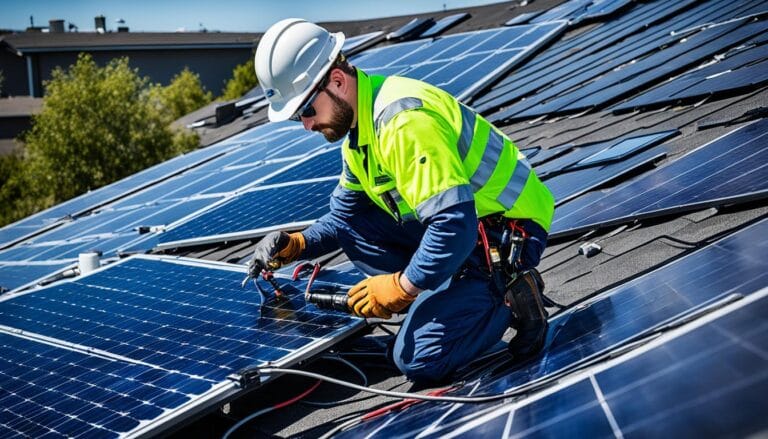
Practical tips: if you’re considering solar, use a reliable solar calculator to estimate local production, check state and federal incentives, and consult a certified installer to size PV and storage for your household or business. Want help finding resources or a local installer? Start with your state energy office or national databases of certified contractors to explore options and incentives.