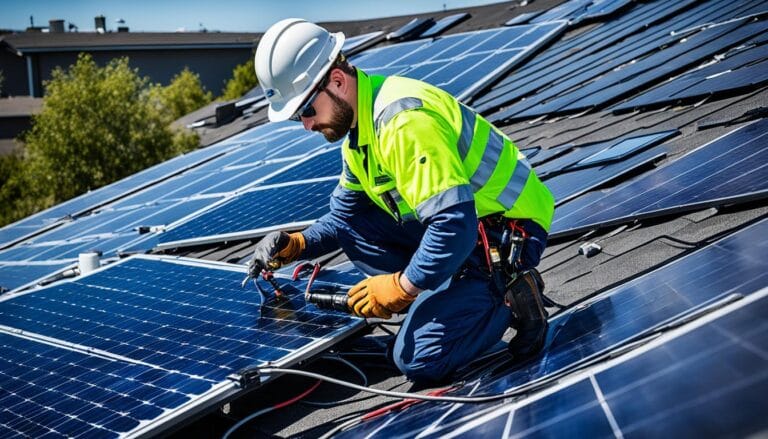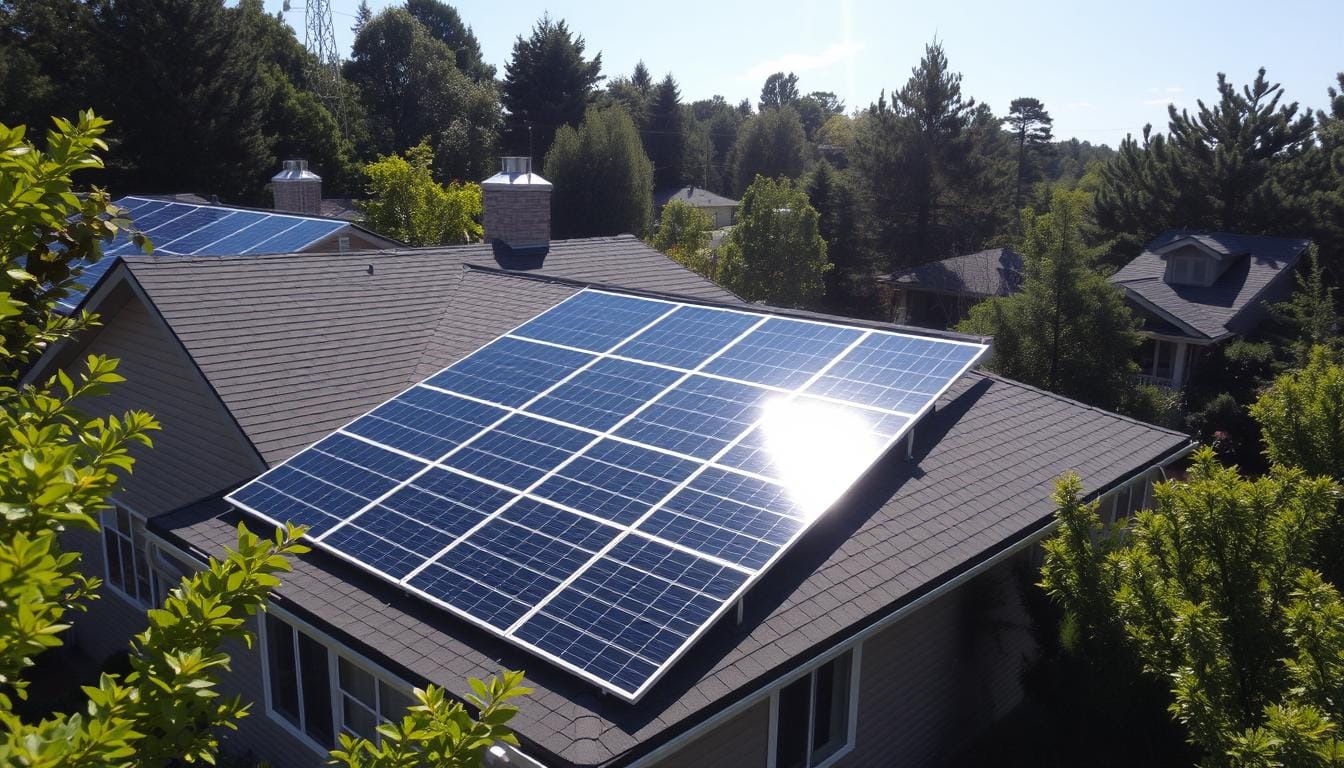
Switching to solar electric panels for homes gives homeowners energy independence, lower monthly bills, and a smaller carbon footprint. Modern solar systems convert sunlight into usable power at the rooftop, and many owners see payback in roughly 6–10 years depending on local electricity rates and system price.
There are strong financial supports available: the federal Investment Tax Credit (ITC) currently covers 30% of system costs for qualifying installations, and many states offer additional rebates or performance-based incentives. Homeowners should explore local programs to maximize savings—start with the DSIRE database and our detailed guide to state tax credits, rebates, and state-specific programs for renewable energy.
Key Takeaways
- Solar energy systems can deliver significant savings on electricity bills while cutting household carbon emissions.
- Upfront installation price and panels vary by technology and state, but federal and local incentives often offset much of the cost.
- Return on investment for residential solar frequently averages near 10% nationally, with higher returns in states with high electricity rates and strong incentives.
- Typical panel lifespans are 20–30 years with gradual output degradation; many systems still produce useful power beyond that window.
- Adding a solar electric system can boost property value—studies often report a few percent increase depending on location and system size.
- Improved panel efficiency, financing options, and incentive programs are making solar systems more accessible for more homeowners.
TL;DR: Well‑sized rooftop solar panels can cut or eliminate utility bills, pay back in roughly 6–10 years in many U.S. markets, and increase home value—especially when you factor in tax credits and rebates.
Understanding Solar Electric Panels for Homes
— this short video demonstrates PV basics, typical system components, and what to expect from a home installation.
Modern solar energy systems use photovoltaic panels to convert sunlight into household electricity. Beyond being an environmental choice, rooftop solar is a practical way to lower long‑term energy costs and lock in predictable power expenses.
How Solar Panels Harness Sunlight for Energy
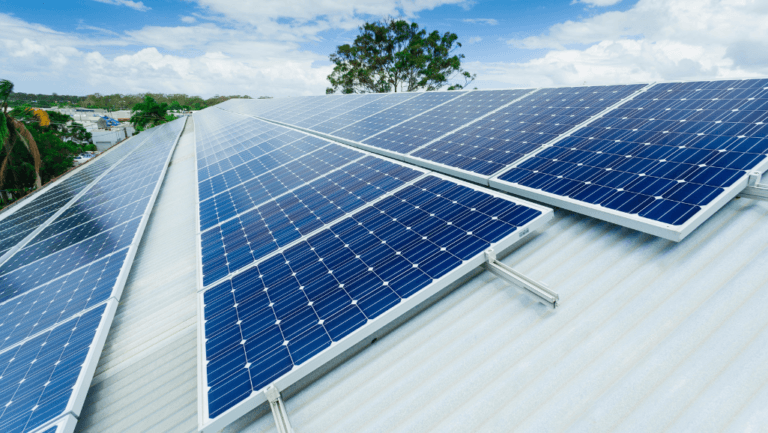
Photovoltaic cells inside each panel absorb photons from sunlight, freeing electrons and creating direct current (DC). An inverter then converts DC to alternating current (AC) for home use. Monitoring systems report production and estimated output so homeowners can track savings.
Photovoltaics: The Science Behind Solar Energy Conversion
Most residential panels use silicon-based cells. When photons strike these cells they create an electrical charge; grouped into modules, these cells produce the voltage and current that become usable household electricity.
Key Components of Home Solar Energy Systems
- Solar panels (monocrystalline, polycrystalline, or thin-film) — the primary panel modules that generate DC power.
- Inverter — converts DC to AC; options include string inverters, microinverters, and hybrid inverters for battery integration.
- Battery storage (optional) — stores excess energy for night use or backup power.
- Mounting hardware, racking, wiring, and grid connection for net metering or export to your utility.
Understanding these parts helps homeowners choose the right system and setup for their needs. For a deeper walkthrough, see our comprehensive guide on solar panels on a house.
| System Size (kW)Cost Before Incentives ($)Estimated Lifetime Savings ($) | ||
| 4 kW | 13,000 | 31,100 |
| 6 kW | 18,000 | 48,800 |
| 12 kW | 33,000 | 93,300 |
Note: the table above is illustrative—actual price, expected output, and lifetime savings depend on local sunlight, utility rates, system quality (panel wattage such as 410W or cell counts like 108‑cell modules), and incentives. See the costs section for state examples and a calculator to estimate your system size.
Overall, adding photovoltaic panels for home use reduces grid dependence, lowers monthly bills over time, and contributes to long‑term sustainability.
Environmental Impact and Sustainability
Solar technology is a cornerstone of the transition to cleaner electricity. Rooftop solar panels generate power without burning fossil fuels, reducing greenhouse gas emissions and helping communities move toward renewable energy and greater energy independence.
Renewable Nature of Solar Power

Solar is a virtually limitless energy source while the sun shines. Unlike finite fossil fuels, widespread adoption of solar panels helps diversify the energy mix and lowers reliance on utility-supplied electricity during peak demand.
Reduction of Carbon Footprint and Greenhouse Gas Emissions
When a home uses solar-generated electricity, it directly replaces power from carbon-intensive sources. Lifecycle studies typically show solar systems produce far fewer CO2-equivalent emissions per kWh than coal or natural gas — a key factor in meeting carbon neutrality goals.
Advances in Solar Technology and Sustainability
Improvements in panel efficiency and manufacturing have driven down the price of solar power and reduced land-use intensity. At the same time, industry and regulators are expanding recycling and take‑back programs to limit end-of-life impacts.
| StatisticDetail | |
| Cost Reduction since 2010 | More than 70% (decline in module and system costs since 2010; see IRENA/SEIA) |
| Estimated Solar Panel Waste by 2050 | Projected tens of millions of tons globally without improved recycling — industry programs aim to reduce this (source-dependent) |
| Land Requirement by 2035 | Estimated 5.7 million acres for broad deployment scenarios (~0.3% of contiguous U.S.) — subject to modeling assumptions |
Quick facts: efficiency gains and economies of scale have driven down the cost of solar panels and increased power output per unit area, but recycling and responsible manufacturing are essential to minimize future waste. For homeowners, seek products from manufacturers with clear recycling policies or producer take‑back programs.
To learn more about local recycling options and policies, check state resources or contact manufacturers directly — small choices at purchase time (panel type, supplier warranties, and available battery recycling) can reduce long-term environmental impact.
Economic Advantages of Residential Solar Power Systems
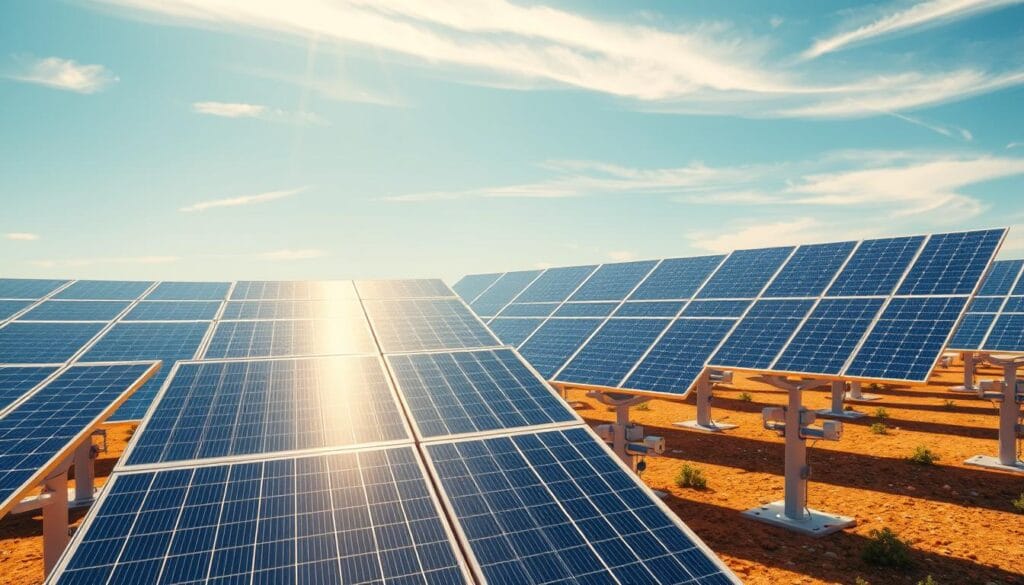
Installing rooftop solar panels is both an environmental and financial decision: well‑designed home solar systems reduce monthly utility bills, hedge against rising electricity prices, and can deliver attractive long‑term returns.
Where you live matters. In sunny states with high utility rates, homeowners see the largest savings—Florida, for example, often shows strong monthly reductions in electricity bills when paired with net metering and incentives. Across the U.S., incentives and falling equipment costs make residential solar a more affordable option than ever.
- Lower utility costs: Solar power offsets grid electricity use and reduces monthly bills; surplus generation can be exported if your utility supports net metering.
- Federal incentives: The Investment Tax Credit (ITC) currently covers 30% of qualifying system costs, lowering upfront price.
- Property value: Solar installations often increase home resale value—studies show percentage gains that vary by market and system size.
Example: a 6 kW rooftop system with an $18,000 pre‑incentive cost, minus a 30% tax credit, lowers the net cost to roughly $12,600. If that system saves $1,500 per year in electricity, the simple payback is about 8.4 years and lifetime savings mount over 25+ years of production.
Note on lifespan: manufacturers typically warrant panels for ~25 years, and panels commonly produce useful output for 25–30 years or more with gradual degradation. Treat the warranty and expected degradation rate as part of your long‑term cost analysis.
Solar Electric Panels for Homes and Property Value
Beyond monthly savings, solar can be a tangible home improvement. Buyers often view operational solar systems as a reduced monthly cost and a value add—especially in states with high energy costs or strong solar adoption.
How Solar Installations Increase Home Resale Value
Research from housing and energy bodies suggests installed solar can increase resale value by several percent, depending on local market conditions and system size. For instance, a modest 6 kW system in a high‑cost market may translate to a multi‑thousand‑dollar premium on sale.
Understanding the Perception of Solar Upgrades in the Housing Market

Markets with high electricity costs, strong incentive programs, and frequent solar adoption (California, parts of the Northeast, Pacific Northwest cities) often show higher buyer premiums and faster sales for homes with solar. Example figures and regional potential value increases depend on local utility rates and typical system size.
| AreaAverage Increase in Home ValueSolar System Size (kW)Potential Additional Value | |||
| California | 5.4% | 6 kW | $22,620 |
| New York | 5.4% | 11 kW | $39,690 |
| Seattle, Washington | 9.3% | 6 kW | $38,740 |
These numbers are illustrative: actual impacts vary with local electricity rates, home price, system output, and whether the system is owned outright or leased. To evaluate your situation, use a local savings and home‑value estimator or ask installers for a market‑adjusted appraisal.
Want a personalized estimate? Use our calculator to project system price, expected annual power production (including common module sizes like 410W or 108‑cell panels), incentive adjustments, and a payback timeline—then compare financing options (cash, solar loans, leases, or PPAs) to find the best path for your home.
Solar Panel Installation Costs Explained
If you’re considering rooftop solar panels, understand the components of the upfront price. Typical installed cost includes the panels themselves (module cost), the inverter, racking and mounts, electrical hardware, permits, interconnection fees, and labor. Optional items—like battery storage, monitoring systems, or higher-end panels (e.g., 410W or 108‑cell modules)—raise the initial outlay but can improve long‑term power output and resilience.
The avg. cost for a residential system varies widely by state, system size, and product choice. A typical 6 kW rooftop system often lists pre‑incentive averages near $18,600, with a range roughly $14,600–$21,700 depending on technology and local labor/pricing. State examples can swing more (higher in CA, lower in some Southeastern states) due to labor, permitting, and local market differences.
| Type of PanelCost Per WattTypical System Size (kW)Cost Range | |||
| Monocrystalline | $2.30 – $3.82 | 6 | $14,600 – $21,700 |
| Polycrystalline | $0.90 – $1.50 | 8 | $19,400 – $29,000 |
| Thin-film | $0.50 – $1.50 | 10 | $24,300 – $36,200 |
Important: those ranges typically bundle equipment and installation. Prices per watt fluctuate with wholesale module costs, retailer margins, and available solar kits or panel kits. DIY or wholesale kit options can reduce sticker shock but usually require more homeowner time and have different warranty/support tradeoffs.
Beyond purchase, budget for modest ongoing costs: annual cleaning, periodic inverter replacement (often 10–15 years for string inverters, longer for many microinverters), and occasional repairs. Standard panel warranties commonly cover ~25 years; expected useful life often spans 20–30 years with gradual degradation in output.
Financing and incentives change the net cost picture. The federal 30% Investment Tax Credit (ITC) applies to qualifying owned systems and (subject to current rules) also covers energy storage systems of relevant capacity. State rebates, performance payments, and local utility programs further cut net cost—consult DSIRE for state‑by‑state listings.
Understanding Tax Credits and Incentives for Solar Conversion
The federal tax credit (ITC) currently reduces the tax liability for qualifying residential system owners by 30% of the system cost—effectively lowering the upfront price when paired with suitable tax liability. Many states add rebates or performance incentives, and utilities may offer net metering or buyback rates for exported electricity, improving payback and lifetime savings.
Use the Database of State Incentives for Renewables & Efficiency (DSIRE) to find local programs, or ask installers for net‑metering details and recent examples in your county. Note that incentive rules and program availability change, so check current DSIRE listings and installer quotes before finalizing a purchase.
Which costs qualify? Besides panels, the ITC typically covers inverters and balance‑of‑system components. Energy storage systems may qualify if installed with solar or meeting capacity thresholds—verify current IRS guidance for eligibility specifics.
To make an informed decision, compare: cash purchase vs. solar loans (lower long‑term cost than leases in many cases), leasing or PPAs (lower/no upfront cost but different savings profiles), and DIY/kit vs. full installation from a certified contractor. Also weigh grid‑tie solar against off‑grid solar setups—grid‑tie is usually cheaper and leverages net metering, while off‑grid requires larger battery systems and higher up‑front price.
Advanced Solar Panel Technologies and Efficiency
Solar panel technology has advanced quickly. Modern solar modules and cells deliver higher power output per square foot, better durability, and more options for homeowners who want to optimize performance or minimize system price.
Innovations in Photovoltaic Materials
Researchers and manufacturers are improving photovoltaic materials to raise efficiency and lower costs. Perovskite‑silicon tandems and silicon heterojunction cells are pushing lab and commercial efficiencies upward (recent reported perovskite tandem records are in the mid‑20s percent range). Flexible, lightweight prototypes from research labs demonstrate far higher power‑to‑weight ratios, suggesting new product categories for specialized installations.
When evaluating real products, look for published module efficiency, degradation rate, and independent lab test results rather than single headline numbers.
Monocrystalline vs. Polycrystalline vs. Thin‑film
Choosing the right panel type depends on budget, roof space, and performance goals:
- Monocrystalline (mono) — highest efficiency (commonly ~17–22% for many residential modules), best power density for limited roof space; typically priced higher per watt.
- Polycrystalline — lower cost per watt and slightly lower efficiency (~15–17%), a good choice when roof space is ample and upfront price is the priority.
- Thin‑film — lowest cost per watt in some cases and flexible options for specialized uses, but lower efficiency and larger area required.
Manufacturers also offer high‑watt modules such as 410W panels and multi‑busbar or 108‑cell configurations that increase per‑panel output—useful to reduce racking and installation labor for a given system capacity.
| BrandModelEfficiencyRepresentative Cost | |||
| SunPower | M-Series 440 W | ~22.8% | $1.30/watt (representative) |
| QCELLS | Q.Peak Duo G9 | ~21.4% | $1.10/watt (representative) |
| REC Group | Alpha Series | ~21.7% | $1.20/watt (representative) |
| Jinko Solar | Eagle PERC 72M | ~20.5% | $1.00/watt (representative) |
| Panasonic | EverVolt Series | ~21.2% | $1.25/watt (representative) |
Note: brand efficiencies and costs change over time; verify current specs and local wholesale vs. retail pricing when requesting quotes.
Long-Term Savings and Return on Investment
Higher efficiency generally increases annual power production for a given roof area and can shorten payback. But the economics depend on installed price, incentives, local electricity rates, and degradation over years.
Analyzing Lifetime Costs and Savings
When modeling lifetime savings, include:
- Installed price (modules, inverter, racking, labor, permits)
- Federal and state incentives that reduce net cost
- Expected annual power output (based on panel wattage like 410W or module cell count and local sunlight)
- Degradation rate (typical ~0.5%–0.8% per year for many modern panels)
- Inverter replacement costs and optional battery storage if off-grid or backup is desired
A 3 kW system’s monthly savings example depends on region; convert local generation to kWh and multiply by your utility rate for realistic projections. Note: remove or replace non‑U.S. currency examples in U.S.-focused estimates and use local dollars for clarity.
Real‑world ROI Examples
Average ROI for residential systems is frequently cited near ~10% nationally, with higher returns (often 15–20% or more) in states that combine high electricity rates, strong incentives, and abundant sunlight. Use local installer quotes and an output estimate for your roof to get an accurate ROI and payback timeline.
Degradation matters: if a panel’s annual output declines by ~0.6% a year, plan for reduced production late in life when modeling 25–30 year savings. Also consider inverter life (10–15 years for many string inverters) and battery replacement cycles if you include storage.
Compare options: a higher‑efficiency mono panel (higher upfront price) vs. a lower‑cost poly panel (lower price, lower area efficiency) — the best choice depends on roof constraints and desired lifetime economics. For DIY or budget‑minded homeowners, solar kits and panel kit wholesale options exist but check warranties and local code compliance.
Call to action: Compare top panel models, expected annual output, and net installed price with our roof estimator to choose the best panel type—mono, poly, thin‑film, or high‑watt 410W modules—for your home.
Assessing the Suitability of Your Home for Solar Panels
Solar adoption has grown steadily since 2008, but not every home is equally well suited for rooftop solar panels. Assess your property, local climate, roof condition, and local rules to determine whether a home solar system will deliver the expected financial and energy benefits.
Factors to Consider: Roofing, Location, and Sun Exposure
Key site considerations include roof age, orientation, usable area, and tilt. Authorities such as NREL recommend a south‑facing roof is ideal in the Northern Hemisphere, with an optimal slope often between about 15° and 40° for year‑round production. Shading from trees or nearby structures can significantly reduce annual power output, so perform a shading check at solar noon across seasons.
Local solar resource and electricity price matter: in many U.S. cities a roughly 7 kW rooftop system (for example, ~7.15 kW cited in some EnergySage examples for Austin) can cover the needs of an average household, but your required system size depends on your actual consumption and sunlight hours.
Professional Solar Evaluation for Optimal Placement
A professional site assessment or a high‑quality remote assessment (using satellite and LIDAR data) will estimate expected annual kWh production, optimal panel layout, inverter sizing, and roof work needs. Installers also verify code, permitting, HOA rules, and utility interconnection requirements (including whether your utility offers net metering or favorable buyback rates).
Consider whether you want a grid‑tie solar setup (lower price and simpler permitting, uses net metering) or an off‑grid solar system (requires larger battery capacity and higher upfront cost but enables energy independence). Also evaluate product options like higher‑watt 410W modules, 108‑cell configurations, or complete solar kits for simpler installs where appropriate.
FAQ
What are the benefits of installing solar electric panels for homes?
How do photovoltaic panels convert sunlight into electricity?
What are the key components of a home solar energy system?
How does solar power contribute to environmental sustainability?
What economic advantages do residential solar power systems offer?
How can solar panel installations impact home resale value?
What is the average upfront cost for residential solar panel installation?
What tax credits and incentives are available for solar conversion?
What are the latest advancements in solar panel technology?
What long-term savings and return on investment can homeowners expect from solar panels?
How do I determine if my home is suitable for solar panels?
Next steps: get a free home assessment from a certified installer or run our roof estimator to compare system price, expected annual output, and financing options. Ask potential installers about product warranties, inverter options, battery sizing, and whether they offer complete solar kits or wholesale pricing.