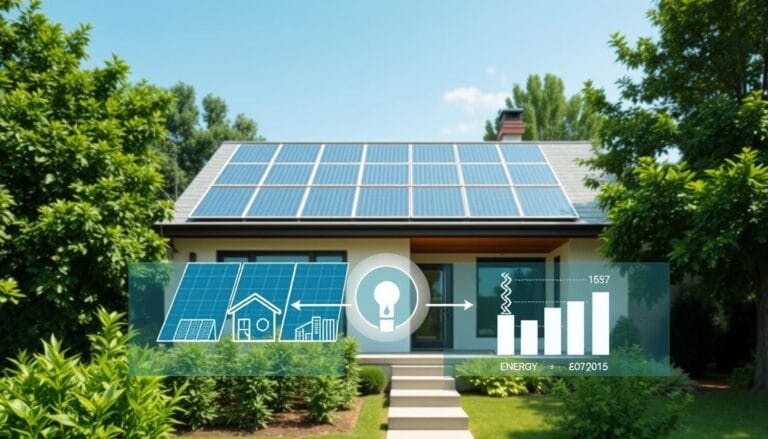
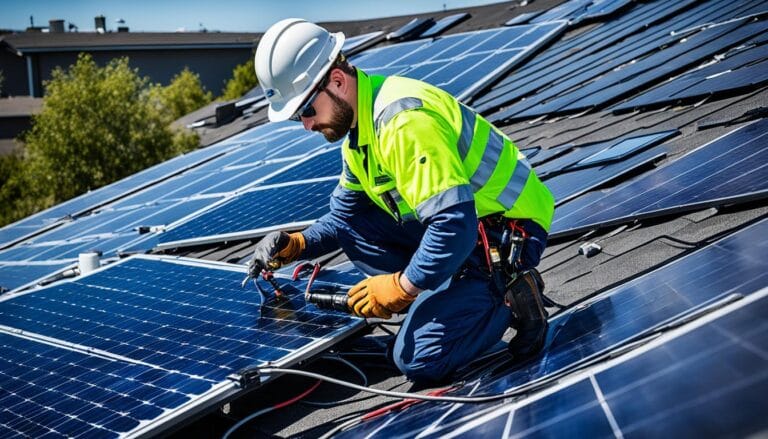
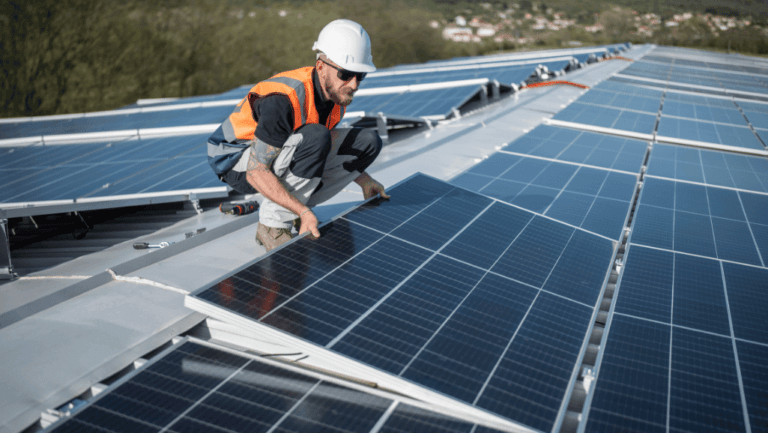
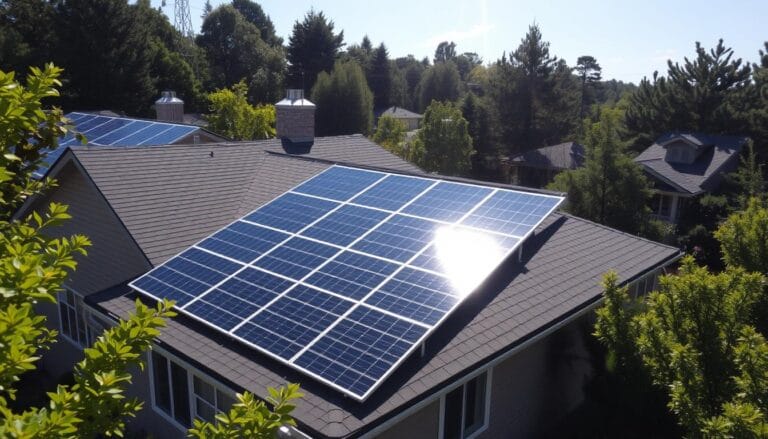
Discover a future-proof investment that delivers more than energy savings. Commercial solar installation equips businesses with reliable sustainable power generation while strengthening a greener corporate identity. As utility rates rise in many regions, adopting solar offers businesses a proven way to cut operational costs and shrink their environmental footprint.
Backed by federal incentives and growing demand for clean energy, companies of all sizes are adopting commercial solar solutions. Implementing these systems does more than reduce energy bills — it signals a concrete commitment to sustainability that can boost customer trust, attract talent, and improve long-term financial performance.
Key Takeaways
- Lower your utility expenses strategically while supporting cleaner energy initiatives.
- Unlock financial gains through federal tax credits and local incentives to maximize ROI on your commercial solar system.
- Enhance brand value and appeal to eco-conscious customers and employees.
- Support local economic growth through job creation tied to commercial solar projects.
- Gain energy independence to protect your business from unpredictable rate hikes.
Experience the double win of reduced costs and a stronger sustainability profile — for example, a medium-size retail facility can often recover a large portion of its electricity spend within 5–7 years after installation depending on location and system size.
- Enjoy adaptable solar options that fit small and large operations, from rooftop arrays to ground-mounted systems.
Estimate your savings with a free site assessment to see how a commercial solar panel investment could work for your business.
Understanding Commercial Solar Installation Benefits
The shift to solar panel systems in the commercial sector delivers both environmental and financial upside. By installing photovoltaic systems, businesses can lock in predictable energy costs, lower carbon output, and improve their sustainability credentials—advantages that matter to customers, employees and investors.
Reducing Operational Costs with Solar Power
Commercial solar installations reduce ongoing energy expenses by producing on-site electricity and displacing grid purchases. Modern solar panels require minimal maintenance, provide steady output, and help stabilize monthly budgets. As utility rates rise, the relative savings from a properly sized solar system typically increase, improving a business’s bottom line over time.
Navigating Financial Incentives for Solar Investment
Federal and state programs make commercial solar investment more attractive. Key incentives include the Investment Tax Credit (ITC) and accelerated depreciation options such as MACRS, which lower net project costs and shorten the payback period. These incentives apply differently depending on ownership structure and local rules, so businesses should confirm eligibility with a tax advisor.
Projected Savings Over Time for Businesses
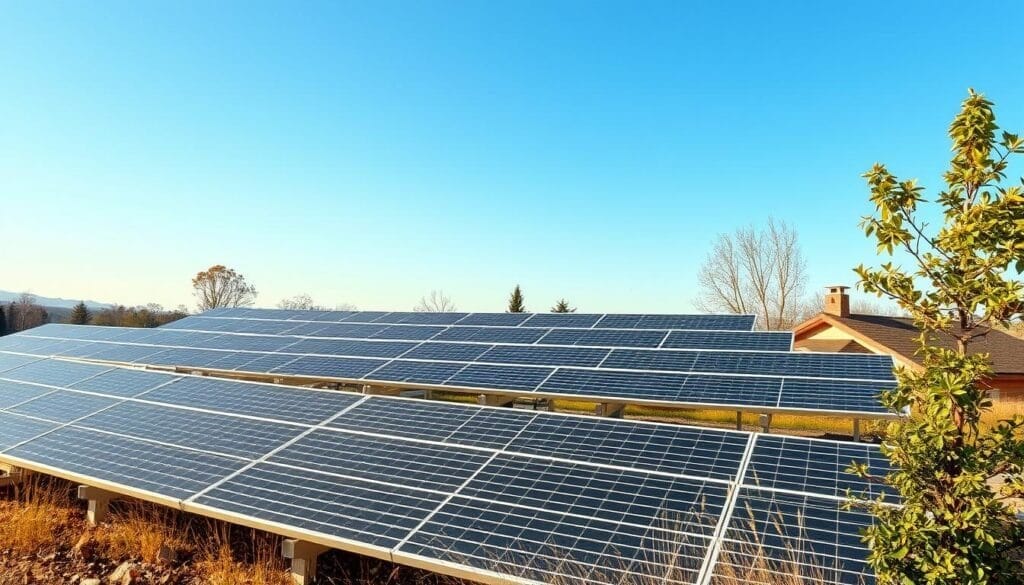
Long-term gains from photovoltaic installations stem from reduced energy bills, increased property value and potential revenue from exporting surplus generation. The example table below is illustrative—actual results vary by location, system size, and utility rates. Use it as a model for estimating year-by-year impact rather than a guaranteed outcome.
| YearEnergy Cost SavingTax Credit SavingsTotal Savings | |||
| Year 1 | $5,000 | $2,000 | $7,000 |
| Year 2 | $5,500 | $2,000 | $7,500 |
| Year 3 | $6,000 | $2,000 | $8,000 |
| Year 4 | $6,500 | $2,000 | $8,500 |
| Year 5 | $7,000 | $0 | $7,000 |
How this model was built: savings assume gradual production increases (cleaning, optimization), an upfront tax credit applied in year one, and steady local electricity price growth. To illustrate variability, a 50 kW rooftop solar installation might pay back in 4–8 years depending on local incentives, while a 500 kW ground-mounted system often achieves longer-term scale benefits and faster per-watt economics.
In short, solar installations offer measurable savings and improved financial resilience. For a tailored projection, get a custom ROI estimate that factors in your facility’s consumption profile, roof or site characteristics, and available incentives.
Exploring Financial Incentives and Tax Credits
For businesses weighing a commercial solar project, understanding available incentives and tax credits is critical to an accurate financial picture. These programs reduce upfront costs, improve cash flow and shorten the payback period—though specifics depend on ownership structure and local rules.
The Investment Tax Credit (ITC) is one of the most important incentives: it lets eligible owners claim a percentage of the qualifying solar installation cost as a federal tax credit. Policy details and applicable percentages change over time, so confirm current rates with the IRS or your tax advisor before finalizing a project.
Some projects may also qualify for a form of the Production Tax Credit (PTC) or other output-based incentives that provide benefits based on actual electricity production over time. Availability and applicability of the PTC to commercial solar varies, so businesses should check current program rules and state-level options.
Accelerated depreciation under the Modified Accelerated Cost Recovery System (MACRS) is another powerful tool: businesses that own the system can recover capital costs faster through multi-year depreciation schedules. In certain cases, combining the ITC with bonus depreciation can materially speed cost recovery—again, subject to tax-code rules and eligibility.
Net metering policies allow businesses to earn utility bill credits for excess generation sent to the grid, increasing the value of on-site solar. Net metering rules differ widely by state and utility, so verify local interconnection and credit rules when modeling project economics.
Ownership matters: if you own the solar system, you can typically claim the ITC and depreciation benefits; if you use a lease or PPA (third-party ownership), the installer or financier usually claims those incentives, and your pricing is structured accordingly. Consult a tax advisor or project developer to determine the best structure for your situation.
| IncentiveDetailsImpact | ||
| Investment Tax Credit (ITC) | Federal tax credit percentage applied to qualifying project costs (confirm current rate) | Reduces upfront cost; improves payback |
| Production Tax Credit (PTC) | Output-based credit tied to electricity production (availability varies) | Rewards efficient long-term operation when applicable |
| MACRS + Bonus Depreciation | Accelerated depreciation schedules; bonus depreciation may apply per current tax law | Fast-tracks cost recovery and lowers taxable income in early years |
| Net Metering | Utility credits for surplus energy exported to the grid (state/utility rules vary) | Increases effective savings and improves ROI |
Example (illustrative): pairing the ITC with accelerated depreciation can cut the effective net cost in year one and reduce payback by several years versus no incentives. Because rules change and state programs differ, talk to a tax advisor or your commercial solar developer and download our incentives one-pager to model your project’s incentives and the solar installation process accurately.
The Impacts of Commercial Solar Installation on Brand Image
Investing in commercial solar goes beyond energy and cost savings — it shapes how your business is perceived. Adopting solar energy signals a company-wide commitment to sustainability and strengthens corporate social responsibility messaging that matters to customers, employees and partners.
Building a Sustainable Brand Reputation
Green projects like commercial solar installations demonstrate concrete action. Studies show consumers increasingly prefer sustainable brands; showcasing measurable outcomes (for example, estimated CO2 reductions or annual water savings tied to your system) helps translate technical benefits into reputational value. That visibility can support premium pricing, stronger customer loyalty, and improved investor interest.
Meeting Consumer and Employee Expectations
Transparency about your commercial solar installation — published savings, expected payback, and environmental benefits — gives you a marketing advantage. While exact numbers depend on system size and location, many businesses report payback windows in the 5–7 year range; communicate these results and the methodology behind them to build trust. Sharing project milestones also helps attract talent: prospective employees often factor sustainability into job decisions.
- PR & marketing: Announce commissioning with a press release, social posts and a sustainability page update.
- Customer messaging: Use clear, localized metrics (kWh produced, CO2 avoided, % energy offset) rather than vague claims.
- Internal comms: Send an employee brief and host a site tour to boost morale and engagement.
Media attention around major sustainability investments can amplify these benefits, boosting visibility and potentially improving long-term profitability. To help teams communicate the value, consider preparing a simple sustainability PR kit and an internal announcement template when your project goes live.
Maximizing ROI from Solar Panel Systems

Return on investment (ROI) is a top priority when businesses evaluate infrastructure projects. Installing commercial solar arrays delivers clear financial upside through sustained energy savings, tax benefits and higher property values, while also supporting corporate sustainability goals.
Commercial solar installations reduce utility dependence by producing on-site electricity, lowering monthly energy costs and improving predictability in operating budgets. Studies also show properties with solar systems can command higher lease or resale values, and modern solar panels commonly carry useful lives exceeding 25 years—helping to extend the period of economic benefit.
| BenefitDescriptionFinancial Impact | ||
| Energy Savings | Less grid consumption through on-site generation. | Lower monthly electricity bills and improved margin stability. |
| Tax Incentives | Federal and state credits, rebates and accelerated depreciation. | Reduced upfront net cost and faster payback. |
| Property Value Increase | Higher valuation for buildings with integrated solar. | Potential for higher rents and sale proceeds. |
| Brand Image | Stronger sustainability positioning and customer appeal. | Improved customer retention and potential revenue upside. |
Typical financial supports include the federal Investment Tax Credit (confirm current rate and eligibility), plus various state-level incentives such as property tax exemptions or sales-tax waivers on equipment—availability varies by state. These incentives lower the effective installed cost and speed the breakeven point, making the investment more attractive.
Maintenance is critical to sustain ROI: schedule periodic panel cleaning, inverter checks and performance monitoring to avoid energy losses. Include estimated O&M (operations & maintenance) costs in your financial model so the projected returns are realistic.
Quick ROI illustration (example inputs): assume installed system cost, applicable tax credits, annual kWh production and local electricity rate to estimate simple payback. For a more accurate projection that models scenarios (no change, 10% or 20% electricity price increases), download our ROI calculator or request a site audit to get a customized investment analysis for your commercial solar project.
Tailoring Solar Solutions for Different Business Sizes
As more businesses and property owners invest in commercial solar, it’s important to match the solution to each site’s unique needs. From small storefronts to large industrial campuses, custom photovoltaic systems and scalable designs deliver efficiency and financial benefits when sized and placed correctly.
Customized Photovoltaic Installations

Customization maximizes cost-effectiveness. A properly designed rooftop or ground-mounted solar system accounts for building orientation, roof condition, shading and local production rates to deliver the best payback. Example results vary by project size — a modest 50 kW rooftop installation can significantly cut electricity bills for a small business, while larger projects realize stronger per-watt economics.
Custom designs also let complex properties achieve higher self-sufficiency and appeal to tenants or buyers. While exact performance depends on site specifics, tailored systems often improve building valuation and tenant retention compared with non-solar properties.
Scalable Solar Designs for Growing Companies
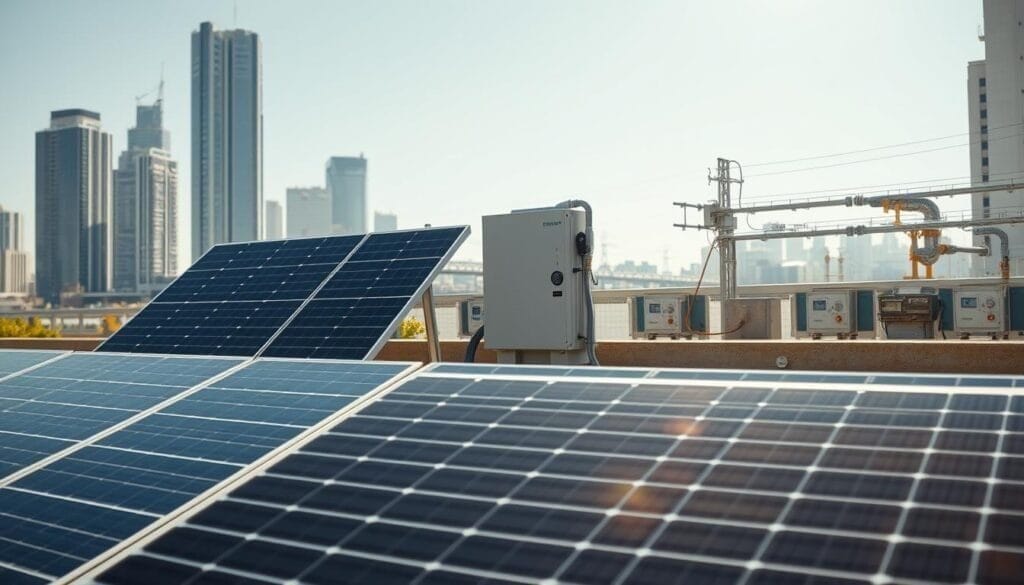
Scalability is key for growing companies. Start with a phased rooftop or carport installation and expand capacity as energy needs increase. This approach spreads capital expenditure and lets you apply lessons from early phases to optimize later projects.
- Rooftop arrays: Best for existing buildings with suitable load-bearing roofs.
- Ground-mounted systems: Ideal for larger parcels with open space and flexible orientation.
- Canopies & carports: Provide dual benefits—shade/covered parking plus energy production.
Most solar systems have expected service lives of 25–30 years; combine that lifespan with flexible financing (loans, leases, PPAs) to tailor upfront costs and repayment terms to your company’s cash flow.
To choose the right option, use a simple sizing checklist: evaluate your annual kWh demand, available roof/land area, structural capacity, local incentives, and planned growth. For a guided next step, download our scalable design worksheet or talk to a solutions engineer to review site-specific options and project timelines for commercial solar.
Solar Power as a Catalyst for Employee and Customer Engagement
Adopting solar energy strengthens both internal culture and external brand loyalty. When businesses invest in visible clean energy projects, they create talking points that boost morale, attract talent and deepen trust with customers who value sustainability.
How solar improves engagement and loyalty
- Employee pride and retention: Demonstrable sustainability commitments give staff a sense of purpose and can improve retention and recruitment efforts.
- Customer trust: Public-facing renewable projects signal authenticity and can influence purchasing decisions for eco-conscious buyers.
- Community goodwill: Local installations—especially visible rooftop arrays or carport panels—encourage community support and positive media coverage.
| BenefitsImpact | |
| Increased Morale and Retention | Employees feel aligned with company values, reducing turnover risk. |
| Boost in Consumer Trust | Visible sustainability efforts build stronger customer loyalty. |
| Enhanced Public Image | Positive PR and media attention from green initiatives. |
| Community Engagement | Local events and partnerships tied to projects strengthen neighborhood ties. |
Simple 3-step communication plan
- Announce: Publish a press release and social posts at commissioning with clear KPIs (kWh produced, % energy offset).
- Share: Add a sustainability page update and regular progress snapshots (quarterly production, CO2 avoided).
- Engage: Host an employee site tour and a community open house to showcase the commercial solar investment.
Sample social post: “Proud to announce our new rooftop solar system—offsetting X kWh/year and reducing emissions by Y tons. Learn how this project supports our sustainability goals.” Use local metrics rather than vague claims to increase credibility.
To maximize public and internal impact, prepare a short internal announcement, a press kit, and shareable visuals. For ready-to-use assets, download communication templates and a one-page summary that highlights your project’s key benefits and estimated savings.
How Solar Energy Can Propel Local Economic Growth
Expanding commercial solar installations does more than cut emissions—it can be a meaningful engine for local economic development. Both solar farm construction and on-site commercial projects create jobs, increase local spending, and stabilize energy costs for area businesses.
Job Creation Through Solar Farm Construction
Solar farm construction and large-scale commercial projects are labor-intensive during the build phase, creating roles for engineers, electricians, installers and general contractors. After commissioning, ongoing operations and maintenance support longer-term local employment and opportunities for regional suppliers and service companies.
Boosting Local Economies with Commercial Solar Projects
Commercial solar reduces operating expenses for local companies by lowering utility bills and providing more predictable energy costs. Those savings can be reinvested locally—supporting hiring, expansion and procurement from nearby vendors—amplifying the initial economic impact of the project.
| ImpactDescriptionOutcome | ||
| Direct Employment | Construction and installation workforce for projects | Short-term jobs and wages within the community |
| Indirect Employment | Supply chain and O&M services supporting the project | Longer-term, recurring local jobs |
| Economic Stability | Lower and more predictable energy costs for companies | Redirected savings to other local expenditures |
| Commercial Influence | Visible projects encourage peers to invest in solar | Broader adoption and additional local investment |
How to quantify local impact
- Estimate jobs per MW: industry studies often cite construction-phase jobs and ongoing operations jobs per MW—use these as a local proxy.
- Track local procurement: measure the percentage of project spend that stays in-region (equipment excluded).
- Model utility savings: calculate annual $ savings and estimate reinvestment rates into the local economy.
Example: a medium commercial project can generate dozens of local construction jobs during installation and a few permanent O&M positions afterward—figures vary by project size and procurement strategy. For a site-specific projection, request a local impact report that estimates jobs, local spend and economic multipliers tied to your proposed commercial solar project.
Commercial Solar Installation: Cost vs. Benefit Analysis
Weighing photovoltaic system costs against long-term benefits is essential when evaluating a move to commercial solar. Upfront expenses depend on system size, panel efficiency, site conditions and installation complexity, while future savings come from lower electricity bills, incentives and potential revenue from exported power.
Current industry averages for commercial solar panels range roughly from $2.50 to $3.50 per watt before incentives. That translates to typical installed system costs from about $100,000 for smaller commercial projects up to $1,000,000 or more for larger installations. Incentives and tax benefits can substantially lower the net cost, so model both gross and net scenarios when doing a cost-benefit analysis.
| Cost FactorAverage Cost | |
| Initial Investment (per watt) | $2.50 to $3.50 |
| Post-Incentive Cost (per watt) | $1.20 to $1.75 (illustrative) |
| System Lifespan (Years) | 25 to 30 |
Policy support changes over time—confirm current rates when modeling. For example, the federal investment tax credit (ITC) and other state-level incentives can reduce the effective project cost; always note the date of your assumptions. Regional differences also affect production: a 100 kW system in a high-sun location (like parts of Texas) will produce more kWh/year than the same system in a northern climate.
As an illustrative performance note, a 100 kW installation can produce on the order of 120,000–140,000 kWh annually in high-irradiance U.S. regions; actual output depends on tilt, shading and local solar resource. That generation can offset a significant portion of a facility’s electricity use and materially reduce monthly electricity bills, though the exact % savings will vary by consumption profile and utility rates.
Choosing the right configuration—roof-mounted arrays, ground-mounted systems or canopy/carport panels—affects both installation cost and long-term yield. Include anticipated operations & maintenance costs, inverter replacement timelines and potential equipment upgrades when calculating total cost of ownership.
For a precise projection, request a customized cost estimate that applies your local rates, site production estimates and current incentives. A clear cost vs. benefit analysis will show the payback window and lifetime value of a commercial solar investment for your business.
Design Considerations for Commercial Solar Energy Systems
Effective commercial solar design combines a clear site plan, appropriate equipment selection, and an interconnection strategy that meets local rules. Integrating thoughtful solar energy system design, grid-tied solar solutions and distributed generation helps maximize production, reduce costs and support long-term sustainability goals.
Grid-tied systems and interconnection
A grid-tied solar solution is often the most cost-effective approach for businesses because it lets you use on-site generation and draw from the utility when needed. Excess generation can earn credits through net-metering or utility-specific programs—interconnection timelines and crediting rules vary by utility, so factor that into the design and permitting schedule.
Key structural and site factors
The physical site dictates much of the design: roof condition and load capacity, shading, available area, and orientation. A licensed structural engineer should verify roof load-bearing capacity before mounting panels. For ground-mounted or canopy systems, soil conditions, access and permitting are important considerations.
Practical design checklist (quick)
- Site assessment: annual kWh demand, shading analysis, roof/land area.
- Structural review: roof age, load capacity, attachment strategy.
- Equipment selection: panel type, inverters, racking and balance-of-system equipment.
- Interconnection & permitting: utility requirements, timeline, and local codes.
- Production modeling: expected annual kWh, performance ratio, and degradation assumptions.
Design also needs to address the installation process sequence: site assessment → engineering & system design → permitting & interconnection approval → procurement & installation → commissioning & monitoring. Include warranties and an operations plan for maintenance to preserve long-term production.
For complex projects, use simulation-based production estimates and consult with a qualified designer or installer early. To simplify planning, download our design checklist or schedule a site assessment to evaluate your roof or building and estimate expected production and equipment needs for a commercial solar system.
Financing Options for Solar Array Deployment
Businesses pursuing commercial solar projects have multiple financing options that reduce upfront burden and align payments with project benefits. Choosing the right model depends on whether your company prefers ownership, lower upfront costs, or predictable long-term pricing.
Common financing models — pros & cons
- Solar loans: You own the system, benefit from incentives, and build equity. Pros: access to tax credits and depreciation; predictable payments. Cons: initial loan qualification and modest upfront capital required. Typical commercial loan rates vary by lender and credit profile.
- Solar lease: Third-party owns the equipment; you pay a fixed lease fee. Pros: little to no upfront cost and maintenance may be included. Cons: the lessor claims tax incentives and long-term savings are shared.
- Power Purchase Agreement (PPA): A developer installs and owns the system; you pay for the electricity produced at an agreed price per kWh. Pros: no capital outlay and immediate electricity cost reduction. Cons: contract length (often 15–25 years) and pricing escalators can apply.
| Financing ModelTypical DurationPrimary Benefit | ||
| Solar Loans | Varies | Ownership, tax incentives, building equity |
| Solar Lease | 10–25 years | Low/no upfront cost, maintenance options |
| PPA | 15–25 years | Pay for production, no equipment ownership |
Which model fits your company?
Ask these questions to choose: Do you want to own the equipment and claim tax benefits? (Consider a solar loan.) Do you prefer minimal upfront investment and operational simplicity? (Leases or PPAs may work.) For many companies, a hybrid approach or phased financing aligns best with growth plans.
For project planning, include equipment costs, O&M estimates, and expected incentives in your financial model. To compare options side-by-side, compare financing options with our worksheet or get finance pre-qualification to understand likely loan terms for your commercial solar project.
Solar Energy and Corporate Social Responsibility
Integrating solar energy into your operations is a concrete way for businesses to demonstrate commitment to sustainability and strengthen their CSR narrative. Beyond emissions reductions, commercial solar projects deliver measurable business benefits—from enhanced reputation to improved employee and customer attraction.
Recent studies indicate consumers and employees increasingly favor sustainable companies. While figures vary by survey and year, these trends show that visible sustainability actions—like installing commercial solar—support brand preference and can influence purchasing and hiring decisions.
| BenefitWhy it matters | |
| Consumer preference | Visible sustainability efforts increase trust and can drive sales among eco-conscious customers. |
| Enhanced reputation | Public-facing projects invite positive media and investor interest. |
| Employee attraction | Commitment to clean energy helps recruit and retain talent who value purpose-driven employers. |
How to report CSR impact: track straightforward, comparable metrics such as annual kWh generated, CO2 avoided (tons/year), estimated annual $ savings, and local jobs supported by the project. Present these figures in annual sustainability reports and on your website to maximize credibility.
For guidance, download our CSR reporting template or request an impact statement that maps your commercial solar project to common CSR frameworks and highlights incentives and savings your company can claim.
Conclusion
Embracing commercial solar is a strategic, long-term business decision that delivers both environmental and financial rewards. Companies that invest in on-site solar systems reduce energy costs, strengthen their sustainability credentials, and gain operational resilience—outcomes that matter to customers, employees and investors.
Costs and payback vary by project: typical installed prices often fall in the per-watt ranges discussed earlier, and system lifespans commonly exceed 25 years. When you layer in available incentives and tax treatments, the net investment becomes significantly more attractive. Many businesses see payback windows in the multi-year range (commonly 3–7 years for well-sized projects), though this depends on location, system size and incentive eligibility—confirm current rates and rules when modeling your project.
Solar panels convert sunlight into usable electricity; production and percent offsets depend on site irradiance, panel efficiency and system design. A realistic cost-benefit review should use local production estimates, current utility bills, and up-to-date incentive figures to produce a customized projection for your facility.
Next Steps & FAQ
How should my company get started?
What incentives can reduce project cost?
How long does the installation process take?
Where can I get a tailored estimate?