Skip to content


The solar industry is advancing sustainable energy with high-performance modules such as the Maxeon 7. This solar panel is a leading example of residential solar panel efficiency, with manufacturer-reported lab efficiency around 24.9% and real-world rooftop performance near 24.1% (verify with the latest datasheet or third‑party test). These high-efficiency panels demonstrate how improvements in solar technology and solar cells are increasing electricity output per square foot and making efficient solar systems more viable for homes.
Key Takeaways
- Maxeon 7 currently ranks among top residential modules for panel efficiency (lab ~24.9%, rooftop ~24.1%) — check manufacturer and independent test sources for the most recent figures.
- High-efficiency solar panels (above ~20%) can substantially raise system output for a given roof size, improving payback time and lowering lifetime costs.
- Leading brands such as SunPower, REC, and Q CELLS produce some of the most efficient residential solar panels, with several modules exceeding 22% efficiency in recent model lines.
- Monocrystalline solar cells and advanced module designs tend to offer the highest cell efficiency and are preferred when roof area is limited.
- Real-world performance depends on multiple factors: tilt and orientation, local weather and temperature, shading, and installation quality — all of which affect panel efficiency and system output.
- Average module efficiencies have climbed in recent years (for example, industry averages moved from the high teens toward the low 20s over a multi‑year period); cite up‑to‑date industry reports for current efficiencies.
- When choosing a solar panel company, compare quotes, warranties, installation expertise, and product quality — request module datasheets to confirm temperature coefficients, degradation rates, and per‑square output estimates.
Introduction: Harnessing the Power of the Sun
As homeowners and businesses pursue sustainable living, solar energy has emerged as a practical, scalable way to generate clean electricity. Modern photovoltaic panels convert sunlight into usable power with improving efficiency, helping reduce emissions while lowering utility bills. Advances in solar technology and solar cells have made efficient solar panels more accessible for rooftop and ground-mounted systems alike.
Read more on how solar panels are key to decarbonizing energy supply: they scale from small residential arrays to utility solar farms and work in diverse weather and site conditions. Though the systems are mechanically simple, optimizing panel efficiency and system design requires attention to component selection and installation quality.
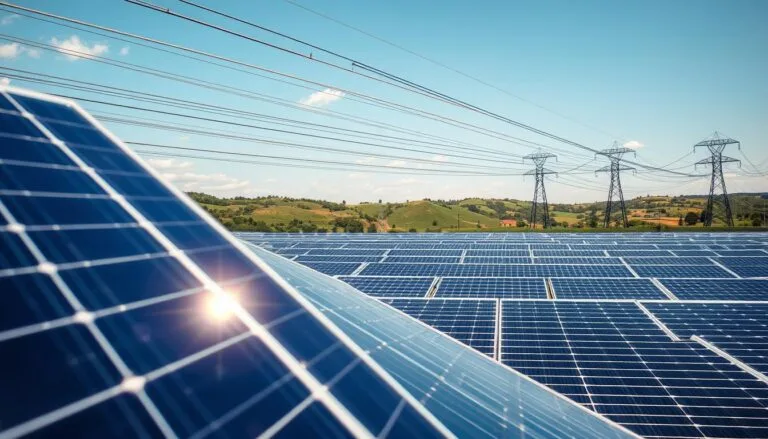
Adoption worldwide has grown because panels are now easier to source and install. You’ll see them on rooftops and solar farms, where improved module production and economies of scale have reduced costs and increased availability.
Typical solar panel features and homeowner benefits (illustrative)
| FeatureBenefit | |
| Efficiency (typical ranges) | Higher kWh output per square foot — modern modules commonly 18%–24% depending on type and year |
| Lifetime / Warranty | 25+ years performance warranty; panels typically produce useful power beyond that with gradual degradation |
| Weather Resilience | Durable performance across varied climates with proper selection (look at temperature coefficients) |
| Minimal Maintenance | Low upkeep — periodic cleaning and inspection keep output near rated levels |
| Adaptability | Suitable for rooftops, carports, and ground mounts; choose panel type by available roof size and sun exposure |
To see the financial side, consider a representative example: a 6 kW system using efficient panels rated ~22% on a well‑sited roof in a sunny U.S. city might produce roughly 8,000–10,000 kWh/year (actual output depends on sunlight hours, orientation, tilt, and losses). With local incentives and net metering, many owners reduce bills significantly and shorten payback time — check your local policies for precise numbers.
As countries shift toward renewable energy, solar panels are no longer just an add‑on appliance. They are a key component of resilient, low‑carbon energy systems. When evaluating options, look for up‑to‑date module datasheets (efficiency, temperature coefficient, degradation rate) and authoritative sources such as NREL or DOE to compare real-world performance and incentives.
The Evolution of Solar Panel Efficiency
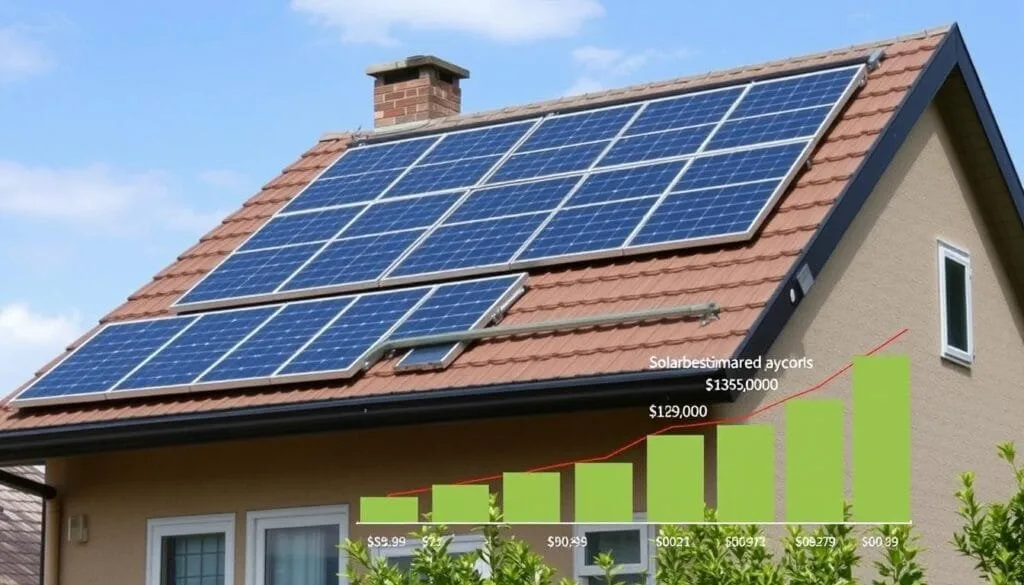
The story of solar panel efficiency traces a path from laboratory curiosities to widely deployed, highly efficient solar technology. Improvements in solar cells, module design, and manufacturing have steadily increased how much sunlightelectricity, shrinking the cost per watt and expanding practical applications.
The Pioneers: Early Solar Technology and Its Limits
In 1839 Alexandre Edmond Becquerel observed the photovoltaic effect, and early practical demonstrations followed in the late 19th century (Aleksandr Stoletov is credited with early cell work around 1888). Commercially usable solar cells appeared in the 1950s but were extremely costly and low in solar cell efficiency — on the order of a few percent.
Those early steps established the physics and materials research that later enabled modern solar technology.
Breakthroughs in Efficiency: How Modern Solar Panels Compare
Through the late 20th century and into the 21st, research and manufacturing advances (better silicon purification, cell architecture, and module engineering) drove panel efficiency upward. By the mid‑1980s, lab cells exceeded 20% efficiency; by recent years, commercially available modules commonly reach the high teens to low‑20s in percentage terms, while specialized concentrator and multi‑junction cells have achieved higher lab results.
Note the important difference: cell efficiencies reported in lab conditions (small area, controlled lighting, sometimes concentrated sunlight) typically exceed full module, rooftop, or system efficiencies experienced in the field due to temperature effects, wiring and inverter losses, and real weather conditions.
Record-Setting Solar Panel Models
Manufacturers and research labs have repeatedly set new records. Several companies (including Panasonic and Sharp historically, and specialized aerospace/defense labs) and research groups have produced cells above 25% efficiency in controlled tests. Residential module leaders such as the Maxeon series have reported lab figures near 24.9% and real‑world module figures slightly lower — always check current datasheets and independent test reports for the latest verified numbers.
Ongoing R&D continues to push the envelope, with experimental cells (multi‑junction or tandem designs under concentration) reporting much higher laboratory efficiencies; these results indicate possible future pathways to higher real‑world module performance.
| YearEfficiency AchievementsTechnological Advances | ||
| 1985 | Lab cells exceed ~20% | Improvements in cell design and silicon processing |
| 1992 | Commercial and lab milestones around 20%+ for some cells | Refinements in silicon types and cell architecture |
| 2020 | Advanced concentrator and multi‑junction cells >25% (lab) | Use of concentrator photovoltaic systems and tandem approaches |
| Current Trends | Experimental cell efficiencies (multi‑junction) well above single‑junction limits in labs | Innovation in tandem cells, heterojunctions, and N‑type silicon |
This timeline highlights major milestones but simplifies a complex research landscape — for authoritative historical data and current records see NREL or peer‑reviewed literature. To make this concrete: a module that gains 1–2 percentage points in real‑world panel efficiency can produce noticeably more kWh per year per square foot; for example, increasing module efficiency from 18% to 20% on a fixed roof area raises annual output proportionally (use local sun‑hours to estimate kWh).
Solar Panel Efficiency Explained
Modern photovoltaic systems are central to improving overall energy efficiency in buildings and power systems. Understanding solar panel efficiency — the share of incoming sunlight converted to usable electricity — is key to comparing modules, estimating system output, and calculating payback.
Efficiency figures vary by technology and model. High-end modules from manufacturers such as SunPower and Panasonic have historically reported top‑end efficiencies in the low‑20% range (verify against the latest datasheets — some current modules exceed 23% in lab conditions). Meanwhile, many commercially available modules fall between the high teens and low 20s percent in typical production lines.
| Type of PanelAverage EfficiencyTypical Temperature CoefficientCost per Watt (illustrative)Notable Feature | ||||
| Monocrystalline Silicon | ~18%–24% (varies by model/year) | Lower (better performance in heat) | $0.90–$1.50 | High wattage per size, suitable when roof area is limited |
| Polycrystalline Silicon | ~15%–18% | Higher (more heat sensitivity) | $0.80–$1.20 | Cost-effective upfront |
| Thin-Film | ~7%–14% (depends on material: CdTe, CIGS, a‑Si) | Moderate | $0.80–$1.50 | Flexible options for unusual surfaces; lower per‑panel efficiency |
Notes: cost ranges and average efficiencies are illustrative — market prices and module efficiencies change over time. Always consult recent market reports or vendor datasheets for precise cost and performance figures.
Government incentives can materially improve project economics. U.S. federal tax incentives and state rebates have varied over recent years; check current IRS guidance or local incentive databases to confirm eligibility and percent values. Also review module datasheets for temperature coefficients and degradation rates — these affect real‑world panel efficiency and annual kWh production, especially in hot weather.
Quick rule of thumb for estimating annual output: Panel efficiency × panel area × average annual full‑sun hours (adjusted for losses such as inverter and soiling) ≈ annual kWh. For precise system sizing, request manufacturer performance curves and perform a location‑specific production estimate.
Raising overall solar panel efficiency reduces required roof area and can lower project costs per installed kW and per kWh produced over the system’s lifetime — a key reason many homeowners and installers prioritize higher‑efficiency modules when roof area is limited or when seeking the most efficient solar panels available.
Understanding Solar Panel Types and Their Impact on Efficiency
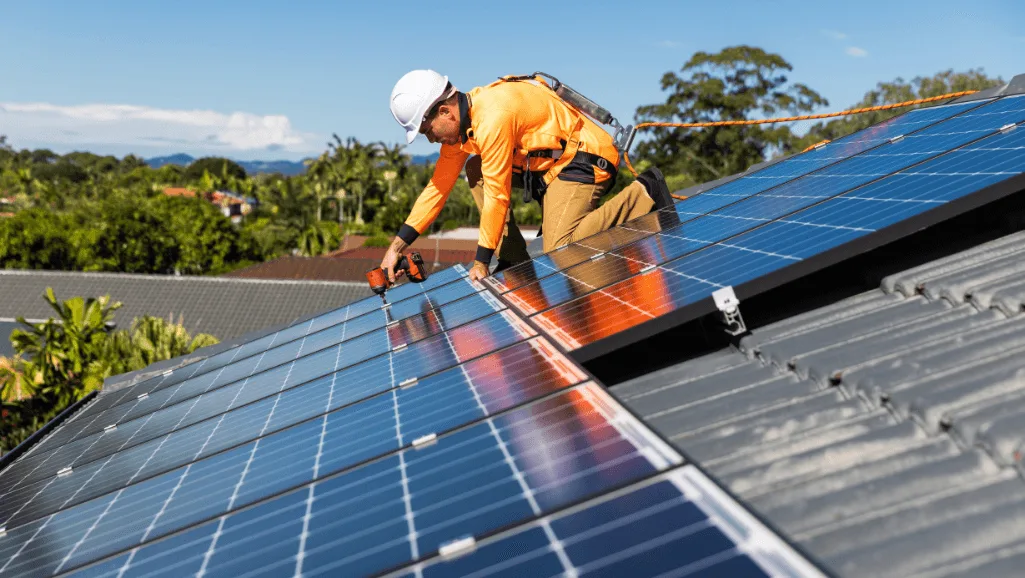
Selecting the right solar panel type is one of the most important decisions for maximizing solar panel efficiency and system value. Panel families—monocrystalline, polycrystalline, and thin‑film—have distinct tradeoffs in efficiency, cost, temperature performance, and expected output per square foot.
Monocrystalline Solar Panels: Leading the Efficiency Race
Monocrystalline modules generally offer the highest commercial efficiencies today. Modern monocrystalline modules commonly range from about 18% to 24% (some premium models exceed 24% in lab ratings). Their higher cell efficiency and dense packing mean more kWh per square foot, making monocrystalline panels the best option when roof size is limited or when homeowners want highly efficient panels for maximum production.
- Pros: high efficiency, lower degradation, good temperature coefficients (better performance in heat).
- Cons: higher upfront cost per panel compared with basic polycrystalline options.
Polycrystalline vs. Monocrystalline: A Cost-Benefit Analysis
Polycrystalline panels have historically been more budget‑oriented with typical efficiencies in the mid‑teens to high‑teens (roughly 15%–18% in many product lines). For large roofs where area is plentiful and up‑front cost matters most, polycrystalline can be a sensible choice — you trade some per‑square output for lower module price.
- Pros: lower cost per module, straightforward manufacturing.
- Cons: lower panel efficiency and usually slightly worse temperature performance than mono.
Thin-Film Solar Panels: When Flexibility Trumps Efficiency
Thin‑film technologies (CdTe, CIGS, a‑Si) offer flexibility and lower weight, with efficiency ranges that vary widely by material (commonly ~7%–14% for many thin‑film products). They are useful where conformable or lightweight panels are required (curved surfaces, some commercial installations), or where cost per area (not per watt) is the primary metric.
- Pros: flexible form factors, potentially lower production costs for certain technologies.
- Cons: lower module efficiencies and larger area required for the same kWh output.
Comparison snapshot:
| Type of Solar PanelEfficiency Range (typical)Cost-EffectivenessBest Use Scenario | |||
| Monocrystalline | ~18%–24% (modern modules) | Higher upfront cost but best output per square foot | Residential rooftops with limited area; high-efficiency needs |
| Polycrystalline | ~15%–18% | Lower module cost; more area required | Large roofs where budget matters |
| Thin-Film | ~7%–14% (varies by material) | Cost-effective for some large installations; flexible options | Large-scale arrays, flexible or unusual surfaces |
Additional considerations when comparing panel types:
- Temperature coefficient — panels with lower (less negative) coefficients lose less efficiency in hot weather.
- Degradation rate — panels with lower annual degradation keep producing near‑rated output for more years.
- Module warranties and third‑party performance tests — request datasheets and independent test reports to compare modules directly.
Decision matrix for homeowners: if roof area is constrained, prioritize monocrystalline or other highly efficient modules; if roof area is abundant and budget is tight, polycrystalline or lower‑cost modules may be appropriate; if unique mounting or flexibility is required, consider thin‑film options. Always compare per‑square and per‑kW costs, temperature performance, and long‑term degradation when choosing efficient solar panels for your project.
Solar Panels
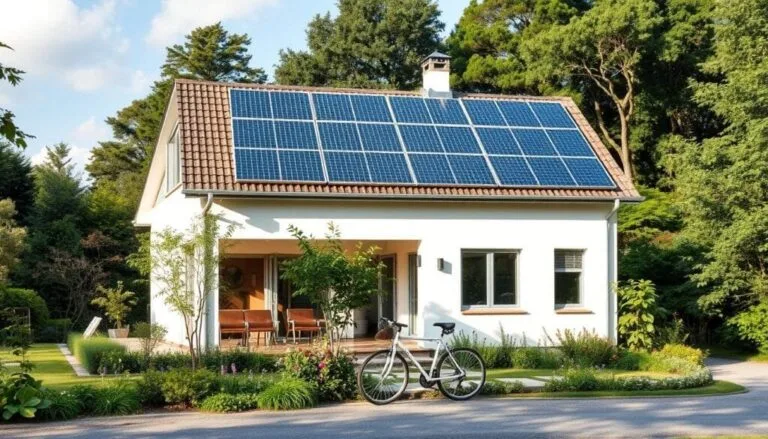
Solar panels are a cornerstone of modern eco-friendly solutions, converting sunlight into on‑site power and cutting grid electricity demand. Installation techniques, system components, and module efficiencies have all improved, making photovoltaic systems more reliable and cost‑effective than a decade ago.
Adoption has accelerated: utility and distributed solar installations expanded rapidly in the 2010s and 2020s. (For precise national and state installation figures, cite NREL or EIA data during the rewrite.) Typical residential system sizes vary by household consumption and roof area, but many U.S. homes install systems in the 5–8 kW range — a commonly cited average is roughly 7.15 kW for installations in several sun‑rich markets. System size should be chosen based on your annual kWh use, available roof size, local sunlight hours, and budget.
Example calculation (illustrative): a 7.15 kW system using modules at ~20% efficiency on a well‑sited roof in a sunny U.S. city (about 5.0 effective sun hours/day) roughly produces:
7.15 kW × 5.0 hours/day × 365 days × system factor (0.75 to account for losses) ≈ 9,780–9,900 kWh/year. Actual output depends on panel efficiency, orientation, tilt, shading, inverter losses, and local weather.
Incentives such as federal tax credits and state rebates have materially improved project economics. Federal policies have changed over recent years (for example, variations in the Investment Tax Credit percentage); verify current values on IRS and local incentive databases. These incentives, along with falling module and BOS costs since 2009, often make solar competitive with retail electricity in many regions.
Beyond bill savings, studies indicate solar installations can increase home value and reduce lifetime carbon emissions. Panel durability is strong: most modern modules carry 25‑year performance warranties and continue operating beyond that period with gradual degradation — typical warranties and expected lifetimes should be confirmed via manufacturer datasheets.
When planning a system, compare per‑kW and per‑square estimates, and request production modeling from installers that uses local irradiance data. A good installer will provide system sizing that balances roof area, desired annual kWh, panel efficiency, and cost to meet your goals.
The Latest Advancements in Photovoltaic Cells
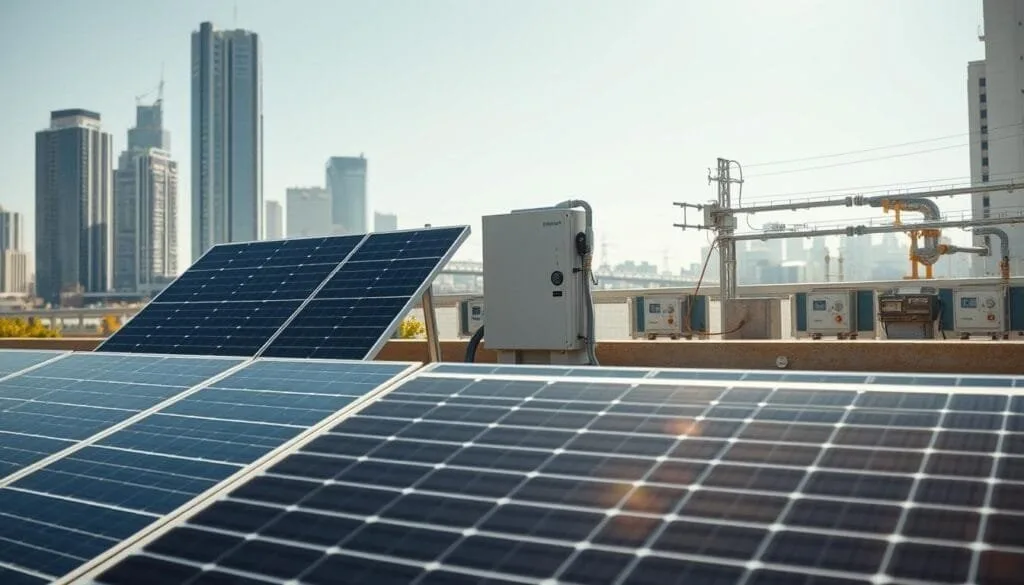
The solar energy sector continues to advance rapidly, with new photovoltaic technology improving panel efficiency and real‑world performance. Breakthroughs in N‑type silicon, tandem (multi‑junction) cells, and heterojunction architectures are enabling higher efficiencies at both the cell and module level — important developments for more efficient solar panels and lower cost per kWh over a system’s life.
N-Type vs. P-Type Silicon: A Paradigm Shift in Solar Technology
N‑Type silicon has gained traction because it is less susceptible to certain impurities and often shows lower degradation and better temperature performance than traditional P‑type wafers. For homeowners and installers, that can translate into more stable output over the years and slightly better performance in hot weather (check temperature coefficients on datasheets).
Tandem Cell Technology: The Future of Solar Efficiency?
Tandem cell approaches stack two or more absorber materials to capture a broader portion of the solar spectrum. In laboratory settings, tandem and multi‑junction cells have achieved substantially higher conversion rates than single‑junction silicon cells (lab records exceed single‑junction limits). While many tandem results are currently at the cell or concentrated‑PV stage, they point to pathways for modules that could eventually exceed current commercial module efficiencies — a potential route to significantly higher per‑square output and more highly efficient solar panels.
High-Efficiency Heterojunction Technology
Heterojunction (HJT) modules combine different silicon structures (for example, crystalline silicon with a thin amorphous silicon layer) to gain efficiency and reduce recombination losses. HJT and other advanced module technologies now compete with premium monocrystalline products, offering high module efficiencies, attractive temperature coefficients, and promising degradation profiles — useful where space is limited and higher performance per square foot matters.
| TechnologyRepresentative Efficiency (reported)Potential Applications | ||
| N‑Type Silicon (commercial modules) | High‑efficiency modules up to high 20s % in some lines (verify current datasheets) | Residential & commercial projects where reduced degradation and heat performance are priorities |
| Tandem / Multi‑junction (lab) | Lab cells >30% (varies by configuration); concentrated setups report higher numbers | Advanced commercial/utility R&D, future high‑efficiency modules |
| Heterojunction (HJT) | Competitive with premium modules (low‑ to high‑20s % for top modules) | Space‑constrained installations needing high kWh per square foot |
Practical notes for homeowners:
- Most current rooftop systems use improved monocrystalline or HJT‑based modules — tandem cells are promising but largely at the R&D or early commercial stage for residential use.
- Tradeoffs matter: higher efficiency often comes with higher module cost; weigh per‑square output, per‑kW cost, and lifetime degradation when selecting modules.
- Always verify whether quoted efficiencies are cell (lab) or module (realistic) figures; module and system losses (temperature, soiling, wiring, inverters) reduce lab numbers in the field.
For technical readers, consult NREL, peer‑reviewed publications, and recent manufacturer technical notes to verify current record figures and module‑level performance. These sources will also clarify whether reported efficiencies are cell, module, or concentrated‑PV results and provide the most up‑to‑date context on which technologies are ready for residential systems versus those still in development.
Optimizing Solar Panel Performance for Home Installations
Homeowners increasingly focus on maximizing the productivity of their solar panels by combining better panel efficiency with smart system design. Well‑designed solar energy systems — the right modules, inverters, and layout — boost annual output, lower lifetime costs, and support sustainable living goals across varying weather and site conditions.
Factors Influencing Solar Efficiency in Residential Settings
To get the most from a rooftop system, prioritize high‑efficiency panels, appropriate mounting hardware, and balance‑of‑system components. Microinverters or power optimizers reduce production losses from partial shading and module mismatch. Also consider inverter efficiency, wiring losses, and soiling: together these factors typically reduce theoretical output by 15%–30% versus lab ratings, so use system modeling for realistic estimates.
The Role of Installation Angle and Orientation
Orientation and tilt strongly affect annual production. In the Northern Hemisphere, orienting arrays toward true south and tilting near the local latitude is a practical rule; in the Southern Hemisphere orient toward true north. Trackers can increase daily capture (often used for ground‑mounted systems), but on most roofs fixed tilt optimized for local sun angles is simpler and cost‑effective. Example: a properly oriented array in a sunny region can deliver several percent more annual kWh versus a misaligned array — request production modeling from installers to quantify gains.
The Temperature Coefficients: Making the Most of Climate Conditions
Temperature impacts real‑world panel efficiency. The temperature coefficient (typically expressed as %/°C) tells you how much output falls as module temperature rises — e.g., a coefficient of −0.30%/°C means output drops 0.30% per degree Celsius above 25°C. In hot climates pick modules with lower (less negative) coefficients to preserve performance. Also allow ventilation under roof‑mounted modules to reduce operating temperature and losses.
Practical tips and maintenance checklist:
- Run a shading analysis before purchase; even 5% shading can cause disproportionate losses without optimizers.
- Choose panels with low degradation rates and solid warranties to preserve long‑term value.
- Schedule visual inspections and cleaning (frequency depends on local dust/pollen), and monitor inverter/production data monthly to spot issues early.
- For mixed climates, request installer simulations showing seasonal and temperature‑adjusted production to pick the best modules and system size.
Applying these measures helps homeowners improve delivered kWh per square foot, enhance system reliability, and maximize the financial and environmental returns of their efficient solar panels.
Choosing the Right Solar Panel Company for Sustainable Living
The sustainable power movement is expanding quickly, and selecting the right installer and products is essential to realize long‑term value from solar panels. Look for providers who combine strong technical expertise with transparent pricing and robust after‑sales support. (Example: regional vendors such as SunPower are often highlighted for warranties and service in specific markets—verify local reviews and disclosures before selecting a single vendor.)
When evaluating companies, prioritize these criteria:
- Local expertise and knowledge of regional permitting, interconnection, and weather‑related installation practices.
- Clear, itemized quotes that separate module, inverter, racking, and labor costs so you can compare per‑kW and per‑square estimates.
- Certifications and credentials (e.g., NABCEP), sample contracts, and documented warranty coverage — distinguish product warranties (modules), performance guarantees, and workmanship/installation warranties.
Transparent financing, equipment choices, and after‑sales monitoring make it easier to maximize panel efficiency and system output over time. Good installers will provide production modeling using local irradiance data, list expected degradation rates, and show per‑year kWh estimates so you can evaluate payback and lifecycle value.
Illustrative cost snapshot for comparison (market ranges vary)
| Panel TypeCost per Watt (typical range)Approx. 6 kW System Cost (before incentives)Expected Lifespan / Warranty | |||
| Monocrystalline | $0.90–$1.50/W | $5,400–$9,000 | 25+ years (performance warranty) |
| Polycrystalline | $0.80–$1.20/W | $4,800–$7,200 | 20+ years |
| Thin-film (CdTe, CIGS) | $0.80–$1.50/W | $4,800–$9,000 | 20–25 years (varies by technology) |
Notes: the ranges above are illustrative — regional labor, permitting, and supply chain factors affect final costs. Always request at least three quotes and a standardized production estimate to compare installers on equal footing.
Practical next steps (CTA suggestions): request three detailed quotes, ask for module datasheets showing efficiency and temperature coefficients, verify installer references, and confirm available incentives in your ZIP code. These steps will help you choose a company that delivers efficient solar panels, reliable production, and long‑term sustainable value.
Conclusion: Embracing a Bright Solar Future
The energy landscape is shifting rapidly, and solar energy solutions are at the forefront of that change. Well‑designed solar panels produce clean power, lower household energy bills, create jobs, and reduce greenhouse gas emissions — delivering both environmental and economic benefits.
Advances in solar panel efficiency and module design make the case stronger every year: higher‑efficiency modules reduce required roof area and often improve project economics. Financial incentives, falling equipment costs, and expanding installer networks further improve the business case for residential and commercial adoption.
Solar deployment grew dramatically in the early 21st century, driven by technology improvements and policy support — verify specific growth metrics and forecasts with authoritative sources like NREL, IEA, or the U.S. EIA for up‑to‑date numbers. Even where solar represented a modest share of total electricity in past years, long‑term projections show substantial growth through midcentury as systems scale and efficiencies improve.
Choosing efficient solar panels and a reliable installer lets homeowners capture more kWh per square foot, lower lifetime costs, and increase property value while contributing to a low‑carbon future. Consider requesting production estimates, module datasheets (efficiency, temperature coefficient, degradation rate), and multiple quotes to compare options.
FAQ
What defines the efficiency of solar panels?
How do monocrystalline and polycrystalline solar panels differ in terms of efficiency?
What role does panel angle and orientation play in efficiency?
Are there breakthrough technologies increasing panel efficiency?
What is the most efficient solar panel available today?
How do environmental conditions affect performance?
What are temperature coefficients and why do they matter?
How do I choose the right installer?
What are the benefits of investing in solar panels?
Are thin‑film panels a good alternative?
Next steps: request three quotes, collect module datasheets to compare panel efficiency, temperature coefficients and degradation rates, and check local incentives to improve project economics.