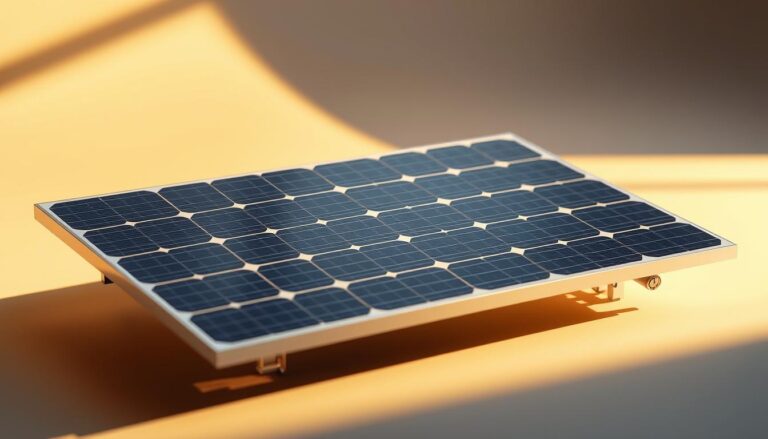
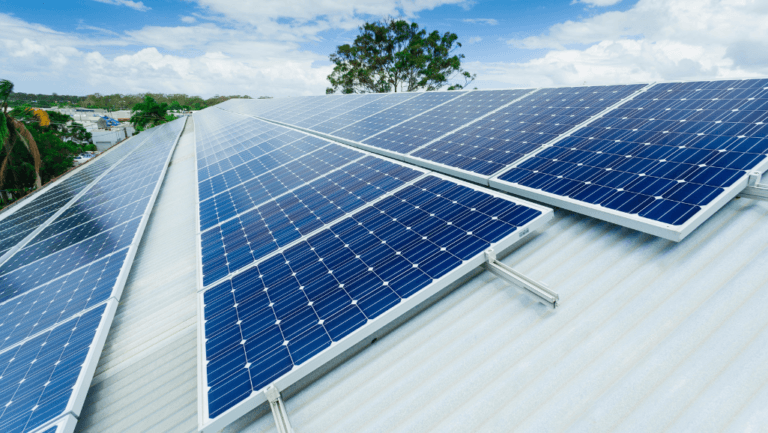
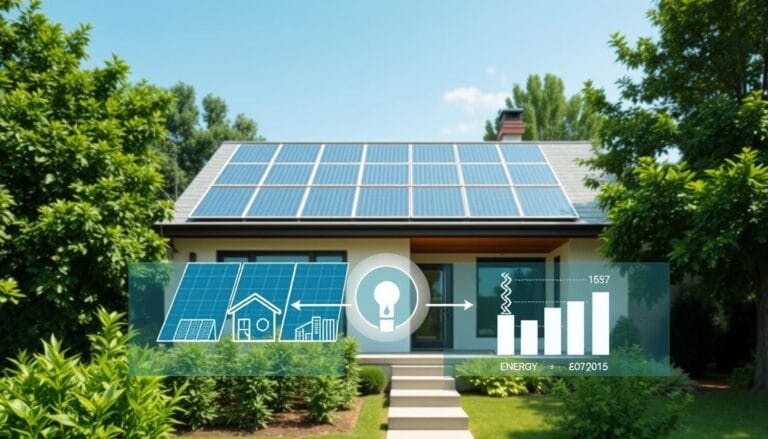
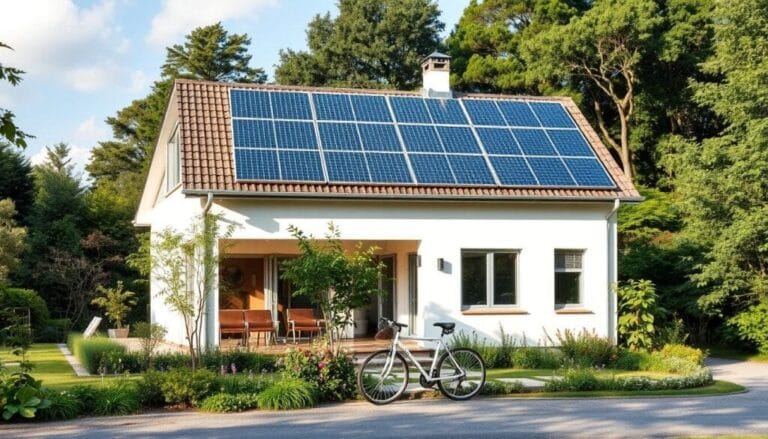
Solar panels are a cornerstone of modern solar power generation and a practical way to tap into clean solar energy. Using photovoltaic technology, panels convert sunlight into electricity, letting homes, businesses, and power plants use the sun as a reliable energy source.
The story of photovoltaic technology begins in the 19th century with Edmond Becquerel’s 1839 observation of the photovoltaic effect, and a major milestone came in 1954 when Bell Labs produced the first practical silicon solar cell. Since then, silicon-based solar cells and improvements in panel design have steadily increased output and lowered costs, so panels now provide electricity across residential, commercial, and utility-scale applications.
Key Takeaways
- energy solar.
- Solar panels convert sunlight into direct current (DC) electricity via the photovoltaic effect; an inverter then changes DC into alternating current (AC) for home and grid use.
- Individual solar cells make up panels; many panels together form a system that increases total solar power production and overall capacity.
- Modern panels and cells approach peak cell efficiencies near 25% in lab conditions, while real-world module efficiency is typically a bit lower.
- Net metering and other policies let homeowners export surplus electricity to the grid and receive utility credits in many areas (rules vary by location).
- Monocrystalline cells are generally more efficient than polycrystalline cells because they’re made from single-crystal silicon; panel selection balances efficiency, cost, and available roof area.
- Beyond electricity, solar technologies (photovoltaic and thermal) support applications such as water heating and combined systems that deliver both heat and power.
The Basics of Solar Energy Conversion
Understanding how solar energy conversion works begins with the photovoltaic effect, first observed by Edmond Becquerel in 1839. That underlying phenomenon lets solar panels capture solar radiation and convert it into usable electricity, turning sunlight into an on-site energy source for homes and larger systems.
The photovoltaic effect occurs when photons from sunlight strike a solar cell and transfer energy to electrons, freeing them to flow as electric current. This PV reaction is the core process behind solar panels and is what makes solar power generation possible at scales from a rooftop system to utility plants.
Understanding the Photovoltaic Effect
Most commercial solar cells use crystalline silicon because it effectively absorbs sunlight and supports the internal electric fields needed to produce current. When light hits the silicon, its energy excites electrons across the cell’s junctions; the resulting DC current can be combined across many cells in a panel and then converted to AC for home and grid use.
A Brief History of Solar Power Development
The science of solar energy conversion moved from laboratory curiosity to practical application in the 20th century — notably with the 1954 Bell Labs silicon solar cell, which proved PV could generate useful power. Since then, improvements in cell materials, manufacturing, and system design have increased production and lowered costs, enabling widespread solar power deployment.
As an example of real-world output, a typical 300 W rooftop panel will produce roughly 1.2–1.6 kWh per peak sun hour depending on location and tilt; multiply that by daily sun hours for an estimate of daily electricity production. Use local solar maps or an online calculator to estimate production for your area and system.
Photovoltaic Technology: From Past to Present
Today’s PV technology ranges from traditional crystalline silicon to emerging materials and tandem cells that aim to boost cell-level efficiency. Modern systems combine panels, inverters, and sometimes batteries to deliver reliable solar energy for residential, commercial, and utility-scale applications. As these systems improve, solar energy becomes an increasingly cost-effective and scalable energy source.
For readers: if you want an authoritative overview of the PV process and how much electricity you could generate, see the U.S. Department of Energy guide linked above or try an online solar potential tool for your specific roof or site.
The Green Credentials of Solar Power Generation
As solar panels spread across rooftops and fields, they play a major role in delivering clean solar energy and reducing reliance on fossil fuels. Operationally, solar systems produce electricity with near-zero emissions; however, a full lifecycle view — from raw-material extraction through manufacturing, transport, installation, operation, and end-of-life — gives a clearer picture of overall environmental impact.
Is Solar Energy Really Clean?
In everyday use, solar energy is very low-emission: once installed, panels produce electricity without burning fuels or releasing CO2. Life-cycle analyses (LCA) generally show an energy payback time for modern PV systems in the range of about 1 to 4 years depending on panel type and local solar radiation, after which the system delivers net clean energy for the remainder of its working life. Most panels are warrantied for around 25 years and commonly operate for 25–30 years or longer with gradual performance degradation.
Renewable and Sustainable: The Lifecycle of Solar Panels
Manufacturing PV modules requires materials (notably silicon derived from silica) and energy. That production phase accounts for the majority of upstream impacts, while operation is low-impact. Newer manufacturing practices and greater use of recycled inputs are steadily reducing embodied emissions and resource use. Recycling programs are expanding — Europe and parts of the U.S. now have pilot and commercial recycling routes for recovering glass, aluminum, and silicon — but infrastructure and cost-effective processes still need wider adoption.
Water and land use are practical concerns in some deployments: utility-scale plants and some tracking systems can increase water need for panel cleaning or vegetation management in dry climates. To reduce impacts, developers increasingly prefer brownfields, low-value lands, or agrivoltaic approaches that combine panels with agriculture to share land use and even reduce irrigation needs for certain crops.
In short, while solar power is not impact-free, its low-operational emissions, improving manufacturing footprint, long energy payback, and evolving recycling solutions make it a strong renewable energy source. If you’re considering solar, check local recycling options, select reliable manufacturers with transparent environmental data, and use a solar-payback calculator to estimate your system’s net energy and climate benefits.
Solar Panel Composition and Functionality
At the heart of renewable energy, understanding solar panel composition and photovoltaic cell functionality helps explain how we turn sunlight into usable electricity. These design and material choices determine a panel’s real-world performance, durability, and suitability for different applications.
Silicon remains the dominant material in commercial PV modules because crystalline silicon efficiently absorbs solar radiation and supports the internal electric fields that produce current. Follow the link for a deeper technical primer on photovoltaic principles: photovoltaic effect.
The Role of Silicon in Photovoltaic Cells
Most solar cells are built from silicon doped to form n-type and p-type regions; together these create the junction and internal electric field that separates charge. When photons strike the cell, that field directs freed electrons into a circuit, generating DC power. Materials science and cell architecture — from passivation layers to back-surface fields — directly affect how much of the sun’s energy a cell can convert.
How Photons Trigger Electricity Production
Photons from sunlight deliver energy to electrons in the silicon lattice. That energy frees electrons, allowing them to flow as an electric current when the cell is connected in a circuit. The produced current is direct current (DC); an inverter is normally used to convert DC to alternating current (AC) for homes, commercial buildings, and the grid.
Recent research (including work at leading universities and labs) focuses on lighter, higher-efficiency materials and multi-junction approaches that stack absorbing layers to capture more of the solar spectrum. Combining panels with energy storage, such as lithium-ion batteries, increases system reliability and lets solar energy meet demand after sunset.
| AspectImpact on EfficiencyExample | ||
| Temperature Dependency | Typical module temperature coefficient is ~0.3–0.5% loss per °C above 25°C | Install with ventilation/cooling to reduce heat losses |
| Soiling on PV modules | Can reduce power output by up to ~5% (location-dependent) | Regular cleaning or hydrophobic coatings |
| Derate Factor | System-level derate often ranges from ~80–90% depending on design | Optimize wiring, inverter sizing, and layout |
| Inverter Efficiency | Modern inverters commonly exceed 95–98% peak efficiency | Choose high-quality inverter with good MPPT tracking |
Key takeaway: many small losses add up — module temperature, dirt, wiring losses, shading and inverter inefficiency combine into the system derate. Designers aim to reduce each loss to maximize the installed capacity and yearly energy yield.
The Photovoltaic Process: How Do Solar Panels Make Electricity

The photovoltaic process starts at the cell level and scales to modules and arrays. Cells are connected into modules (panels), and panels are wired into arrays to meet a project’s power and energy goals. Proper system design — tilt, azimuth, row spacing, and stringing — affects annual output and site-level performance.
Below is a snapshot of common cell technologies and their typical real-world efficiencies. Note that lab cell efficiencies are usually higher than module efficiencies because real modules include interconnects, glass, frames, and encapsulants that slightly reduce net performance.
| Type of CellTypical Module EfficiencyTypical Application | ||
| Monocrystalline Silicon | ~20–23% | Residential and commercial rooftops; best efficiency per area |
| Polycrystalline (Multicrystalline) | ~15–19% | Cost-conscious residential and commercial installations |
| Thin-film (CdTe, CIGS) | ~11–14% | Large-area, flexible, or building-integrated projects |
| Perovskite / Tandem (R&D) | Lab cells >25% possible; modules emerging | Emerging and future high-efficiency applications |
Monocrystalline modules give the highest output per roof area, while polycrystalline and thin-film offer cost or integration advantages depending on the project. Perovskite tandems show strong research promise for boosting module efficiency further but are generally still maturing for long-term field reliability.
Example — temperature effect: a 350 W module with a -0.4%/°C coefficient operating at 45°C (20°C above standard test conditions) can lose about 8% of nameplate output at that temperature (0.4% × 20°C = 8%). This simple calculation shows why site climate and ventilation matter for annual energy production.
To keep improving overall system output, manufacturers and engineers focus on material advances, anti-reflective coatings to capture more sunlight, better module packaging to reduce degradation, and smarter system design to lower soiling and shading losses. Want to compare panel types side-by-side? Use a buyer’s checklist to weigh efficiency, warranty, degradation rate, and cost per watt for your specific roof or area.
From DC to AC: The Inverter’s Role in Solar Power
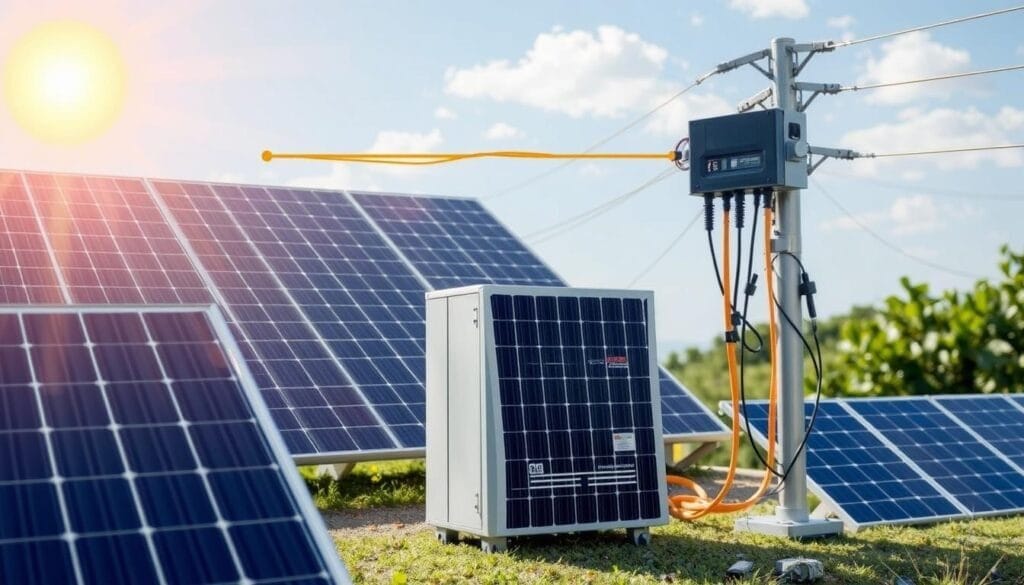
Solar power generation starts at the panel but the inverter is the component that turns the system’s output into usable household electricity. Solar panels produce direct current (DC); inverters convert that DC into alternating current (AC) so you can run appliances, feed the grid, or charge batteries. Modern inverters also add monitoring, safety, and smart-grid features that improve overall system performance.
Because the grid and virtually all home devices expect AC, an inverter is essential — without it the DC produced by panels can’t be used directly. Inverters also perform voltage regulation, maximum power point tracking (MPPT), and safety isolation to keep systems efficient and code-compliant.
Why Alternating Current is Essential for Home Use
Alternating current is the standard for power delivery because it is efficient to transmit and easy to step up or down with transformers. Converting the DC from solar panels to AC via an inverter lets homeowners use generated solar energy immediately, export surplus generation to the grid (where allowed), or route it to storage for nighttime use.
The Inverter – A Critical Component for Energy Conversion
Inverter types vary by scale and architecture: microinverters attach at the panel level for per-panel optimization; string inverters handle multiple panels together; central inverters serve large arrays. Hybrid or battery-ready inverters integrate energy storage to supply power at night or during outages. Choose an inverter based on system size, shading, future expansion plans, and whether you want panel-level monitoring or simpler centralized control.
Efficiency in Solar Panel Electricity Production

The drive for improved solar electricity production centers on better cell materials, smarter panel packaging, and system-level design that maximize yearly energy yield. Ongoing solar technology advances have steadily increased module power ratings and reduced lifetime degradation.
Factors Affecting Solar Panel Efficiency
Panel efficiency depends on several factors: cell chemistry and manufacturing quality, ambient temperature, amount of direct sunlight, shading, and how clean the modules remain. Monocrystalline panels typically deliver the highest efficiencies (often ~20–23% for good-quality modules) while polycrystalline and thin-film options trade some efficiency for lower cost or specific installation advantages.
Installation details — tilt, orientation, row spacing, and local climate — matter as much as panel choice. Hot climates reduce module output because modules lose a small percentage of output per °C above standard test conditions; proper system design and ventilation can reduce heat-related losses.
Advancements in Solar Technology for Better Efficiency
Improvements such as anti-reflective coatings, PERC cell structures, bifacial modules, and higher-efficiency cell architectures have increased module output. Typical modern module power ratings commonly fall between about 250 W and 370 W, with premium modules reaching higher. Manufacturers also focus on lowering annual degradation rates (often ~0.4–0.6% per year) so systems keep producing near their rated output for decades.
| Panel TypeEfficiencyAnnual DegradationTypical Power Output | |||
| Monocrystalline | ~20–23% | ~0.4–0.6% | 320–375 watts |
| Polycrystalline | ~15–19% | ~0.4–0.6% | 240–300 watts |
| Thin-film | ~11–14% | Varies | <240 watts |
As solar technology advancements continue, overall system production improves — higher-efficiency panels mean more power per roof area and a better return on investment.
Understanding Solar Panel Efficiency
Solar panel efficiency measures how much of the sun’s energy striking the panel converts into electricity. Most consumer modules perform below 23% module efficiency, though top brands and high-end cells approach those upper ranges under ideal conditions. Efficiency is only one factor; cost per watt, warranty length, degradation rate, and installer quality all affect long-term value.
Temperature and shading are two critical operators’ concerns. While per-degree temperature impacts on output are modest (see module temperature coefficients), site-level annual losses from high heat or persistent shade can add up to significant reductions in total yearly generation. PERC and other cell-level improvements have increased conversion efficiency and helped reduce losses.
| Panel TypeAverage EfficiencyTemperature CoefficientCost per Watt (typical) | |||
| Monocrystalline Silicon | 20%–23% | Lower (better) | ~$2.50–$3.00 |
| Polycrystalline Silicon | Below 20% | Higher (worse) | ~$2.00–$2.80 |
Panel and system costs have fallen dramatically over the past two decades, bringing solar energy within reach for many homeowners and businesses. Incentives like the federal tax credit can further reduce upfront costs. Regular cleaning and quick repairs help preserve production, and researching ceramic or anti-soiling coatings can reduce maintenance needs.
Practical tip: when comparing quotes, ask installers for estimated annual kilowatt-hours (kWh) produced for your location, expected degradation, inverter efficiency, and warranty coverage — these items tell the real story about long-term performance and value.
Scaling Up: Solar Farms and Their Impact on Renewable Energy
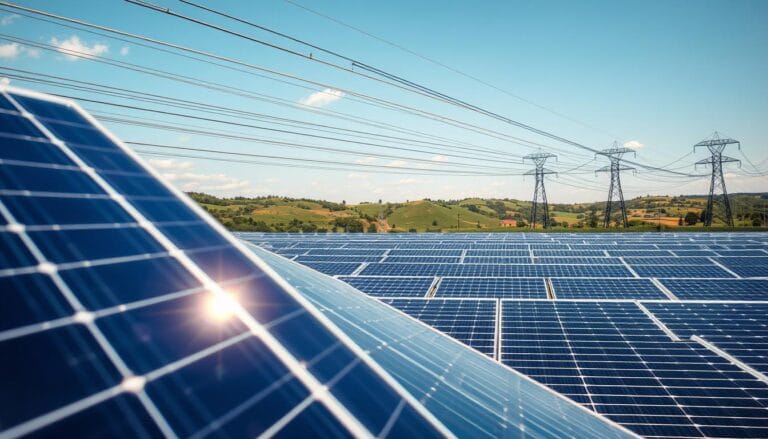
The growth of solar farms is reshaping how we produce and distribute renewable energy sources. Utility-scale arrays capture the sun’s energy at large area scales to deliver bulk power to grids, providing a low-carbon alternative to fossil fuels and conventional power plants.
What Constitutes a Solar Farm?
A solar farm is a large installation of many solar panels wired into arrays that generate electricity for the grid rather than a single building. These utility-scale projects vary in size and capacity — from community solar sites of a few megawatts to sprawling utility facilities that add hundreds of megawatts of capacity. For example, large facilities often quote numbers like “homes powered per year” to communicate scale — verify project-specific claims (such as the Oberon example) against the original developer data for accuracy.
The Role of Solar Farms in Clean Energy Production
Solar farms supply large amounts of clean energy and help reduce emissions tied to coal and gas-fired generation. National targets and modeling scenarios envision a much larger share of electricity coming from solar by mid-century, although specific projections (for example, “40% by 2050”) depend on policy, storage deployment, and grid upgrades. As developers scale up, innovations like agrivoltaics — co-locating panels with crops — optimize land use and can increase the combined value of the site.
Community-scale projects offer local benefits: distributed generation, local jobs, and opportunities for residents who can’t install rooftop panels. Utility projects deliver bulk generation to the grid, while emerging models blend energy and agriculture to balance food production and energy output.
| FeatureUtility-Scale Solar FarmCommunity Solar FarmAgrivoltaic Systems | |||
| Size | Hundreds of acres; large capacity | Approx. 1–10 MW typical | Varies; integrated with crop areas |
| Primary Benefit | Massive electricity generation | Localized energy distribution and access | Dual use: energy + agriculture |
| Environmental Impact | Reduced carbon footprint vs. fossil fuels; land-use trade-offs | Supports local renewable initiatives | Can enhance biodiversity and reduce water needs for some crops |
| Example | Large utility farms worldwide | Community solar projects across regions | Jack’s Solar Garden, Colorado (case study) |
Best practices for siting large projects include prioritizing degraded or low-value lands, avoiding high-conservation areas, and using dual-use approaches where appropriate. These strategies reduce conflicts with agriculture and biodiversity while expanding clean generation capacity.
Environmental Impact and Sustainability of Solar Power
Assessing the sustainability of solar energy requires a lifecycle view. Operationally, PV systems produce electricity with minimal direct emissions. However, module manufacturing, balance-of-system components, transport, and end-of-life handling all contribute to the full environmental footprint.
Manufacturing PV modules uses energy and materials — notably silicon and metals such as aluminum and copper — and can have localized impacts (land disturbance, water use) if not managed carefully. Large solar projects can change land cover and soil dynamics; in water-stressed regions, cleaning and vegetation management may increase local water demand. Developers increasingly adopt dry-cleaning methods, water-efficient maintenance, or siting strategies that minimize water needs.
Recycling is a growing priority: programs in Europe and pilot initiatives in the U.S. are recovering glass, aluminum frames, and some semiconductor materials. Wider deployment of economically viable recycling and circular-materials strategies will cut upstream resource demand and lower lifecycle emissions over time.
Policy and planning matter: clear rules, incentives for recycling, and land-use guidance help ensure that solar farm expansion supports both climate goals and local environmental values. For communities and planners, consider these practical steps: favor previously disturbed sites, require biodiversity-friendly fencing and groundcover, and seek agrivoltaic designs where beneficial to share land resources.
In short, while solar farms contribute significant clean energy and reduce reliance on fossil fuels, responsible siting, water-aware operations, improved manufacturing practices, and robust recycling systems are essential to maximize their climate and community benefits as deployment scales worldwide.
Global Solar Power Generation: Leaders in Solar Energy

The global solar energy industry has expanded rapidly as countries scale up solar power generation to meet climate and energy goals. China, the United States, Japan, Germany, and India lead deployment and innovation, driving down costs and increasing the share of solar in national electricity mixes.
Who Produces the Most Solar Power?
China tops the list with very large utility projects and rapid annual additions. Landmark sites such as the Tengger Desert Solar Park are often cited to illustrate scale (verify project-specific “homes powered” metrics against developer data). India also hosts massive sites like the Bhadla Solar Park and has ambitious targets that push national capacity upward — for example, India’s broader renewable targets (including solar) aim to dramatically expand clean generation by 2030.
Remember: “homes powered” is a shorthand based on annual energy production divided by an average household consumption figure; it helps communicate scale but varies with assumptions about household use and local climate.
Emerging Trends in Global Solar Energy Production
Key trends include higher-efficiency modules, falling costs, expanded storage integration, and policy support that enables grid integration at scale. Countries are experimenting with agrivoltaics (co-locating crops and panels) to optimize land use and combine food and energy production. Community solar projects and distributed generation also increase access where rooftop installation is impractical.
Investment and innovation remain crucial to address solar’s variability and end-of-life challenges for modules. Storage, grid upgrades, and recycling infrastructure are the supporting systems that let solar move from a niche into a dominant energy resource in many regions of the world.
FAQ
How do solar panels use photovoltaic technology to generate electricity?
Can you explain the photovoltaic effect?
How has solar power developed over the years?
How has photovoltaic technology advanced from past to present?
Is Solar Energy Really Clean?
How sustainable and renewable is the lifecycle of solar panels?
How does silicon play a role in photovoltaic cells?
What happens when photons trigger electricity production?
What is the photovoltaic process in solar panel electricity generation?
Why is alternating current essential for home use?
What is the role of an inverter in the conversion of solar energy?
What factors affect the efficiency of solar panels?
What technological advancements have led to better solar panel efficiency?
How is solar panel efficiency measured and improved?
What constitutes a solar farm?
How do solar farms contribute to clean energy production?
What are the environmental impacts of solar power?
Who produces the most solar power globally?
What are the emerging trends in global solar energy production?