...

Discover the Environmental Benefits of Solar Energy

Renewable energy is reshaping how we power our lives, and solar energy sits at the forefront of that shift thanks to its clear environmental benefits. Choosing solar power reduces reliance on fossil fuels, lowers emissions, and helps protect the environment — not just now, but for generations to come.

The U.S. Department of Energy’s Solar Energy Technologies Office is funding research and guidance to ensure solar deployment protects local ecosystems and wildlife while maximizing sustainable energy benefits. Their work helps developers and communities plan projects that balance clean energy production with habitat conservation.

A DOE analysis finds that a deeply decarbonized, carbon‑neutral electric grid by 2035 is achievable with rapid deployment of wind, solar, storage, and other clean technologies; importantly, meeting that target would require roughly 0.3% of U.S. land for solar and related infrastructure — a relatively small footprint compared with the benefits of replacing fossil-based generation. For example, a utility-scale 100‑MW solar farm typically occupies a few hundred acres, illustrating how scaling up can stay land-efficient.

Many modern projects also include habitat and pollinator plantings or dual-use approaches (like grazing), which improve biodiversity while producing electricity. Homeowners and site owners interested in practical steps can read our guide on how solar helps local ecosystems to learn simple actions and incentives that support both energy and nature.

Key Takeaways

  • Solar energy delivers clear environmental benefits of solar energy by cutting greenhouse gas emissions and reducing reliance on fossil fuels.
  • Strategic solar development can meet large electricity needs while using roughly 0.3% of U.S. land, keeping the overall land footprint small.
  • Avian monitoring and bird-friendly designs are essential to understand and mitigate solar development impacts on wildlife.
  • Integrating grazing and native plantings beneath panels improves ecosystem health and soil conditions while maintaining energy production.
  • Pollinator habitat projects at solar sites support biodiversity and sustain critical wildlife populations.
  • Research into stormwater management is producing best practices that protect soil and water at solar installations.
  • Material innovations and thoughtful design can simplify PV and solar panels recycling, boosting environmental stewardship across the panels’ lifecycle.
  • Equity and environmental justice are central to solar technology deployment, ensuring communities share the benefits of clean energy.

Read on to learn how these key points are supported by research, policy, and real-world projects.

Understanding Solar Energy and Its Positive Impact on Ecosystems

The world is fighting climate change, and solar energy is one of the most scalable clean energy solutions available today. Solar energy systems generate electricity without burning fuels, which cuts air pollution and reduces greenhouse gas emissions compared with fossil-fuel generation. As a renewable energy source, solar helps communities lower their carbon footprint while producing reliable power from the sun.

The Role of Solar Energy in Carbon Sequestration and Pollination

Beyond producing low‑carbon electricity, many solar sites are being designed to support on‑site carbon sequestration and pollinator habitat. For example, native perennial plantings under and around arrays can build soil organic carbon over time while providing forage and nesting resources for bees and other pollinators. These dual‑use approaches let panels generate electricity and create habitat that supports local agriculture and biodiversity.

Improving Air Quality with Reduced Greenhouse Gas Emissions

Replacing generation from coal or natural gas with solar panels reduces emissions of CO2 and pollutants such as NOx and particulate matter, improving local and regional air quality. Cleaner air translates into measurable public‑health benefits — fewer respiratory and cardiovascular events — because solar power displaces polluting fossil fuels in the energy mix.

Ground and Stormwater Management through Solar Installations

Thoughtful site design for solar installations can protect soil and manage stormwater effectively. Vegetative groundcovers beneath panels reduce erosion and increase infiltration; properly graded layouts and stormwater controls prevent runoff and protect downstream waterways. In many climates, panels also moderate surface temperatures and soil moisture, creating site‑specific microclimates that can benefit certain plant communities.

Strategies for Eco-Conscious Solar Development

Implementing solar energy in ways that protect ecosystems and deliver the benefits solar energy promises requires careful planning. Thoughtful site selection, clear permitting, and community engagement reduce impacts while maximizing the energy and environmental returns of solar panels. When government agencies, developers, landowners, and local stakeholders collaborate, projects deliver clean energy and measurable environmental benefits.

Reducing upfront costs and lifecycle impacts is also essential. That means choosing efficient systems and materials, tapping available tax incentives, and designing projects for long-term value — lower electricity bills, stronger resilience, and faster return on investment. For DIY tips and basic cost-saving ideas, see the Solar Powers World guide linked above.

BenefitDescriptionImpact
Long-term Cost SavingsReduction in electricity billsSignificant financial savings for businesses and homeowners over time
Energy IndependenceReduced reliance on external power sourcesEnhances community resilience and stability in energy supply
Environmental ConservationLow operational water use and negligible on-site greenhouse gas emissionsPreserves natural resources and protects ecosystems compared with fossil fuels
Stimulation of Local EconomiesCreates local jobs in installation, operations, and maintenanceBoosts sustainable economic growth without degrading the environment
Tax Incentives and RebatesFederal and state programs that lower installation costsSpeeds up ROI and makes home and commercial projects more affordable

Quick how-to checklist for eco-conscious developers and site owners:

  • Prioritize previously disturbed or low‑conflict sites to minimize habitat loss and footprint.
  • Run early ecological and stormwater assessments during permitting to avoid surprises.
  • Design panels and racking to allow vegetation, grazing, or pollinator habitat beneath arrays.
  • Specify recyclable materials and plan for end-of-life panel recycling to reduce industry waste.
  • Engage local communities and environmental groups early to align project benefits and address concerns.

These practical steps help projects deliver clean energy while protecting land and water. Eco-conscious solar development supports renewable energy goals, reduces the overall footprint of power production, and aligns with international climate commitments like the Paris Agreement (see linked Oxford Academic analysis for policy context).

Action for developers: consult your local permitting guide and include an ecological management plan during the design phase to both reduce environmental impacts and maximize the long-term benefits of solar deployment.

Solar Energy’s Interaction with Wildlife and Habitats
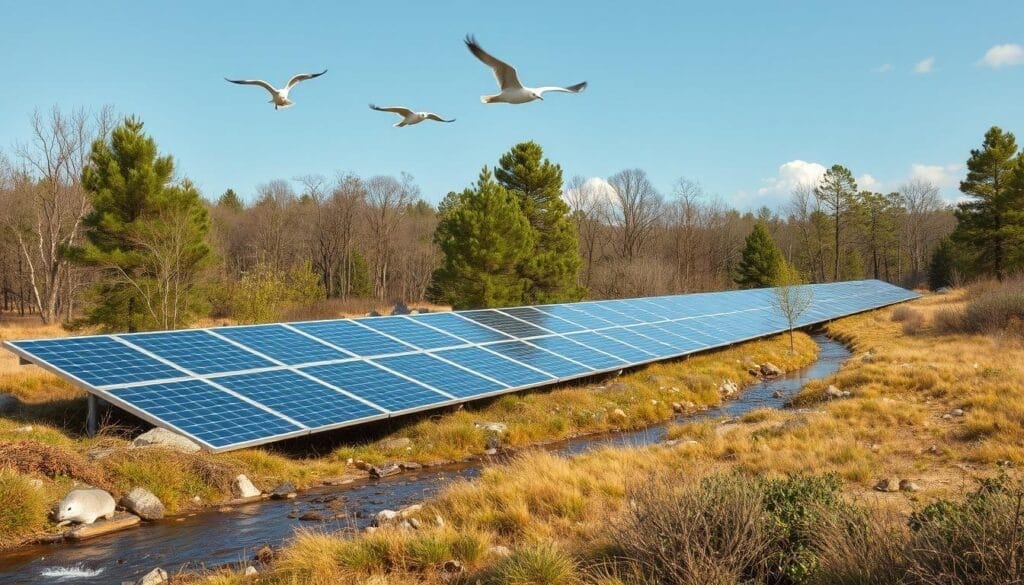
Solar Energy Installation Wildlife Protection

The rapid expansion of solar energy delivers major climate and air-quality benefits, but projects must be planned to avoid unintended harm to wildlife and habitats. Thoughtful siting, design, and management let developers produce clean energy from panels while protecting and even enhancing local ecosystems.

Monitoring and Protecting Avian Species in Solar Project Areas

Active monitoring and targeted mitigation reduce risks to birds. Rather than vaguely “not harm birds,” best practices include early avian surveys, timing construction outside key nesting seasons, and applying bird‑friendly design measures (for example, reducing reflective surfaces and adjusting layout to avoid flight corridors). The DOE’s findings on solar impacts compile guidance that helps prioritize low‑conflict sites and practical design choices for avian protection.

Maximizing Environmental Benefits While Minimizing Impacts

Maximizing benefits means pairing energy production with habitat stewardship. Converting degraded or low‑value land to solar can limit ecosystem disruption, while habitat integration—such as native pollinator plantings beneath arrays or managed grazing—can increase biodiversity and improve soil health. These dual‑use systems allow solar panels to generate electricity and support local plants and wildlife.

Proven mitigation measures include establishing native buffer zones, using wildlife‑permeable fencing, and scheduling construction to avoid sensitive periods for species. Examples from pilot projects show increased pollinator abundance and richer groundcover when native species and adaptive management are part of the design.

Collaboration is essential: developers should engage conservation organizations, landowners, and local communities early to align project goals, carry out ecological surveys, and implement monitoring and adaptive management plans. Early planning reduces risk and improves outcomes for both the energy system and the environment.

AspectStrategyBenefit
Land UseUtilizing degraded landReduces ecosystem disruption and preserves higher‑value habitat
Avian ProtectionImplementing bird‑friendly designs and monitoringReduces collisions and disturbance to birds
BiodiversityEnhancing habitat integration with native plantsIncreases local species diversity and pollinator abundance
Community EngagementPartnering with conservationists and residentsEnsures project alignment with ecological and social needs

With modern strategies and adaptive management, solar energy and nature can coexist—and in many cases, solar projects can enhance local habitats. Residential and community solar examples show how smaller systems can incorporate native plantings and pollinator habitat, pointing toward a future where panels support both energy and ecological goals.

Stormwater Management and Soil Health in Solar Facilities

solar power environmental impact

As solar energy deployment expands, thoughtful stormwater management and attention to soil health are critical to maximizing environmental benefits. Large utility systems can alter local hydrology if sites are not designed and managed to control runoff, encourage infiltration, and protect soil structure. Researchers such as Lauren McPhillips and Nasim Yavari are publishing applied studies that inform better site practices.

Several states have updated regulations to address these concerns: for example, Pennsylvania released new guidance in 2022 for stormwater at solar farms that emphasizes vegetation, infiltration, and minimizing concentrated runoff to reduce flood risk and help groundwater recharge.

Field research shows site‑specific outcomes. A study in central Pennsylvania reported roughly 19% greater topsoil moisture beneath arrays at the sampled sites, a change tied to shading and altered evapotranspiration; context such as soil type, panel tilt, and vegetation management affected results. In arid regions like parts of Arizona, partial shading from panels has been observed to reduce surface evaporation and in some cases support understory plant growth—again showing that effects depend on climate and management.

These findings demonstrate the value of site‑specific design: vegetative groundcovers, low‑impact grading, infiltration basins, and contouring can limit erosion and support healthier soils. Rooftop solar offers a complementary strategy in urban areas—rooftop panels generate electricity without changing ground hydrology or soil, preserving natural water cycles at-grade.

Recommended best practices for developers and land managers include early stormwater and soil assessments, incorporating native groundcovers or pollinator mixes beneath arrays, designing for infiltration and controlled runoff, and monitoring soil moisture and erosion over time. Applying these site‑specific methods reduces environmental harm and strengthens the positive conservation outcomes of solar production.

Solar Panels Benefits: Low Energy Payback Periods

Homeowners and businesses should understand a key environmental benefit of solar panels: short energy payback periods (EPBT). EPBT is the time a system needs to generate the same amount of energy that was consumed during its manufacture, transport, and installation. For modern PV systems in many U.S. locations, EPBT commonly ranges from about 1 to 4 years, depending on panel type, local solar resource, and system design — far shorter than the lifecycle energy recovery period for many fossil‑fuel power technologies.

The solar energy advantages become clearer as module efficiency improves. New PV technologies, including higher‑efficiency silicon modules, push commercial panel efficiencies upward (many modern modules exceed ~19–22% depending on type), which reduces EPBT because panels produce more electricity per square foot.

Advancements in Solar Panel Efficiency and Production

Innovative Solar Industry

Higher efficiencies and improved manufacturing mean panels produce more electricity for the same embedded energy. Innovations in module design, manufacturing scale‑up, and U.S. production—plus improvements in system components and balance-of-system design—shorten EPBT and cut lifecycle impacts. For example, more efficient panels and optimized racking reduce total land and material needs while increasing electricity production per installed kilowatt.

Continual Reduction in Solar Panels’ EPBT

Reducing EPBT also depends on circular practices: domestic production, lower‑carbon manufacturing, and better end‑of‑life recycling all reduce carbon emissions tied to panel production and transport. Studies by NREL and other lifecycle assessments show that over their lifetimes, solar systems avoid substantial CO2 and sulfur dioxide emissions compared with fossil generation, making them an effective clean energy solution.

Practical takeaway: selecting higher‑efficiency panels and siting systems where they generate abundant sunlight shortens the time to “pay back” embedded energy and accelerates net emissions savings. For typical home solar installations, this translates into faster environmental payback and quicker financial returns when paired with incentives — reinforcing why home solar is a strong choice for both homeowners and the planet.

The Comparison: Solar Photovoltaic vs. Solar Thermal Energy
Comparative Analysis of Solar Energy Technologies

Choosing between solar photovoltaic (PV) and solar thermal depends on whether you need electricity or heat. Both technologies deliver renewable energy benefits and reduce reliance on fossil fuels, but they operate differently and suit different applications.

AspectSolar Photovoltaic (PV)Solar Thermal
Basic FunctionConverts sunlight directly into electricityAbsorbs sunlight to produce heat
Efficiency RateCommercial modules commonly range from about 15% to 22% (higher for premium modules)Useful thermal efficiencies vary widely (20%–70%) depending on design and application
Lifespan25–30 years for typical PV systems20–25 years depending on components and maintenance
Application ScaleScalable from small rooftop home solar to large utility power plantsBest suited for water heating, district heating, industrial process heat, and concentrated solar power
Cost ConsiderationsHigher initial investment for complete systems but falling costs and low maintenanceCan have lower initial costs for simple thermal systems, but high‑temperature setups and CSP can be costly
Space RequirementsWhole‑home PV systems typically require several hundred square feet (varies by energy needs and panel efficiency)Space needs vary by system; some thermal systems are compact, others (CSP) require large fields
Primary ChallengeIntermittency of electricity generation without storageComplexity of installation and maintenance for high‑temperature systems; best where heat demand exists

Solar photovoltaic systems are the go‑to choice when you need electricity for homes, businesses, or grid power. They scale well, pair easily with batteries, and reduce the need for fossil‑fuel generation.

Solar thermal systems excel where heat is the primary need — for water heating, industrial processes, or heat storage — and can provide efficient, low‑carbon thermal energy that offsets fossil fuel use.

Decision tip: choose PV when your priority is electricity generation and flexible deployment (rooftops to large plants); choose solar thermal when you have a persistent heat demand that can directly replace fossil‑fuel burners. Both play complementary roles in decarbonizing the energy system and cutting carbon emissions.

Advancements in Solar Technology Over the Decades

Solar technology has advanced rapidly, driving steady gains in how much electricity panels produce and improving the overall environmental benefits of solar energy. Each generation of panels and system components reduces material and land requirements while increasing electricity output and lowering costs.

The Rise of High-Efficiency Solar Panels

Commercial module efficiencies have climbed over time: typical mass‑market silicon modules in the early 2000s often operated well below today’s commercial averages, while modern commercial modules commonly fall in the ~19–22% range depending on technology and manufacturer. Higher efficiency means a given array generates more electricity per square foot, reducing the land footprint needed for equivalent production and shortening the energy payback period.

System-level improvements also boost generation: bifacial panels capture reflected light from the ground, and trackers increase annual energy yield by orienting panels toward the sun. In many installations, trackers can raise production by roughly 15–25%, depending on site latitude and design—helping systems produce more useful electricity with the same panel area.

Future Prospects: Lab-Level Innovations in Solar Efficiency

Lab records now exceed typical commercial efficiencies—tandem architectures and perovskite/silicon tandems have pushed lab cells into much higher efficiency ranges (records reported in lab settings reached the 40s percent in recent years). These lab breakthroughs point to future commercial modules that could approach significantly higher efficiencies, though commercialization timelines vary by material stability and manufacturing scale.

Researchers are also developing flexible, lightweight PV and new materials that could expand where and how solar panels are used (building-integrated PV, wearables, and thin‑film applications). At the same time, improvements in manufacturing—especially more domestic production and lower‑carbon processes—reduce embedded emissions tied to production and transport.

YearRepresentative EfficiencyNotable Innovation
2000sCommercial modules: mid‑teens (%)Standard silicon manufacturing scale-up
2015Commercial modules: ~15–20% (bifacial, improved silicon)Bifacial panels, system trackers
2023Lab records: high‑40s% (lab cells)Tandem/perovskite research pushes lab records
Future>50% potential (lab projections)Advanced materials, tandem cells, AI optimizations

In summary, continuous technology and production improvements—from silicon refinement to tandem cells, trackers, and balance‑of‑system optimizations—mean panels produce more electricity, systems have shorter payback periods, and solar energy’s role in cutting emissions and replacing fossil fuels grows stronger each year.

Environmental Benefits of Solar Energy

Switching to solar energy delivers multiple environmental benefits of solar energy by producing clean electricity without combustion. Solar systems reduce reliance on fossil fuels, cut carbon emissions, and lower pollution that harms people and ecosystems—making solar a core part of any strategy to decarbonize the energy system.

Decrease in Greenhouse Gas Emissions and Fossil Fuel Dependence

Deploying solar energy at scale substantially reduces greenhouse gas emissions compared with burning coal or natural gas. Over a typical 25‑year lifetime, a rooftop or utility PV system avoids many tons of CO2 that would otherwise be emitted; lifecycle studies show solar systems produce far less CO2 per MWh than fossil generators. This displacement of fossil fuels is a primary route by which solar contributes to climate goals and cleaner air.

Impact on Respiratory and Cardiovascular Health from Cleaner Air

Cleaner electricity from solar panels results in fewer harmful pollutants (NOx, SO2, and fine particulate matter) in the atmosphere. Reductions in these pollutants translate into measurable public‑health benefits—fewer asthma attacks, hospital visits, and cardiovascular events—because they come from burning fossil fuels. Government analyses and peer‑reviewed modeling estimate that large-scale adoption of clean energy could prevent thousands of premature deaths and many more illnesses over time by cutting air pollution.

Energy SourceCO2 EmissionsWater Usage
SolarLowest lifecycle emissions (many studies report roughly an order of magnitude lower CO2 per MWh vs. coal)Relatively low water use (varies by technology; utility PV uses far less water than thermal power plants)
Natural GasModerate lifecycle emissionsHigher water use than PV for cooling and extraction impacts
CoalHighest lifecycle emissionsHighest water use for cooling and processing

Solar also uses land relatively efficiently compared with other energy sources when properly sited; national analyses show that meeting large decarbonization goals would require a small percentage of total land area (for example, a commonly cited estimate is on the order of 0.3% of U.S. land for large‑scale deployment scenarios). Solar’s low water footprint, low operating emissions, and potential to pair with habitat‑friendly groundcovers make it a key clean energy option for reducing the environmental footprint of electricity production.

Conclusion

Solar energy is driving measurable environmental and economic benefits: it cuts carbon emissions, reduces water use compared with many thermal power plants, supports job growth in the clean energy industry, and can help restore or repurpose degraded land. Corporate examples—such as manufacturers reporting large reductions in industrial water intensity—demonstrate how the sector is lowering its own footprint while delivering clean electricity to customers.

Shifting away from fossil fuels toward solar and other renewables reduces greenhouse gas emissions and local air pollution, improving public health and helping communities meet climate goals. As the solar industry expands, it also creates opportunities for local economic development through installation, operations, and manufacturing jobs.

Actionable next steps: homeowners who want to reduce household emissions can explore home solar options and incentives; developers should adopt site‑specific ecological management plans; and policymakers can accelerate impacts by supporting recycling standards, siting guidance, and equitable access to solar benefits.

FAQ

What are the environmental benefits of solar energy?

Solar energy reduces greenhouse gas emissions, lowers air pollution, saves water compared with many fossil‑fuel power plants, and can support carbon sequestration and pollinator habitat when sites are managed with native vegetation.

How does solar energy contribute to carbon sequestration and pollination?

Sites designed with native perennial plantings and pollinator mixes can increase soil organic carbon over time and provide forage for bees and other pollinators, delivering biodiversity benefits alongside electricity production.

Can solar installations improve air quality?

Yes. By displacing generation from coal and natural gas, solar panels reduce emissions of CO2 as well as air pollutants (NOx, SO2, PM), which contributes to fewer respiratory and cardiovascular health incidents.

What is the role of ground and stormwater management in solar installations?

Good groundcover, low‑impact grading, infiltration features, and vegetative buffers help control runoff, prevent erosion, and protect water quality. Rooftop systems avoid ground impacts entirely and are an effective urban strategy.

How are solar developers implementing eco‑conscious strategies?

Developers use early ecological assessments, prioritize degraded or low‑conflict sites, incorporate pollinator‑friendly plantings and grazing where appropriate, and plan for panel recycling and low‑carbon procurement.

How is solar energy’s impact on wildlife and habitats being addressed?

Mitigation includes pre‑construction surveys, timing construction to avoid nesting seasons, bird‑friendly design choices, native buffer plantings, and ongoing monitoring. Collaborative planning with conservation groups improves outcomes.

What environmental considerations are taken into account for stormwater management and soil health at solar facilities?

Practices include using native groundcovers to increase infiltration, designing for contours that slow runoff, installing infiltration basins where needed, and monitoring soil moisture and erosion to adapt management over years.

What advancements have been made in solar panel efficiency and production?

Commercial module efficiencies have risen substantially over recent decades (many modules now exceed ~19–22% commercial efficiency), while lab cells and tandem architectures have pushed record efficiencies much higher. Improvements in manufacturing and recycling reduce lifecycle emissions and lower embedded carbon in production.

How does solar energy reduce society’s reliance on fossil fuels?

Solar provides a scalable source of electricity that displaces fossil‑fuel generation, cutting carbon emissions and other pollutants. Widespread deployment—paired with storage and grid planning—enables deeper decarbonization of the energy system.

What impacts do solar panels have on respiratory and cardiovascular health?
By reducing emissions from fossil‑fuel combustion, widespread adoption of solar energy helps lower local air pollution levels, which is associated with fewer respiratory and cardiovascular illnesses and reduced premature mortality in population models.
energy solar
Harnessing Solar Energy: Transformation into Electricity
The quest to harness the sun’s energy has made solar panel electricity conversion practical and steadily more efficient. In fact, various energy studies estimate that roughly an hour or two of the sun’s energy reaching Earth could theoretically meet the world’s annual energy needs — a striking illustration of how abundant solar energy and the energy sun really are. Modern solar technologies, especially photovoltaic (PV) panels, turn sunlight into usable electrical power, letting homes, businesses, and industries tap a clean, renewable energy source. To appreciate this achievement, it helps to know what’s inside a typical solar panel and PV system. Panels combine silicon cells, metal busbars and wire grids, and protective glass or polymer layers. When sunlight hits those cells, it triggers the photovoltaic effect and produces electric current that can flow into batteries, inverters, and the grid. Engineers and researchers continue improving these systems—reducing costs and boosting performance through ongoing solar research and innovation. Key TakeawaysHow...
how solar energy creates electricity
How Solar Energy Creates Electricity: From Sunlight to Power
The quest for clean, sustainable energy has pushed us to harness the sun’s power. Scientists estimate that the Earth receives more than enough sunlight that, in a relatively short time, it could supply global energy demand for a year — a commonly cited figure that depends on how you convert solar flux to usable energy. This enormous sun energy potential has driven technologies that convert solar radiation into usable electricity, a cornerstone of renewable energy progress worldwide. Photovoltaic (PV) systems sit at the center of this transition. PV panels convert sunlight into electrical power and are increasingly common — from rooftop arrays on homes to utility-scale solar farms. Understanding how solar energy creates electricity helps homeowners, businesses, and policymakers make better decisions about energy systems and investment. Efficiency and flexibility matter because solar resource strength varies by location and season. That variability affects how PV cells and solar systems perform, so planners match technology and system design to local conditions. Advances in materials, inverters, and storage are steadily making solar power more reliable and practical as a core energy source. Technology and grid integration are narrowing the gap between intermittent sunlight and steady energy supply. Read on to learn how photovoltaic cells transform sunlight into direct current, how inverters make that electricity usable in homes and on the grid, and what role storage and policy play in scaling clean energy. Key Takeawayshow...
investment tax credit for energy property
Maximize Savings with Investment Tax Credit
The path to a cleaner, more affordable energy future is powered in part by the Investment Tax Credit...
Solar Power
Solar Power: Harnessing Renewable Energy
Solar power is a cornerstone of renewable energy generation and a practical way for homes and businesses to cut emissions and lower electricity bills. By capturing the sun’s energy, solar systems generate electricity with no direct combustion, using photovoltaic cells to convert sunlight into usable power. Modern solar panels typically carry performance warranties of 25–30 years and can be recycled at end of life in many regions, though recycling availability and processes vary by location and panel type. When sized and sited correctly, a typical residential system often pays back its upfront cost in roughly 6–12 years depending on local electricity rates and incentives. Key TakeawaysHow is solar power generated: photovoltaic (PV) cells transform sunlight into direct current electricity, which inverters convert to alternating current for home and grid use. Solar power is a low‑emission, abundant energy source that supports renewable energy generation and clean energy goals. Solar panels are long‑lasting and increasingly recyclable, making them an eco‑friendly addition to homes and communities. Photovoltaic technology — first observed in the 19th century — remains the core method for how solar power is generated today. Silicon‑based cells remain the market leader for converting sunlight into electricity at competitive efficiency and cost. Inverters are essential components that turn DC from panels into AC used by household appliances and the grid. Large solar farms and distributed rooftop systems both play roles in expanding solar’s impact worldwide. Net metering and similar programs let homeowners export surplus power to the grid and receive bill credits, improving the economics of residential solar.The Sun’s Infinite Power: An Introduction to Solar Energy   Solar energy is one of the most important energy sources for decarbonizing electricity and heating. By capturing sunlight, solar power can serve homes, remote microgrids, satellites, and large utility projects—making it a versatile tool for reducing fossil‑fuel use and lowering energy bills. (Note: the often‑quoted idea that the sun delivers in ~90 minutes enough energy to meet global annual energy demand refers to total solar irradiance vs. global primary energy; cite IEA/UN figures when publishing.) Solar energy technologies include different approaches suited to varied needs. Below is a quick overview of the main types and how they work.ComponentDescriptionPhotovoltaic (PV) Cells Convert sunlight directly into electricity using semiconductor materials such as silicon; widely used from rooftop panels to utility farms.Concentrated Solar Power (CSP) Uses mirrors or lenses to concentrate sunlight to heat a fluid and produce steam that drives a turbine—effective for large, utility‑scale generation and for adding thermal storage.Solar Heating and Cooling (SHC) Employs solar thermal collectors to provide space heating, hot water, or to drive absorption chillers for cooling, reducing conventional heating costs.Beyond cutting greenhouse gases, solar technologies create jobs across manufacturing, installation, and operations—supported by policy incentives in many markets (see IEA and NREL reports for recent employment data). Solar systems can also reduce household energy costs and pair with water‑heating systems and batteries to increase resilience. As innovation continues—improvements in panels, better mirrors for CSP, and integrated solar heating—solar power is increasingly practical as a major part of clean energy strategies worldwide. How Is Solar Power Generated?   The path from sunlight to usable electricity combines physics and practical engineering. Solar technologies capture energy from the sun (sunlight) with photovoltaic cells, assemble those cells into panels, and then convert the generated power so it can run appliances or feed the grid. The Role of Photovoltaic Cells in Energy Conversion Solar panel technology centers on photovoltaic (PV) cells — semiconductor devices, most commonly made from silicon, that produce electricity when photons strike them. This photoelectric process frees electrons and produces direct current (DC), the primary way panels generate electricity. From Sunlight to Electricity: The Science Behind Solar PanelsPanels are arrays of many photovoltaic cells wired together to increase voltage and current. Modern residential monocrystalline panels commonly operate in the ~18–22% efficiency range (some high‑end cells exceed that), while polycrystalline and thin‑film options typically offer lower efficiency but can cost less. Efficiency improvements (PERC, bifacial designs, and new materials) continue to raise energy yield per square meter.Cells → Panels: Individual cells produce DC; panels combine cells into modules sized for roofs and arrays. Panels → Arrays: Multiple panels form an array sized to meet household or utility energy needs. DC → AC: Inverters convert DC to alternating current (AC) so power matches household appliances and grid requirements.The Transformation from Direct Current to Alternating Current The raw output of PV panels is DC, which most homes and the electrical grid use as AC. Inverters perform this conversion and come in several types: string inverters (one inverter per array), microinverters (one per panel, better panel‑level optimization), and hybrid inverters (combine battery management). Choosing the right inverter affects system efficiency, monitoring, and expansion capability. Example (typical estimate): a 6 kW rooftop system in a sunny region might produce roughly 7,000–9,000 kWh per year depending on local sunlight (insolation) and panel efficiency — a practical way to generate electricity for most household needs while reducing grid consumption. For precise design and savings, use a solar savings calculator and local insolation data. Historical Milestones in Solar Energy Development   The story of solar power begins with scientific curiosity and evolves into a global industry. In 1839 Edmond Becquerel observed the photovoltaic effect, laying the groundwork for modern photovoltaic technology. From that discovery, a series of technical breakthroughs, research institutions, and policy actions helped bring solar from lab benches to rooftops and utility fields around the world. Below are key milestones that shaped the development and deployment of solar technologies, with lasting impacts on costs, performance, and market adoption.YearEventImpact1839 Edmond Becquerel discovers the photovoltaic effect Established the basic scientific principle for converting sunlight into electricity1954 First practical silicon solar cell developed at Bell Labs Demonstrated a usable PV device and launched modern photovoltaic technology1977 Founding of U.S. national solar research efforts (predecessors to NREL) Accelerated research, testing, and industry partnerships for solar innovation1999 Germany’s large residential solar initiatives (e.g., early rooftop incentive programs) Spurred mass adoption of rooftop systems and helped reduce costs through scale2005 U.S. federal incentives and state programs expand support for solar Investment tax credits and rebates increased deployment and private investment2022 U.S. Inflation Reduction Act expands long-term tax incentives for clean energy Provided multi-year policy certainty supporting large-scale solar investmentWhat these milestones mean for adoption and costs Each milestone reduced technical barriers, scaled manufacturing, or improved economics. Scientific advances increased panel efficiency; policy incentives and programs lowered consumer costs and encouraged investment; research institutions drove continuous improvement. Together these factors helped solar move from a niche technology to a mainstream energy option around the world. Understanding Solar Panel Technology and Its Components   Solar panel technology has advanced substantially, using photovoltaic cells built from semiconductor materials to convert sunlight into electricity. This section explains what’s inside a panel, how different panel types compare, and which technologies suit specific applications like rooftop arrays, large-scale farms, or solar heating systems. The...
how is solar energy released
Solar Energy Release: Understanding the Process
Solar energy is central to sustainable innovation because it provides abundant, low‑carbon power driven by the sun. As the climate crisis deepens, understanding how is solar energy released helps homeowners, businesses, and policymakers make better choices. Sunlight reaches Earth as electromagnetic radiation, and modern systems — chiefly solar panels using the photovoltaic (PV) effect and solar thermal collectors — capture that sunlight and convert it into usable electricity or heat. Solar energy harnessing relies on mature, improving technologies. Typical rooftop solar panels carry warranties for about 25–30 years and commonly produce useful energy for decades as degradation rates are low (check manufacturer specs and third‑party test data). New materials, higher recycling rates, and better manufacturing are reducing lifecycle impacts. The same basic PV technology also powers satellites and spacecraft in space applications, demonstrating solar’s versatility. Key TakeawaysSolar energy produces almost no operational greenhouse‑gas emissions, making it a leading renewable power source for lowering carbon footprints (lifecycle emissions vary by technology and manufacturing). High‑quality solar panels typically last 25+ years; warranties and degradation rates provide realistic lifetime expectations. Photovoltaic technology has a documented history — milestone silicon PV cells were developed in the 1950s — and has steadily improved since. Solar panels convert sunlight into electricity (PV) or heat (solar thermal), making them adaptable for many energy needs. Large solar farms and distributed rooftop systems together are expanding global solar power capacity. The abundance of sun energy reaching Earth means solar can contribute a significant share of future energy supplies.The Fundamentals of Solar Energy Release   The journey of solar energy from the sun to Earth begins with nuclear fusion inside the solar core. In fusion, hydrogen nuclei combine to form helium and release vast amounts of energy as electromagnetic radiation — a mix of visible light, ultraviolet (UV), and infrared (IR) wavelengths. That outgoing solar radiation and sunlight are the raw inputs that solar technologies capture for heat and electricity. Turning that radiation into electric energy depends on the photovoltaic effect. Photovoltaic (PV) cells inside solar panels absorb photons from sunlight; each absorbed photon can free an electron, producing a flow of electrons (an electric current) in the cell. That current is the core of photovoltaic energy production and is later converted from DC to AC for homes and businesses.Direct, unobstructed sunlight delivers the highest output from PV systems; but panels still generate power from diffuse light on cloudy days (performance varies by location and panel type). Areas with higher solar irradiance — for example, parts of the southwestern United States — produce more annual energy from comparable PV systems because they receive more consistent, intense sun radiation.YearTotal U.S. Solar Energy Use (Trillion Btu)Solar Electricity Generation (Billion kWh)1984 0.06 0.0052022 1870 204Those figures illustrate how quickly solar energy deployment and solar electricity production have grown in the United States, driven by falling costs, improving technology, and policy support. The link between natural solar radiation availability and human innovation — from materials science to system design — determines how much usable energy a given system will produce. The Historical Evolution of Solar Energy Utilization   The story of solar energy harnessing spans millennia: simple thermal uses in ancient societies evolved into the sophisticated PV and solar thermal systems we install today. Early Solar Energy Practices Humans have used concentrated sunlight for thousands of years — early records show people using reflective surfaces and lenses to focus sunlight for heating and ceremonial purposes in ancient Greece and Rome. Those practices demonstrated early awareness of sun energy’s potential. The Birth of Photovoltaic TechnologyScientific work in the 19th century established the photovoltaic effect: Edmond Becquerel observed the effect in 1839, showing that light could produce an electric current. Over subsequent decades inventors experimented with materials (Charles Fritts made selenium cells in 1883). The modern era of silicon solar cells began in the 1950s when researchers at Bell Labs produced the first practical silicon PV devices, a milestone that led to wider adoption. Solar Power in Modern Applications From space to rooftops, solar technology found rapid new applications in the 20th century. Vanguard I (1958) and later spacecraft demonstrated that PV systems are ideal for off‑grid power in space. Back on Earth, government policies and industry innovation through the 2000s — including tax incentives and technology improvements — helped lower system costs dramatically, spurring residential, commercial, and utility‑scale deployment. Nuclear Fusion: The Sun’s Energy Production   The sun is a massive fusion reactor. Understanding that process helps explain why so much energy reaches Earth. In the sun’s core, extreme temperature and pressure drive nuclear fusion, converting hydrogen to helium and releasing energy as radiation. The Proton-Proton Chain Reaction The proton‑proton chain reaction is the dominant fusion pathway in the sun: hydrogen nuclei (protons) fuse through several steps to form helium, emitting energy carried away by photons and neutrinos. The enormous energy output sustains the sunlight we receive each second. To appreciate scale: the sun converts a large mass of hydrogen every second into energy (estimates like “620 million metric tons” are commonly cited in popular sources — verify with astrophysics references for precise phrasing and context). How the CNO Cycle Contributes The CNO (carbon–nitrogen–oxygen) cycle is an alternative fusion path that operates more efficiently in hotter, more massive stars; in the sun it contributes a smaller fraction of total fusion energy. Understanding both processes helps astrophysicists model stellar behavior and energy output. Learning how the star at the center of our system produces radiation clarifies why photovoltaics and solar thermal systems can rely on a steady, abundant source of sun energy for decades to come. Understanding Solar Panel OperationThe fundamentals of solar panel operation explain how sunlight becomes usable electricity. This process—commonly called photovoltaic energy production—combines materials science and system design to convert sunlight into power for homes, businesses, and the grid. At the heart of every module are photovoltaic (PV) cells, usually made from silicon (monocrystalline, polycrystalline) or thin‑film materials. When photons from sunlight strike a solar cell, they can excite electrons and create a flow of charge: a DC current. That direct current travels from the array to an inverter, which converts DC into alternating current (AC) used by household appliances and the power grid. Modern inverters also monitor system performance and enable features like smart metering and grid interaction. Learn more about how these systems work. From photon to power — step by step 1) Sunlight (photons) hits the panel. 2) PV cells absorb photons and free electrons (the photovoltaic effect). 3) Freed electrons flow as DC current. 4) An inverter converts DC to AC and the electricity is used, stored, or exported to the grid via net metering. Installations combine many panels and cells to increase output during peak sunlight hours; system sizing depends on roof area, local solar irradiance, and household energy needs. Smart meters and electrical panels route production where it’s needed and track exported energy so homeowners can receive credits.YearUtility-Scale PV Generation (billion kWh)Small-Scale PV Generation (billion kWh)2004 6 Data Not Available2014 Rapid increase noted 112023 162 74The table above highlights the rapid growth of PV production at both utility and distributed scales. That expansion has helped reduce electricity bills, cut carbon emissions, and increase energy independence—key benefits of wider solar energy adoption. Photovoltaic Energy Production Process   When sunlight strikes modules, electrons in semiconductor materials absorb energy and move across a junction, creating DC electricity. The inverter then produces AC power for immediate use or to export to the grid. Improvements in cell architecture and manufacturing have steadily increased average module efficiency—currently around 18–22% for many mainstream products—while top commercial cells achieve higher efficiencies (some lab‑verified modules approach the mid‑20% range).PV cells rely on materials engineered to maximize photon absorption and electron collection. Advances in cell design and module engineering mean higher output per square meter—important where roof space is limited.Global installed PV capacity reached roughly 710 GW by the end of 2020, with about 125 GW added that year—illustrating rapid deployment. Around the same period, module prices fell dramatically, and levelized costs for solar electricity decreased enough to make many projects competitive with conventional generation (sources like IRENA, BloombergNEF, and IEA provide detailed timelines). Manufacturing a photovoltaic module follows a multi‑step supply chain: polysilicon production → ingot/wafer slicing → cell fabrication → module assembly. Each stage affects cost, efficiency, and environmental footprint.Solar module prices have dropped substantially since 2010, improving affordability for residential and utility projects. Lower equipment and installation costs have driven wider adoption, especially where incentives or favorable policies exist.Understanding these technical and market trends clarifies how solar converts sunlight into usable electricity and why photovoltaics are a major component of the clean‑energy transition. Photovoltaic Energy Production Process   The core of photovoltaic energy production is straightforward: when sunlight strikes a solar module, specially engineered semiconductor materials absorb photons and free electrons, producing direct current (DC) electricity. An inverter then converts DC into alternating current (AC) for use in homes, businesses, or export to the grid. Understanding these steps explains in practical terms how is solar energy released and turned into usable power. Recent advances in cell architecture, materials, and manufacturing have raised typical module performance: many mainstream commercial panels now average roughly 18–22% efficiency, while high‑performance models and research cells can reach the mid‑20% range or higher. Improvements in module design also increase energy yield per square meter—critical where roof or land area is constrained.PV cells convert photons to electrons through the photovoltaic effect; materials (mainly silicon) and cell structure determine how efficiently that conversion happens. System components—panels, inverters, mounting hardware, wiring, and monitoring electronics—work together to maximize energy harvest and reliability.Global deployment has scaled rapidly: installed PV capacity approached 710 GW by the end of 2020, with about 125 GW of new capacity added that year. Those increases reflect falling equipment costs, economies of scale in manufacturing, and supportive policies. As module prices dropped substantially since 2010, levelized costs for solar electricity also fell, making many PV projects cost‑competitive with conventional generation sources.YearGlobal Installed PV Capacity (GW)New Installed Capacity (GW)2020 710 1252019 585 115Manufacturing a photovoltaic module involves multiple stages—polysilicon production, ingot growth and wafering, cell fabrication, and module assembly—each stage influencing cost, yield, and environmental footprint. Optimizing the supply chain and recycling end‑of‑life modules reduces lifecycle impacts and supports the long‑term sustainability of solar energy.Lower module and balance‑of‑system costs have driven widespread deployment across residential, commercial, and utility scales. Integration with smart inverters and monitoring systems improves performance, safety, and grid interaction.Insights into Solar Thermal Technology   Solar thermal technology captures sun energy as heat rather than electricity. Collectors heat a working fluid (water, glycol, or thermal oil) that can be used directly for space and water heating, for industrial processes, or to generate steam for turbines in larger power plants. Because thermal systems store heat effectively, they are valuable for shifting energy use to times when sunlight is absent. The Working Mechanism of Solar Thermal Panels Flat‑plate and evacuated tube collectors absorb solar radiation and transfer heat to the circulated fluid, which then delivers that heat to a storage tank or heat exchanger. Concentrating systems (CSP) use mirrors or lenses to focus sunlight to a receiver, reaching higher temperatures suitable for utility‑scale steam generation. Well‑designed solar thermal systems can achieve high component‑level efficiencies (collector efficiency) and provide effective thermal storage; system‑level efficiency depends on application, temperature requirements, and storage strategy. The Role of Solar Thermal in Heating and Power Generation Solar thermal is particularly effective for domestic hot water, space heating, and industrial process heat. At utility scale, CSP plants with thermal energy storage can deliver dispatchable electricity by storing heat in molten salt or other media and driving turbines when needed—offering a complement to PV and battery storage in grid planning.StatisticGlobal ImpactEfficiencyGlobal Capacity 2018 480 GWth (approx.), significant CO2 reductions Collector efficiencies up to ~70% in some technologiesKey Players China and Europe account for a large share of capacity —Future Potential Projected to supply a measurable share of global heat demand by mid‑century with deployment and policy support —Accurate, sourced figures should be cited in the final draft: global capacity numbers, CO2 reduction estimates, and projections require references (IEA, IRENA, and peer‑reviewed assessments offer authoritative data). Together, photovoltaic and solar thermal approaches expand the types and forms of energy production available from solar resources. Examining Solar Energy Generation Methods Today’s solar energy landscape includes distributed PV (rooftop and community systems), utility‑scale PV farms, concentrating solar power (CSP), and thermal installations for heat. Incentives like tax credits, rebates, and favorable interconnection policies have supported growth in many markets; developers increasingly pair PV with storage—often lithium‑ion batteries—to form solar‑plus‑storage systems that smooth output and provide grid services. Solar farms are large arrays that feed electricity to the grid, while distributed systems serve local demand. Both benefit from storage: batteries store excess daytime production for evening use and provide grid‑stability services. As costs for panels, inverters, and batteries continue to decline and system integration improves, solar‑plus‑storage becomes an increasingly practical solution for decarbonizing power production. These manufacturing improvements, policy supports, and technology advances all underline how solar energy generation methods are maturing—strengthening solar’s role as a key renewable energy source in the global transition. Weather Patterns and Solar Energy Harnessing U.S. solar energy use has expanded dramatically over the past four decades, reflecting wider adoption of PV and thermal systems. Seasonal and daily weather patterns strongly influence how much energy a system produces: sunnier regions and longer daylight hours yield higher annual output, while cloudy or short‑day seasons reduce generation. Solar panels can generate electricity even under diffuse light, but performance depends on panel quality, system design, and the type of cloud cover. Rather than a single figure, expect output on cloudy days to range broadly (for many locations typical production may drop to 10–60% of clear‑sky output depending on cloud density and panel technology). Sites like California and Texas receive high average solar irradiance, making them especially productive for both rooftop and utility‑scale solar power. Space weather—phenomena such as sunspots and solar flares—can affect upper‑atmosphere conditions and satellite operations; direct, large impacts on ground‑based PV output are uncommon but researchers monitor solar variability because sustained changes in solar irradiance can influence long‑term climate and generation patterns. Practical system design accounts for weather variability: combining appropriately sized PV arrays with storage (often lithium‑ion batteries) and/or grid connections smooths supply so homes and businesses experience reliable electricity even when sunlight is intermittent. Net metering and smart inverters help integrate distributed generation with the grid, while solar‑plus‑storage systems enable shifting daytime production to evening demand.FAQHow is solar energy released? Solar energy originates from nuclear fusion in the sun. That fusion releases energy as electromagnetic radiation (sunlight), which systems on Earth convert into electricity (photovoltaics) or heat (solar thermal). What is the science behind the solar energy production process? Photovoltaic cells absorb photons and free electrons (the photovoltaic effect) to produce an electric current. Solar thermal collectors capture sunlight to heat fluids for water heating, space heating, or steam for turbines. What are the early practices of solar energy harnessing? Ancient societies used mirrors and lenses to concentrate sunlight for heating and rituals. These early thermal uses anticipated modern solar thermal and concentrating technologies. When was photovoltaic technology first developed? Scientists observed the photovoltaic effect in the 19th century (Edmond Becquerel, 1839); practical silicon solar cells emerged in the 1950s, enabling later residential and satellite uses. How is solar power used in modern applications? Solar power now serves many roles: rooftop systems for homes, commercial installations, utility‑scale solar farms, remote off‑grid applications, and spacecraft power systems. How do weather patterns affect solar energy harnessing? Clouds, rain, snow, and short winter days reduce instantaneous power output. However, panels still produce energy under diffuse light; smart system design and storage mitigate variability. Can solar panels operate without direct sunlight? Yes. Solar panels produce power from both direct and diffuse sunlight. Output is lower on cloudy days, but a properly designed system combined with storage and grid access can still meet most energy needs. Practical tips: if you’re considering solar, use a reliable solar calculator to estimate local production, check state and federal incentives, and consult a certified installer to size PV and storage for your household or business. Want help finding resources or a local installer? Start with your state energy office or national databases of certified contractors to explore options and incentives....

Leave a Reply

Your email address will not be published. Required fields are marked *

Seraphinite AcceleratorOptimized by Seraphinite Accelerator
Turns on site high speed to be attractive for people and search engines.