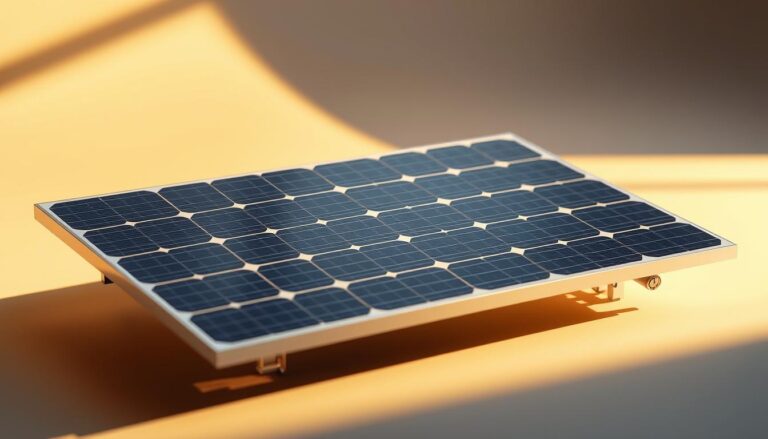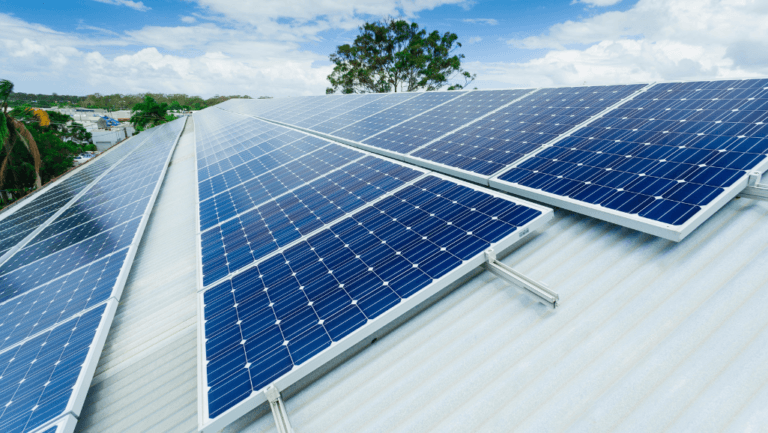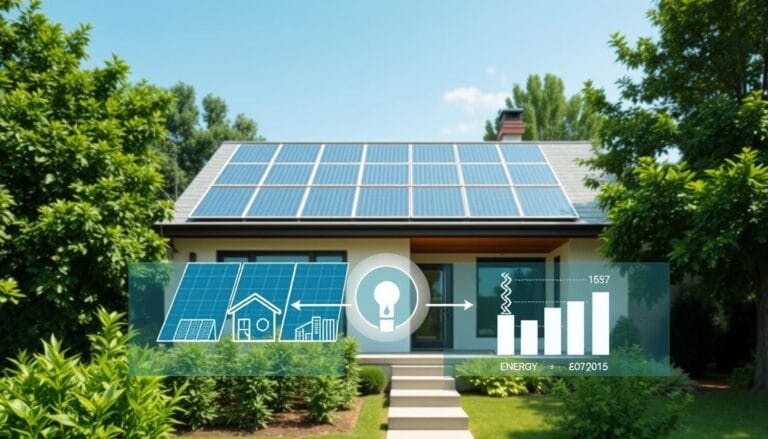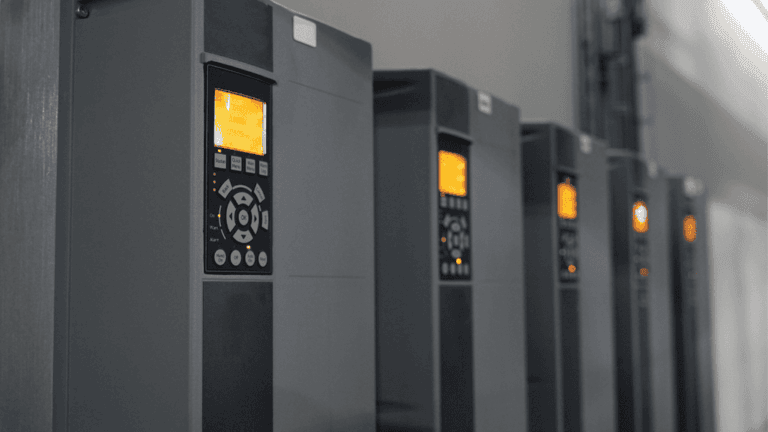
The need for clean energy solutions is growing fast. Understanding different solar energy types helps households and businesses tap a reliable, long-term energy source powered by the sun’s energy. This guide explains the main solar technologies — from rooftop panels that generate electricity to thermal systems that provide heat and hot water — and shows how combined systems can cool, heat, and power spaces for a more sustainable future.
Adopting solar energy can cut utility bills, add resale value to your home, and reduce reliance on fossil fuels like gas. Solar equipment and installation costs have fallen steadily, while performance and durability have improved, making rooftop and distributed solar energy systems easier to access. For an in-depth primer on how residential and commercial systems work, see this clean energy guide.
Key Takeaways
- Photovoltaic solar panels can significantly lower household electricity bills — savings vary by location, system size, and utility rates (typical reductions often range widely depending on usage and incentives).
- Federal incentives such as the Investment Tax Credit (ITC) have historically covered a substantial share of system costs; check current rules for the exact percentage and eligible years in your jurisdiction.
- Installing solar can raise property value and reduce carbon emissions, improving both financial and environmental outcomes for homeowners.
- Solar energy systems paired with battery storage can keep critical circuits running during outages, increasing resilience in emergencies and making energy supply more reliable.
- As costs fall and deployment scales up, solar power is becoming a larger part of the world’s energy mix — a trend supported by industry and government projections.
Example: a typical U.S. homeowner with a 6 kW rooftop PV system in a sunny state may reduce annual electricity bills by several hundred to over a thousand dollars depending on local rates and incentives; payback periods commonly range based on incentives, but many systems pay back in under a decade. See a personalized estimate to learn how solar could work for your location and utility.
Estimate your solar savings — use a calculator to compare system sizes, incentives, and expected energy production for your home.
Understanding Solar Energy Fundamentals
Learning about solar energy starts with the basics of solar power fundamentals: sunlight is a free, continuous energy source that can be captured and converted into usable electricity or heat. Solar technologies — primarily photovoltaic (PV) solar panels and solar thermal collectors — turn the sun’s light and heat into power for homes, businesses, and utility systems. For a clear technical overview, the U.S. Department of Energy explains the conversion steps and system components.
What is Solar Energy?
Solar energy is the radiation from the sun that reaches Earth as light and heat. Photovoltaic panels convert photons (light) directly into electricity, while solar thermal systems capture heat for hot water, space heating, or to generate steam for turbines. Both approaches are widely used and often combined depending on the intended application.
The Role of the Sun as an Energy Source

The sun functions like a vast fusion reactor, emitting enormous amounts of energy that reach Earth as electromagnetic radiation. That energy is inherently clean at the point of use (no combustion emissions) and, on a global scale, far exceeds human demand — although practical capture is limited by location, weather, and hours of sunlight.
Photovoltaic Effect Explained
The photovoltaic effect is the physical process behind PV cells: when sunlight strikes a semiconductor material, it excites electrons and creates a flow of electric current. In a typical rooftop PV system the basic chain is: sunlight → PV cells (DC electricity) → inverter → AC electricity → household loads or the grid. This simple flow explains how panels generate electricity you can use immediately or export.
Quick, plain-language electron flow: photons hit the cell, free electrons move through the semiconductor’s junction, and that directed flow becomes DC current which an inverter converts to AC for lights, appliances, or the grid.
Key milestones in solar development:
| EventYearDescription | ||
| Discovery of Photovoltaic Effect | 1839 | French physicist Edmond Becquerel observed light-generated electric currents in a cell, the foundational observation for PV research. |
| Development of Silicon PV Cell | 1954 | Bell Labs produced the first practical silicon photovoltaic cell, a major step toward modern solar electricity. |
| Implementation of Net Metering | Varies | Net metering policies (which differ by state/country) allow homeowners to receive credit for surplus solar electricity sent to the grid. |
| Projection for Solar Electricity Leadership | 2050 Estimated | Long-term scenarios from major energy agencies project solar becoming a leading source of global electricity by mid-century under high-renewables pathways. |
Thanks to the photovoltaic effect and supporting policy frameworks, solar energy has grown rapidly. Improvements in materials, cell design, and system components continue to raise the amount of useful energy we can capture from sunlight each hour, expanding solar’s role in a secure, sustainable energy future.
Solar Energy Types: An Overview
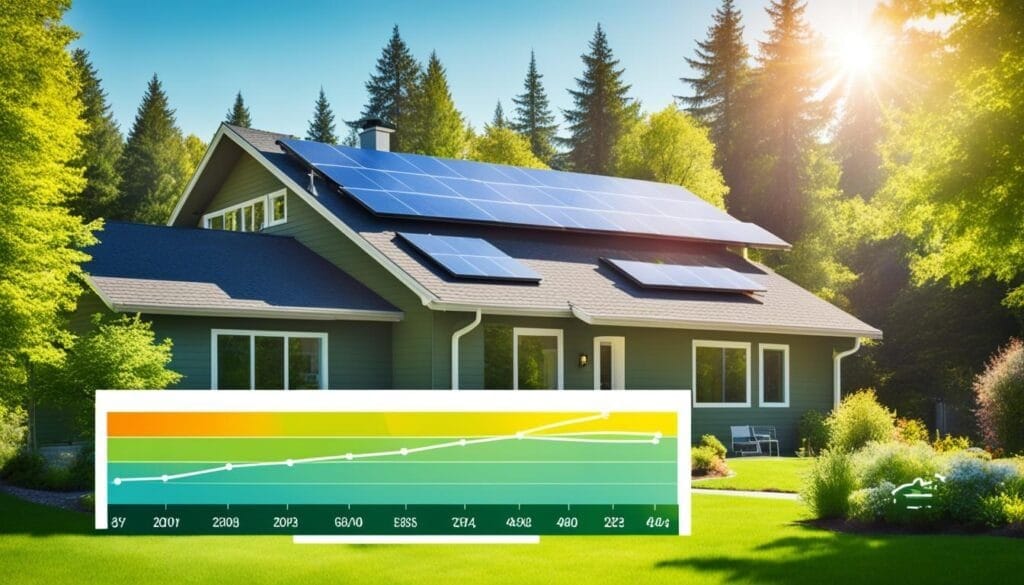
Exploring the main solar energy approaches reveals how we convert sunlight into useful energy for electricity, heating, and hot water. Different methods are better suited to particular goals — generating power for homes, supplying process heat for industry, or providing thermal energy for buildings — and many systems combine technologies to optimize output across seasons and hours of sun.
Distinction Between Photovoltaic and Thermal Solar Energy
Broadly, solar tech falls into two categories. Photovoltaic solar panels directly convert sunlight into electricity via the photovoltaic effect; they are versatile and scale from small chargers to large rooftop or utility systems. Solar thermal collectors capture solar radiation as heat for applications like domestic hot water, space heating, or to drive steam turbines in Concentrated Solar Power (CSP) plants. CSP uses mirrors or lenses to concentrate sunlight and produces high-temperature heat that can be stored and dispatched when needed.
When to Choose Which System
- Choose PV when your primary need is electricity for appliances, lighting, or to offset grid consumption; PV is generally the fastest to install and scales well with available roof or ground area.
- Choose solar thermal where consistent hot water or process heat is the main need — for example, hotels, laundries, or district heating — because thermal collectors can be more efficient at producing heat than electrical conversion routes.
- Choose CSP for large-scale, grid-integrated power plants where thermal storage (molten salt or other media) enables dispatchable solar power to complement variable sources like wind.
- Passive solar design uses building orientation, glazing, and thermal mass to reduce heating and cooling loads without mechanical systems — an important low-cost strategy for homes and renewable energy building design.
Capturing the Sun’s Power — Methods and Technologies
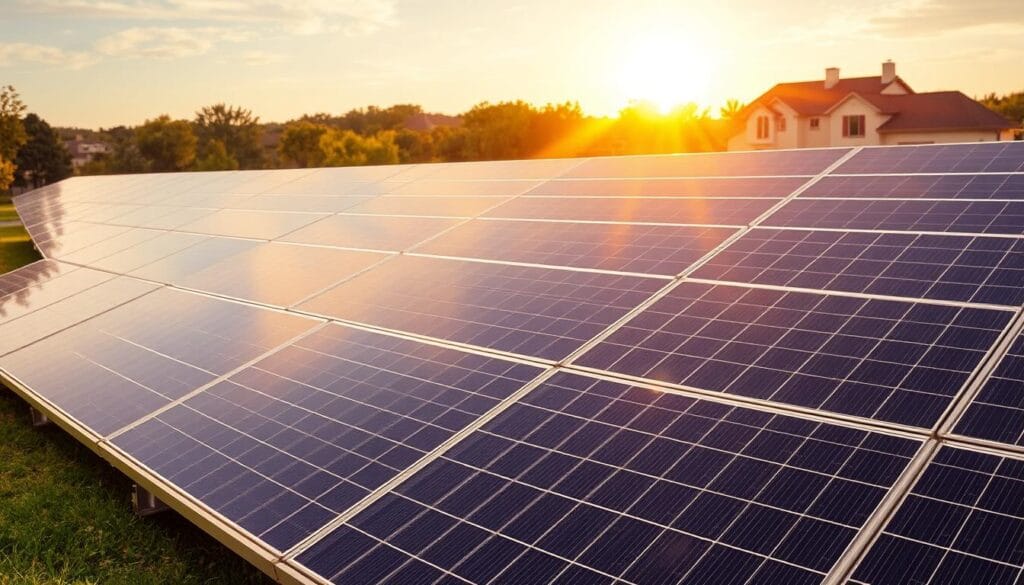
Modern solar systems often combine technologies (for example, PV plus solar thermal or hybrid PV/T panels) and may be integrated with wind or storage to meet different demand profiles. Below is a quick reference for common technologies and typical applications.
| TechnologyDescriptionApplications | ||
| Photovoltaic Solar Panels | Convert sunlight directly into electricity through the photovoltaic effect. | Residential and commercial electricity generation, off-grid systems, charging devices, microgrids |
| Solar Thermal Collectors | Convert solar radiation into heat for immediate use or storage. | Domestic hot water, space heating, industrial process heat |
| Concentrated Solar Power (CSP) | Concentrates sunlight to produce high-temperature heat, often with thermal storage for dispatch. | Utility-scale electricity production, grid support, combined with storage |
| Passive Solar Energy | Design-based use of sunlight to heat or light buildings without mechanical conversion systems. | Energy-efficient homes, bioclimatic architecture |
Example use cases: rooftop PV for a suburban home to offset electric bills; solar thermal systems in hotels for hot water supply; and CSP plants paired with molten-salt storage providing stable midday and evening power to the grid. As materials and system designs improve, hybrid and integrated solutions make the most of available sunlight — increasing overall efficiency and supporting sustainable growth worldwide.
The Rise of Solar Power Technologies
The development of modern solar energy systems has accelerated over the past decade, turning solar into a core component of clean energy portfolios worldwide. Advances in solar materials, manufacturing scale, and system design have driven down costs while raising module and system efficiency — making rooftop and utility-scale installations increasingly attractive compared with conventional gas-fired generation in many regions.
Why costs fell: larger production volumes, improved cell efficiencies, and streamlined balance-of-system components lowered module and installation prices. Policy support and global supply-chain improvements also helped drive the price decline and scale deployment.
- A dramatic decline in module and system prices occurred during the 2010s — different measures (module price, installed system price, levelized cost) report varying percentages, so check the source and metric used when quoting a specific number.
- Installed solar PV capacity increased rapidly worldwide: early-decade gigawatt-scale deployments grew to hundreds of gigawatts as the industry scaled and global deployment accelerated.
- Concentrated Solar Power (CSP) also expanded in niche markets where thermal storage and dispatchable power are valuable for grid balancing.
The U.S. Department of Energy and international agencies publish scenarios showing continued growth: under high-renewables pathways, solar power could supply a substantial share of national electricity by the 2030s and 2040s. (See the cited reports for scenario assumptions and sensitivity to policy and storage deployment.)
| YearInstalled PV Capacity (MW)Installed CSP Capacity (MW) | ||
| 2010 | 40,334 | 1,266 |
| 2020 | 709,674 | 6,479 |
| Projected 2030 | Nearly 600 Gigawatts of solar energy expected online (projections vary by agency) |
As solar technologies improve, two trends will magnify their impact: energy storage and smart control systems. For example, pairing PV arrays with battery storage and AI-driven dispatch can shift midday solar production to evening peak hours, reducing curtailment and improving grid reliability. That combination helps integrate higher shares of variable renewables and makes solar installations more dispatchable — especially useful for utility-scale power plants and community projects.
Policy incentives, research funding, and grid modernization continue to push the industry forward. The transition to a larger share of solar energy in the global energy mix depends on continued cost reductions, deployment of storage at scale, and supportive regulatory frameworks that value clean, flexible generation.
Key Players in Solar Energy Evolution
The growth of solar energy reflects milestones in science, industry, and policy. Progress was driven by pioneering researchers, laboratories, and later by manufacturers and utilities that scaled production. Exploring solar energy history and modern research shows how incremental improvements in materials and manufacturing turned an early curiosity into a major global energy technology.
Historic Milestones in Solar Development
Key early figures and events set the foundation: Edmond Becquerel’s 1839 observation of the photovoltaic effect identified the basic phenomenon that lets light produce current. In 1884 Charles Fritts experimented with selenium-based panels mounted on a New York rooftop (very low, roughly 1–2% efficiency). The mid-20th century brought a commercially meaningful leap when Bell Laboratories developed the first practical silicon photovoltaic cell in 1954, demonstrating the viability of solar electricity for real-world use.
Modern Breakthroughs and Efficiency Enhancements
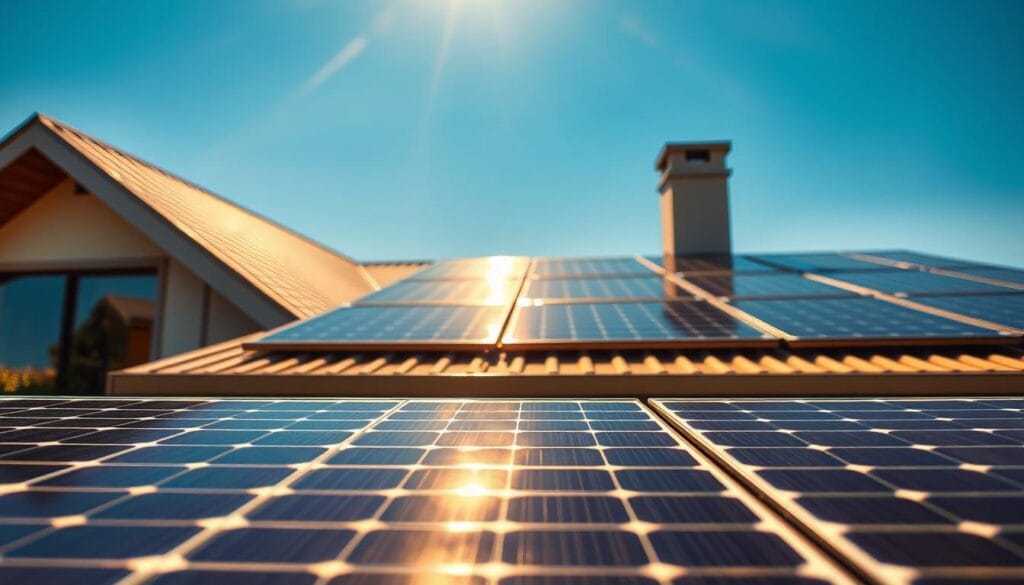
Recent decades have focused on both incremental and record-setting efficiency gains. Laboratory cells have pushed conversion rates much higher than early commercial modules; for example, multi-junction and tandem designs have reached significantly higher efficiencies in controlled research settings. It’s important to distinguish lab-record cell efficiencies from typical commercial module efficiencies: lab records show potential, while commercially available panels balance cost, durability, and performance for mass production.
The Sun of Tomorrow: Next-Gen Solar Innovations
Next-generation innovations include lighter, flexible materials, tandems (such as perovskite-silicon combinations), and building-integrated photovoltaics (BIPV) that embed PV into façades, windows, or roof tiles. BIPV turns architectural elements into power producers — a practical example is solar glass used in atriums or PV roof tiles that replace conventional shingles while generating energy. Manufacturers and research institutions continue to push materials, reducing weight and cost while improving durability and manufacturing throughput.
| YearDevelopmentImpact | ||
| 1954 | Creation of the first practical silicon solar cell by Bell Labs. | Sparked broad interest and investment in solar technology. |
| 1999 | Major lab efficiency milestones for specialized cells. | Demonstrated high-efficiency potential in research settings (lab, not commercial modules). |
| 2016 | University and private-lab advances raised single-junction and tandem cell benchmarks. | Set new targets for research and helped guide industry improvements in manufacturing and materials. |
These historic and modern players — from individual inventors to research universities and industrial manufacturers — collectively shaped the world of solar innovation. For readers who want to dive deeper, consult original papers and agency reports that document lab efficiencies, commercial module performance, and manufacturing-scale breakthroughs.
Residential Applications of Solar Energy
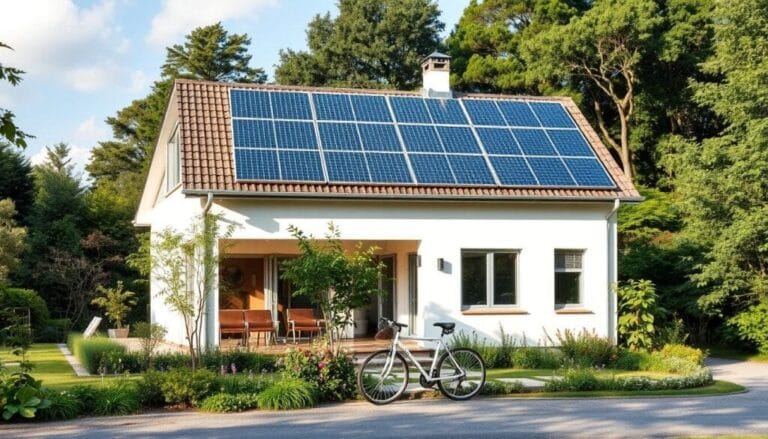
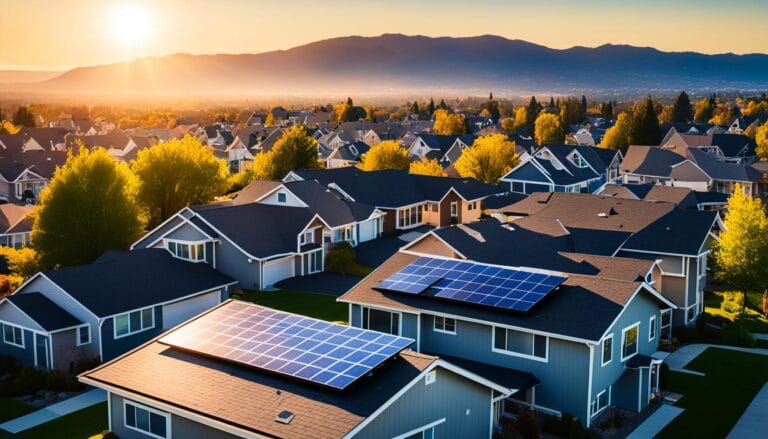
More homeowners are choosing residential solar to lower utility costs and make their homes more sustainable. Modern solar panels for home use generate electricity for appliances and lighting, while thermal systems supply hot water and space heating. When paired with batteries, rooftop systems can also increase resilience during outages and reduce reliance on grid-supplied fossil fuels.
Installing rooftop solar installations is a practical path to energy independence for many households. Buyers can choose from grid-tied systems (which export excess power), off-grid setups, or solar-plus-storage systems that store daytime production for evening use. Typical decisions depend on roof orientation, local incentives, system size, and expected household consumption.
| ApplicationDetailsCost RangeBenefits | |||
| Solar Water Heaters | Active (pumps) and passive systems for domestic hot water | Varies by system and climate | Reduces electric/gas water heating demand, low operating cost |
| Solar Pool Heating | Simple collector arrays that circulate pool water | $2,500 – $4,000 (typical range) | Short payback in sunny climates (often 1–7 years depending on usage and energy prices) |
| Solar Landscape Lighting | Low-voltage LED lighting charged by integrated PV panels | Low upfront cost | No wiring required, sustainable outdoor lighting |
| Solar Security Lights | Integrated PV + battery with motion sensors | Varies by model | Bright lighting when needed, energy savings; many consumer models reach several thousand lumens |
| Solar PV Chargers | Portable or fixed chargers for devices and batteries | Low to moderate | Convenient off-grid charging for phones, tools, and small devices |
Decision factors for homeowners:
- Roof orientation and shading: south-facing, unshaded roofs produce the most energy in the Northern Hemisphere.
- Local incentives: rebates, tax credits, and net metering rules strongly affect payback.
- Roof condition and age: replacing an old roof before installation can avoid rework costs.
Sample estimate: a 6 kW rooftop PV system in a sunny U.S. state producing ~8,000 kWh/year could reduce an average household’s annual electricity spend by several hundred to over a thousand dollars, depending on utility rates and incentives; adding battery storage increases resilience but will lengthen payback unless incentives apply. For precise numbers tailored to your address, run a local solar savings calculator or consult a certified installer.
Solar at home reduces operational emissions (though lifecycle emissions depend on manufacturing and materials), improves energy independence, and expands clean energy use at the household scale. To check roof suitability and estimate savings, try an online tool or request a site assessment from a local installer.
Solar Energy Types for Commercial Needs
Commercial operators increasingly adopt on-site solar energy to cut operating costs, manage price risk, and meet sustainability goals. Rising electricity prices in many regions have strengthened the business case for solar energy, but the exact economics depend on local rates, incentives, and project scale.
Common commercial architectures include:
- Grid-tied systems — the most prevalent option for small and medium businesses. These systems export excess power to the grid and import when needed, often leveraging net metering or utility credits to improve returns.
- Off-grid systems — used by remote facilities or sites with unreliable grid access. Off-grid setups require sufficient generation and storage to meet demand year-round and generally carry higher upfront costs.
- Hybrid systems — combine grid connection with on-site storage and controls to provide resilience during outages, reduce peak demand charges, and increase self-consumption of generated energy.
Site constraints influence system type: urban businesses with limited rooftop area typically favor roof-mounted or canopy systems with high-efficiency panels, while rural or industrial sites can deploy ground-mounted arrays that are easier to scale. Permitting, shading, and roof condition also factor into the decision.
| System TypeCost Before IncentivesCost After Incentives | ||
| Roof-mounted (50-200 kW) | $145,000 – $500,000 | $70,000 – $224,000 |
| Ground-mounted (50-200 kW) | $152,500 – $500,000 | $75,000 – $251,000 |
Example ROI scenario: a mid-size retail facility that installs a 100 kW grid-tied PV system may see payback in 4–8 years depending on local incentives and avoided electricity costs; adding storage increases resilience but extends payback unless storage incentives or high demand-charge reductions apply.
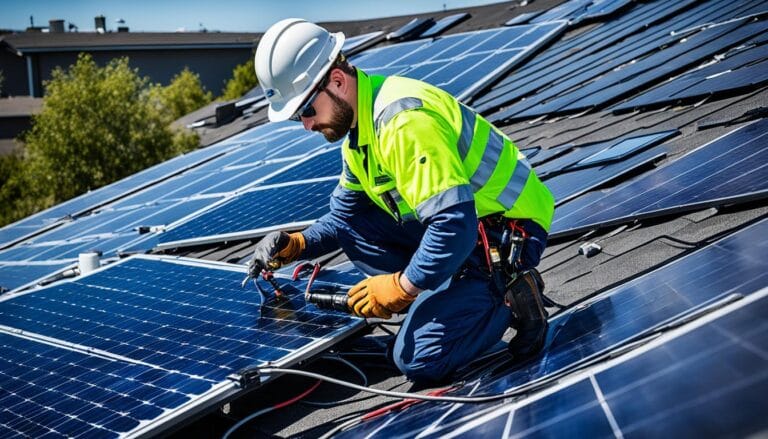
For commercial buyers, focus on lifecycle cost analysis: initial capital, incentives, O&M, expected energy production, and avoided utility expenses. Speak with a qualified commercial installer or use an RFP template to get comparative bids and modeled cash flows tailored to your site.
Large-Scale Solar Implementations: Utility and Community Projects
As we push for more sustainable energy, utility-scale solar projects and community solar power play complementary roles. Large solar arrays and local shared installations both expand access to solar energy, delivering clean electricity at different scales and meeting diverse needs from grids to neighborhoods.
Understanding Utility-Scale Solar Energy Systems
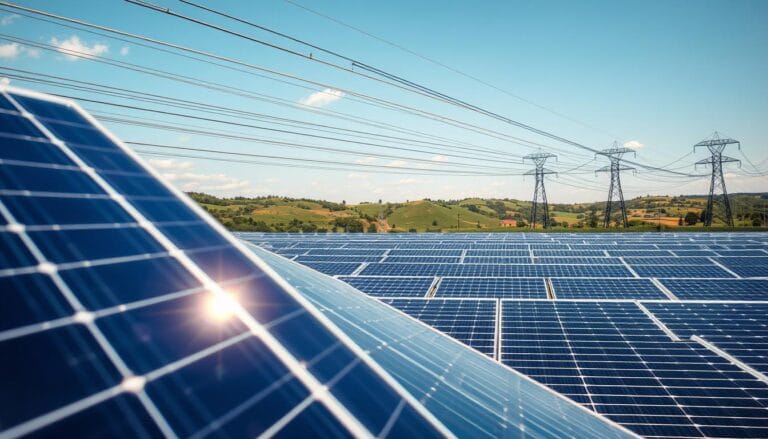
Utility-scale solar projects typically range from several megawatts up to gigawatt-scale facilities and are designed to supply bulk power to the transmission grid. These projects (often sited where land is abundant and sunlight is strong) require substantial capital and long-term operations, but they produce large amounts of low-carbon power that can replace fossil-fuel power plants.
Builders and planners often define project size slightly differently, but using a 10 MW threshold is a practical guideline for distinguishing utility-scale installations from smaller commercial or community arrays.
Benefits of Community Solar Power Initiatives
Community solar projects let multiple participants subscribe to or buy a share of a single array and receive bill credits for their portion of the energy produced. This model expands access for people who cannot install rooftop panels — renters, shaded properties, or those with unsuitable roofs — and helps distribute economic and environmental benefits more equitably in a community.
How to participate: residents typically subscribe to a portion of a project (monthly fee or term contract), receive bill credits proportional to their share, or in some models purchase panels or shares outright. Check local community-solar programs for specific enrollment steps and financial models.
Crafting a Solar Ecosystem: Collaborations and Infrastructure
Scaling both utility and community projects requires coordinated policy, investment, and grid upgrades. Policymakers can enable adoption with incentives, feed-in tariffs (payments for generation delivered to the grid), and interconnection rules. Utilities and developers must build transmission, distribution upgrades, and storage to integrate large volumes of variable solar without compromising reliability.
| Project TypeScalePrimary BenefitKey Requirement | |||
| Utility-Scale Solar | 10 MW or larger | Large-area electricity supply to the grid | Substantial land, capital, and grid interconnection |
| Community Solar | Smaller, localized projects | Access for non-rooftop owners, community engagement | Local organization and financing, subscriber base |
Success stories show that combining both approaches — large plants for bulk generation and community projects for distributed access — accelerates decarbonization while delivering social and economic benefits locally. For municipalities and community groups considering a project, consult regional examples and toolkits to model costs, participation mechanisms, and expected energy outputs.
Advanced Solar Technologies and Storage Options
The push for solar energy advancements is reshaping the broader renewable energy landscape. Improving storage is essential to get the most from solar generation: solar battery storage and other storage solutions firm variable output, allowing solar to serve baseload-like roles and increasing system reliability during hours and night periods when the sun isn’t shining.
New photovoltaic materials and cell architectures are raising the ceiling for how much of the sun’s light and heat we can convert into useful energy. For example, perovskite-silicon tandem cells have shown strong efficiency gains in lab settings (lab-record figures illustrate potential but differ from commercial module performance). These innovations, along with improvements in module materials and balance-of-system components, drive higher production per panel and lower cost per kWh.
Solar-plus-storage systems — the combination of PV arrays and on-site storage — are changing how homes, businesses, and utilities use solar. Pairing solar panels with lithium-ion or alternative chemistries (flow batteries, for example) enables functions such as peak shaving, time-shifting midday generation to evening hours, and providing backup power for critical loads.
Storage approaches are diverse and suited to different needs:
- Lithium-ion batteries — widely used for residential and commercial storage because of high energy density, declining costs, and proven cycle life; ideal for daily cycling (time-shifting and backup).
- Flow batteries — promising for long-duration storage and frequent deep discharge applications where cycle life and scalability matter.
- Thermal energy storage — used with CSP or industrial process heat to store heat (e.g., molten salt) for later electricity generation or direct heating — an effective route to shift thermal production across hours.
- Mechanical storage (compressed air, flywheels) — specialized solutions for grid services and short-duration stability or frequency regulation.
| TechnologyTypical UseStrength | ||
| Li-ion batteries | Residential, commercial, short-duration grid | High energy density, fast response |
| Flow batteries | Long-duration commercial/utility | Long cycle life, scalable energy capacity |
| Thermal storage (molten salt) | CSP, industrial heat shifting | Cost-effective for high-temperature storage |
| Compressed air / flywheels | Grid regulation, short-duration services | Durable, high-power bursts |
Example use-case: a small business installs a 50 kW PV array with a 100 kWh lithium-ion system to perform peak shaving and provide a 3–4 hour outage backup for critical circuits. During peak-price hours the stored energy reduces demand charges; during outages the battery supports essential loads until grid service is restored.
Emerging device-level innovations — ultralight fabric PV, bifacial panels, and tandem cell architectures — improve the power-to-weight ratio and broaden applications (portable devices, building-integrated PV, and lightweight field-deployable arrays). As materials and system costs fall, these technologies will help unlock new markets and use cases.
For project owners, consider the intended service (daily time-shift vs long-duration backup), cycle life, and total cost of ownership when selecting storage. Also look for local incentives for storage deployment — many regions now offer rebates or tariff structures that improve the economics of pairing batteries with solar.
Conclusion
Our review of solar energy shows a pragmatic, achievable path toward a cleaner, more resilient energy system. Advances in materials, manufacturing, and system design mean rooftop solar panels, utility projects, and combined solar energy systems are already delivering meaningful electricity and heat for homes, businesses, and communities.
Perspective: the sun delivers an immense amount of power to Earth — commonly cited calculations show that in roughly one hour the planet receives more solar energy than humanity uses in a year. That comparison illustrates the magnitude of the sun as an energy source, but practical capture depends on location, hours of sunlight, technology, and land or rooftop availability.
The search for viable renewable energy sources increasingly points to solar because costs have fallen while performance and reliability have improved. Durable systems, better storage, and supportive policies (tax credits, rebates, and local incentives) are helping shorten payback times for many projects — though actual payback varies by region and assumptions and is commonly longer than the shortest optimistic estimates.
Beyond cost, solar reduces operational emissions compared with gas-fired generation and supports local energy resilience. Combined with efficient space heating, hot water systems, and demand-side measures, solar helps households and communities cut bills and lower their carbon footprint.
What you can do next: estimate your potential savings with a local solar calculator, check available incentives, or contact a certified installer for a site assessment. For developers and policymakers, prioritize grid upgrades, storage deployment, and fair interconnection rules to accelerate beneficial scale-up.
FAQ
What is Solar Energy?
The Role of the Sun as an Energy Source
Photovoltaic Effect Explained
Distinction Between Photovoltaic and Thermal Solar Energy
Renewable Power from the Sun’s Resources
Capturing the Sun’s Power — Methods and Technologies
Historic Milestones in Solar Development
Modern Breakthroughs and Efficiency Enhancements
The Sun of Tomorrow: Next-Gen Solar Innovations
Understanding Utility-Scale Solar Energy Systems
Benefits of Community Solar Power Initiatives
Crafting a Solar Ecosystem: Collaborations and Infrastructure
Advanced Solar Technologies and Storage Options