Renewable sources like solar power are transforming how we produce energy, and their solar energy environmental benefits are central to that shift. Choosing solar power reduces emissions, lowers reliance on fossil fuels, and supports a cleaner, healthier planet.
The U.S. Department of Energy’s Solar Energy Technologies Office is studying how utility-scale and distributed solar affect local ecosystems and wildlife to maximize sustainable energy benefits while protecting natural habitats (see DOE research for details).
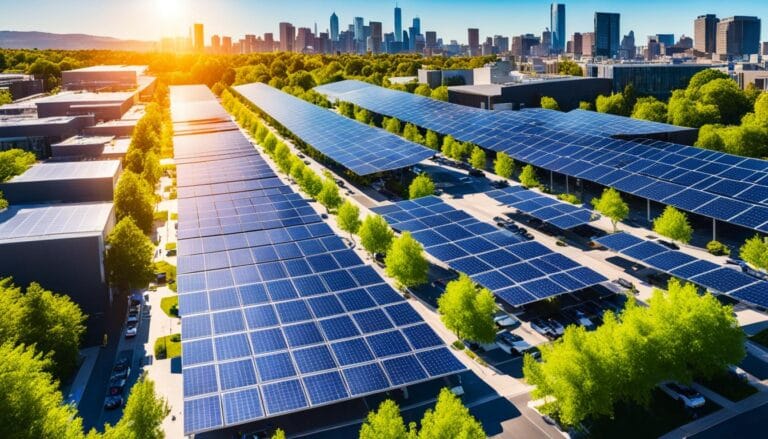
For example, DOE analyses indicate a pathway to a carbon-neutral U.S. electric grid by 2035 if deployment of low‑carbon technologies accelerates—solar energy plays a leading role in that scenario and, in many models, would occupy roughly 0.3% of U.S. land area for utility-scale arrays when coupled with rooftop and other distributed generation (source: DOE reports).
Many projects also incorporate wildlife and pollinator-friendly practices, proving that large-scale solar development can deliver both clean energy and on-site ecological improvements. Read on to learn how these benefits are realized in practice.
Key Takeaways
- solar energy environmental benefits.
- Solar energy delivers measurable environmental benefits by cutting greenhouse gas emissions and lowering reliance on fossil fuels.
- Strategic siting and deployment of solar energy minimize land use—many DOE scenarios estimate utility-scale arrays would occupy roughly 0.3% of U.S. land when combined with rooftop and distributed systems.
- Avian monitoring and bird-friendly design measures are essential to understand and reduce solar development impacts on wildlife.
- Solar grazing and habitat-friendly groundcover improve ecosystem health and soil conditions at many solar sites.
- Pollinator habitat projects at solar facilities can sustain critical insect populations and support local agriculture.
- Research on stormwater management and site-specific practices establishes best practices for maintaining soil health and preventing erosion.
- Material innovations and improved PV design make panel recycling easier, reducing lifecycle waste and emissions.
- Eco-conscious solar projects can be planned to advance equity and environmental justice, ensuring community benefits alongside clean power.
Key takeaway: well-planned solar projects can maximize environmental benefits while supporting local communities—read on to see examples and practical strategies.
Understanding Solar Energy and Its Positive Impact on Ecosystems
The world is confronting climate change, and solar energy is a central tool in cutting emissions and decarbonizing our electricity supply. Solar energy generates clean electricity with minimal operational pollution and delivers tangible environmental benefits for communities and ecosystems.
The Role of Solar Energy in Carbon Sequestration and Pollination
Solar projects can indirectly support carbon sequestration when sites are managed with native vegetation or paired with agroecological practices; it’s the planted vegetation — not the PV panels themselves — that stores CO2. Many solar sites are being designed with pollinator-friendly groundcovers and habitat strips that provide forage and nesting habitat for bees and other insects, supporting both biodiversity and nearby agricultural productivity.
Improving Air Quality with Reduced Greenhouse Gas Emissions
By replacing electricity from fossil fuel-fired power plants, solar power lowers greenhouse gas emissions and other air pollutants that harm respiratory and cardiovascular health. Large-scale deployment of solar energy contributes to cleaner air and measurable public-health benefits by reducing particulate matter and nitrogen oxide emissions linked to coal and natural gas generation.
Ground and Stormwater Management through Solar Installations

Thoughtful site design and soil management at solar facilities help protect water quality and reduce erosion. When developers use native plantings, bioswales, and other stormwater controls, solar sites can improve infiltration and stabilize soils compared with bare, compacted surfaces. Research and state guidance increasingly recommend site-specific stormwater practices so that solar installations maintain ecosystem services for surrounding habitats and communities.
Strategies for Eco-Conscious Solar Development
Applying principles of solar energy conservation and understanding the practical solar panels benefits are essential for minimizing environmental impact while maximizing community value. Thoughtful site selection, streamlined permitting, and meaningful engagement with local stakeholders help projects avoid sensitive habitats and deliver stronger environmental benefits.
Controlling upfront costs and accounting for lifecycle impacts are both important. Incentives such as the federal Investment Tax Credit (ITC) and state rebate programs lower initial expenses and shorten payback periods, while on-site design choices—like native groundcovers, pollinator habitat, and dual-use (agrivoltaics/grazing)—deliver long-term savings in energy bills and environmental stewardship. For practical DIY savings and basics, visit Solar Powers World.
| BenefitDescriptionImpact | ||
| Long-term Cost Savings | Reduction in electricity bills | Significant financial savings for businesses over time |
| Energy Independence | Reduced reliance on external power sources | Enhances community resilience and stability in energy supply |
| Environmental Conservation | Low operational water use and near-zero direct greenhouse gas emissions during generation (lifecycle impacts vary) | Preservation of natural resources and protection of ecosystems |
| Stimulation of Local Economies | Enhances local job markets through clean energy projects | Boosts economic growth without degrading the environment |
| Tax Incentives and Rebates | Reductions and savings through federal and state programs | Makes solar installations more affordable, speeding up ROI |
Best practices include prioritizing degraded or low‑value land, integrating native plants and pollinator corridors, designing stormwater controls, and planning for end-of-life recycling. These steps increase the environmental benefits of solar energy while supporting community goals and aligning with broader climate commitments (see the linked Oxford Academic discussion on policy frameworks).
Next steps for developers and homeowners: assess site constraints, consult local conservation experts, and check available incentives to ensure projects deliver maximum environmental and economic benefits.
Solar Energy’s Interaction with Wildlife and Habitats
The rapid expansion of solar energy brings major environmental benefits but also requires careful planning to protect wildlife and habitat. Thoughtful project design and site selection can minimize ecological impacts while enhancing biodiversity and community outcomes.
Monitoring and Protecting Avian Species in Solar Project Areas

Developers and regulators increasingly use avian monitoring and mitigation to reduce risks to birds. Practical measures include timing construction to avoid nesting seasons, maintaining appropriate panel spacing and heights, using anti-reflective coatings where appropriate, and establishing buffer zones around sensitive habitat. DOE guidance and field studies help identify high‑risk locations and appropriate mitigation strategies (DOE report).
Maximizing Environmental Benefits While Minimizing Impacts
Solar sites can deliver co-benefits when planners integrate habitat restoration, native plantings, and pollinator corridors. Converting degraded or low‑value land to solar with native groundcover or managed grazing often improves soil health and local biodiversity compared with abandoned or intensively farmed sites. Buffer strips, native plant palettes, and hydrological controls further protect nearby ecosystems.
Collaboration with local conservation groups, wildlife biologists, and community stakeholders is key: these partnerships guide site-appropriate strategies, monitor outcomes, and adapt management practices. Case studies from agrivoltaic and pollinator-friendly projects demonstrate measurable increases in pollinator abundance and plant diversity when design and monitoring are built into project plans.
| AspectStrategyBenefit | ||
| Land Use | Prioritize degraded or low-value lands | Reduces ecosystem disruption and preserves high-value habitats |
| Avian Protection | Avian monitoring, timing construction, bird-friendly design | Decreases collision risk and disturbance |
| Biodiversity | Native plantings, pollinator corridors | Increases local species diversity and ecosystem services |
| Community Engagement | Partner with local conservationists and residents | Ensures projects align with ecological and social priorities |
With modern best practices—site screening, monitoring, adaptive management, and community input—solar energy and nature can coexist and even thrive together. Examples from residential and utility-scale projects show that when developers prioritize habitat integration, solar deployment can support both clean power and stronger local ecosystems (residential solar examples).
Stormwater Management and Soil Health in Solar Facilities
As solar power deployment expands, careful stormwater and soil management become essential to preserve ecosystem services and protect water resources. Large ground-mounted arrays can alter local hydrology, so researchers and practitioners are developing site-specific approaches to reduce erosion, improve infiltration, and maintain soil health.
Several research teams (including work by McPhillips and Yavari among others) and state regulators have issued guidance to help projects manage runoff and support groundwater recharge. For example, Pennsylvania updated stormwater guidance for solar sites in 2022 to emphasize vegetation-based controls, infiltration where appropriate, and strategies that reduce downstream flooding risks (consult state agency documents for precise regulatory text).
Field studies illustrate how outcomes vary by climate and management. In one central Pennsylvania study, soils beneath arrays recorded increased moisture relative to adjacent exposed ground — a site-specific finding that reflects local climate, panel layout, and groundcover choices. In arid locations such as parts of Arizona, panel shading can reduce heat stress and, with proper planting, even help establish vegetation. These results show that both benefits and trade-offs depend on design, vegetation selection, and local rainfall patterns.
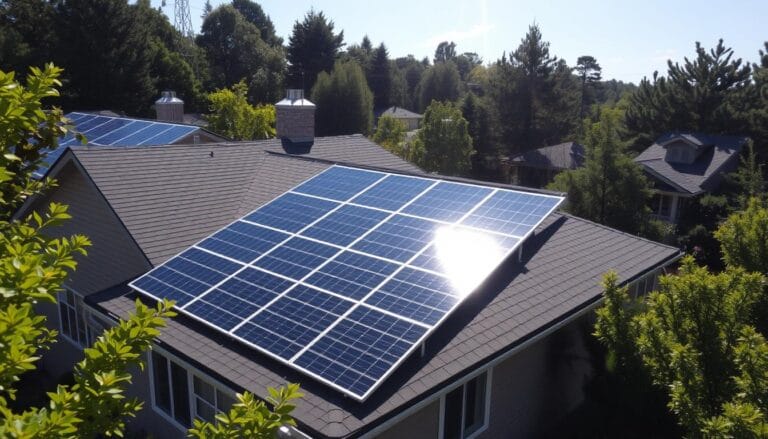
Rooftop and built-environment PV remain low-impact options for water-sensitive areas because they avoid ground disturbance and preserve natural soil and stormwater flow. Where ground-mounted systems are used, best practices include using native, drought-tolerant groundcovers, installing bioswales or infiltration zones, minimizing soil compaction during construction, and monitoring post-installation hydrology.
In short, site-specific stormwater planning and adaptive soil-management practices let solar energy projects increase their environmental benefits while limiting negative impacts on water, soil, and downstream communities. Project developers should consult regional regulations and peer-reviewed studies when designing stormwater and soil-health plans to ensure compliance and maximize conservation outcomes.
Solar Panels Benefits: Low Energy Payback Periods

Homeowners and businesses gain a major advantage from solar panels: short energy payback periods (EPBT). EPBT is the time a PV system needs to generate the same amount of energy that was consumed to manufacture and install it. Typical commercial EPBTs range from roughly 1 to 4 years depending on technology, location, and system design—much shorter than fossil-fuel power plants when lifecycle emissions and fuel use are considered.
The solar energy advantages include continuously improving EPBTs as panel efficiencies rise and manufacturing becomes cleaner. Modern commercial polycrystalline and monocrystalline modules commonly achieve near-20% efficiencies, with many mainstream modules now exceeding 20%—a step change that reduces land needs and energy production time compared with older generations.
Advancements in Solar Panel Efficiency and Production
Higher-efficiency panels and system-level improvements (like smarter mounting and trackers) shorten EPBT and increase lifetime environmental benefits. Less material per watt and domestic manufacturing reduce transportation emissions and supply-chain impacts, improving the overall environmental profile of solar energy.
Continual Reduction in Solar Panels’ EPBT
EPBT improvements are supported by better manufacturing practices and end-of-life planning. Increased recycling and circular design lower lifecycle emissions from production to disposal. Studies such as NREL analyses document that distributed PV systems reduce lifecycle pollutants (including sulfur dioxide and carbon dioxide) compared with fossil fuel generation—quantified benefits depend on the module type, location, and grid mix.
These technological and process advances strengthen solar panels benefits: faster energy payback, fewer lifecycle emissions, and a clearer path to clean energy production.
The Comparison: Solar Photovoltaic vs. Solar Thermal Energy
Knowing the difference between solar photovoltaic (PV) and solar thermal systems helps you choose the right technology for a given application. Both reduce reliance on fossil fuels and support renewable energy goals, but they generate and store energy in different ways and serve different needs.
| AspectSolar Photovoltaic (PV)Solar Thermal | ||
| Basic Function | Converts sunlight directly into electricity | Absorbs sunlight to produce heat (for water heating, space heating, or power via steam) |
| Efficiency (typical commercial) | ~18%–23% for common commercial modules; lab records are higher | System efficiency depends on application — flat-plate collectors ~50–70% for low-temperature heat; concentrated solar power (CSP) varies with design |
| Lifespan | 25–30 years for modern modules | 20–30 years depending on system type and maintenance |
| Application Scale | Highly scalable: rooftop residential to utility-scale farms that generate electricity | Best for thermal loads (domestic hot water, industrial heat) and some large-scale power plants (CSP) |
| Cost Considerations | Declining capital costs and low operating costs; cost per kWh improves with scale and location | Often lower cost for simple water heating; CSP and high-temperature systems can be costly but include thermal storage options |
| Space Requirements | Rooftop or ground-mounted options; typical whole-home arrays require several hundred sq ft depending on energy needs | Varies widely—solar thermal for buildings can be compact; CSP requires larger, dedicated sites |
| Primary Challenge | Intermittency of solar generation; mitigated with storage and grid integration | System complexity and, for CSP, higher site and water requirements for some plants |
Solar PV is the most common way to generate electricity at distributed and utility scales and is well suited for reducing grid emissions and supporting electrification. Solar thermal excels at delivering heat and can be paired with storage to provide dispatchable thermal energy for industrial processes or district heating.
Both technologies contribute to clean energy production and can be chosen to optimize environmental benefits and local energy needs—PV for flexible electricity generation, and thermal solutions where heat or thermal storage is the priority.
Advancements in Solar Technology Over the Decades
Solar technology has advanced rapidly, delivering higher-performing panels and amplifying the environmental benefits of clean energy. Each decade brought materials and system improvements that reduced costs, increased energy production per area, and improved lifecycle impacts.
The Rise of High-Efficiency Solar Panels
Commercial solar panels have steadily improved: mainstream module efficiencies moved from the mid-teens decades ago to roughly 18%–23% for many modern commercial modules today. Laboratory records are higher—lab cells have reached much greater conversion efficiencies—so it’s important to separate commercial module performance from lab-level records.
System-level innovations such as bifacial modules and single-axis trackers can increase output by double-digit percentages (trackers commonly boost yield by up to ~20–25% depending on location and design), which effectively raises the energy yield per panel and shortens payback periods.
Future Prospects: Lab-Level Innovations in Solar Efficiency
Cutting-edge research on tandem cells (for example silicon-perovskite tandems) and new materials aims to push lab efficiencies past current records; some lab demonstrations report efficiencies approaching or exceeding the high 40s percent range under controlled conditions. Commercialization timelines vary—manufacturers are working on scaling perovskite and tandem approaches, but widespread market rollout depends on stability, manufacturing scale-up, and cost reductions.
Flexible and building-integrated PV (BIPV) continue to mature, enabling new applications from rooftop shingles to facade elements and wearable tech. At the same time, battery storage costs are declining, improving the dispatchability of solar power and increasing the overall impact of distributed generation on decarbonization.
| YearSolar Cell Efficiency (%)Notable Technological Introduction | ||
| 2000 | Commercial modules in the mid-teens; lab records higher | Standard silicon cells dominate market |
| 2015 | Commercial modules ~15%–20%; bifacial modules and trackers gain adoption | Bifacial solar panels, wider use of trackers |
| 2023 | Commercial modules commonly ~18%–23%; lab cells report much higher records | Perovskite and tandem demonstrations advance in labs |
| Future | >50% possible at lab scale; commercial steps lag lab records | Advanced materials, tandem cells, AI-optimized manufacturing |
In short, continual improvements in materials, module design, and system integration increase panel performance and reduce environmental impact—making solar an ever-stronger option for clean energy production and climate mitigation.
Environmental Benefits of Solar Energy
Switching to solar energy delivers measurable environmental benefits: it provides clean energy, reduces greenhouse gas emissions, and decreases society’s reliance on fossil fuels. Those shifts support climate change mitigation and help protect ecosystems and public health.
Decrease in Greenhouse Gas Emissions and Fossil Fuel Dependence
Deploying solar energy displaces electricity from fossil fuel power plants and substantially lowers lifecycle carbon dioxide and other greenhouse gas emissions compared with coal and natural gas generation. Large-scale solar deployment is a key pathway to cutting carbon footprints in the power sector; DOE and independent analyses consistently show solar’s strong potential to reduce grid emissions when paired with storage and electrification strategies.
Impact on Respiratory and Cardiovascular Health from Cleaner Air
Reduced combustion of coal and natural gas results in fewer air pollutants (particulate matter, NOx, SO2) that contribute to respiratory and cardiovascular disease. Peer-reviewed public-health studies and energy‑sector analyses estimate that broad adoption of low‑emission electricity sources, including solar, can prevent thousands of pollution-related illnesses and premature deaths by improving regional air quality (estimates vary with scenario assumptions and timeframe).
| Energy SourceCO2 Emissions (relative)Water Usage (approx.) | ||
| Solar | Lowest lifecycle emissions among major power sources (substantially lower than fossil fuels) | Low operational water use; lifecycle values vary (~hundreds of liters/MWh depending on system and region) |
| Natural Gas | Medium lifecycle emissions (higher than solar) | Moderate to high water use for cooling and fuel production |
| Coal | Highest lifecycle emissions | High water use for mining, processing, and cooling |
Solar power also reduces water demand compared with some thermal power plants because PV electricity generation requires little to no water for operation, helping preserve freshwater resources in water‑stressed regions. The National Renewable Energy Laboratory and other technical bodies provide detailed lifecycle and regional comparisons for CO2 emissions and water use to guide precise planning.
Overall, solar energy environmental benefits include lower greenhouse gas emissions, improved air quality with associated health gains, reduced water consumption relative to many thermal power sources, and a smaller long-term carbon footprint for electricity production. These combined advantages make solar a central tool for meeting climate goals and improving community health and resilience.
Conclusion
As this review shows, solar energy delivers substantial environmental and community benefits: it lowers greenhouse gas emissions, reduces operational water use compared with many thermal power plants, supports local economic activity, and helps cut reliance on fossil fuels. These outcomes make solar power a central component of climate change mitigation and energy-sector decarbonization strategies.
Corporate and industry efforts also highlight operational improvements—for example, manufacturers reporting measurable water‑use reductions illustrate how production-side changes can further shrink solar’s lifecycle footprint (see company sustainability reports for exact figures).
To meet climate and public‑health goals, policymakers, developers, and communities should accelerate deployment of responsibly sited solar projects that pair clean electricity with habitat-friendly practices and robust recycling plans. Transitioning away from fossil fuels will both reduce carbon emissions and improve air quality and health outcomes.
Next steps: evaluate local incentives, consult community and conservation stakeholders, and assess rooftop or ground-mounted potential to help bring clean, reliable solar energy to your area.
FAQ
What are the environmental benefits of solar energy?
How does solar energy contribute to carbon sequestration and pollination?
Can solar installations improve air quality?
What is the role of ground and stormwater management in solar installations?
How are solar developers implementing eco-conscious strategies?
How is solar energy’s impact on wildlife and habitats being addressed?
What environmental considerations are taken into account for stormwater management and soil health at solar facilities?
What advancements have been made in solar panel efficiency and production?
How does solar energy reduce society’s reliance on fossil fuels?
What are the differences between solar photovoltaic and solar thermal energy?
What impacts do solar panels have on respiratory and cardiovascular health?