
Solar Panel Sizing: Should You Oversize Your System?
Homeowners often ask whether they should install more solar panels than their current energy use requires. The goal is usually to lower electric costs and increase energy independence, but oversizing a solar system isn’t always the best move. The right choice depends on your present and future energy needs, local utility rules, and the upfront cost of the system.
Net metering and utility export rules determine how valuable extra solar production will be. Some utilities give retail-rate credits for exported power; others offer lower-value net billing or time-limited credits. That means an oversized system can sit idle financially if you can’t use, store, or sell the extra power. Read on to learn how to size your system correctly, when oversizing makes sense, and what questions to ask your utility and installer.
Key Takeaways
- 1) Oversizing a solar panel system doesn’t always maximize savings because utility export limits and crediting methods vary.
- 2) Net metering and local utility policies can change the financial outcome of adding extra panels—check your tariff before expanding.
- 3) Larger systems increase upfront cost and lengthen the time to recoup your investment unless you have a plan for the extra energy.
- 4) Accurately determining solar panel requirements—using your daily kWh usage, local sun hours, and panel wattage—helps optimize system size for current and future energy needs.
- 5) Oversizing can be sensible if you plan future home upgrades (EVs, heat pumps) or can pair the system with batteries to capture excess output.
- 6) Know the National Electric Code “120%” guidance and your utility’s interconnection rules before selecting system size to avoid permit or connection issues.
- 7) Incentives (SRECs, federal/state tax credits) sometimes make a larger system more attractive—verify current availability and eligibility.
Understanding the Basics of Solar Panel Sizing
Solar panel sizing determines how well a solar system meets your electricity needs and your budget. For homeowners and businesses, the goal is to choose the right number of panels so the system produces sufficient energy without unnecessary cost or wasted output. In short: do the math correctly, account for local sunlight, and match panel choice to your goals.
What Determines Your Solar Panel Requirements?
Your required solar array size depends on three core inputs: your electricity usage, the local peak sun hours where you live, and the panel and inverter performance (including derate factors). Roof area, panel wattage, and your future energy plans (EVs, heat pumps, or more occupants) also affect how many panels you need. Real-world output is lower than nameplate ratings because of losses from shading, temperature, inverter efficiency, and soiling.
Matching Solar Panel Quantity with Usage Patterns
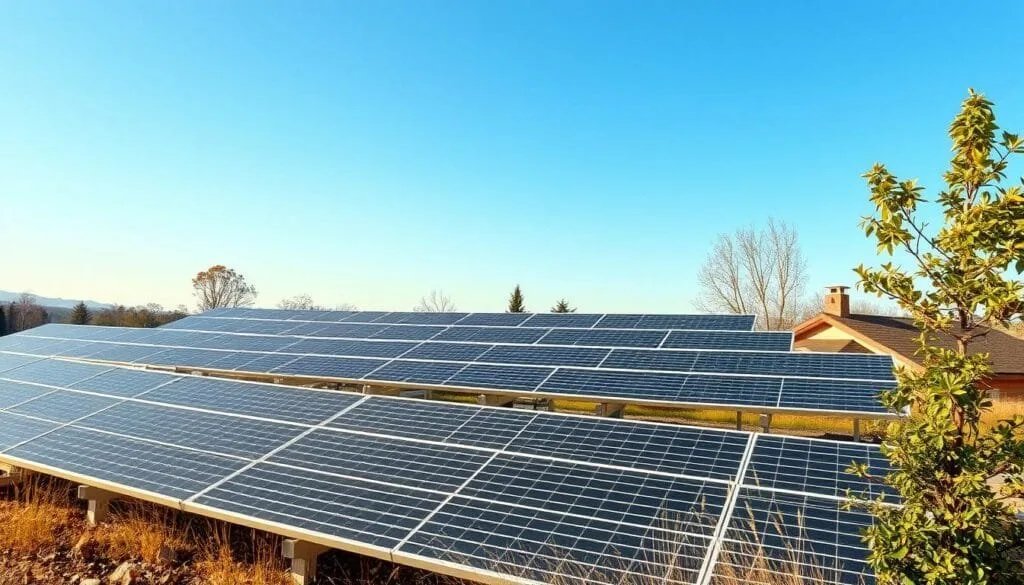
To size solar panels to your daily energy use, match your typical daily kWh usage to the expected daily output of the system. More efficient panels need fewer modules to reach the same output; for example, SunPower® Maxeon® cells have higher wattage-per-panel, so a comparable solar system can use fewer panels and less roof space.
Quick rule-of-thumb: A typical U.S. home uses about 900 kWh per month (your mileage will vary). A very large, sunny-climate home might use ~2,000 kWh per month. Depending on panel wattage and peak sun hours, that could mean roughly 25 standard 250W panels versus about 17 higher-watt 370W panels.
Below are example estimates for different home types (assumes average derate and a typical range of peak sun hours):
| Home TypeMonthly Energy Usage (kWh)Required Number of 250W PanelsRequired Number of 370W SunPower Panels | |||
| Small Home (Temperate Climate) | 200 | 10 | 7 |
| Average Home (U.S. Standard) | 900 | 25 | 17 |
| Large Home (Warm Climate) | 2000 | 55 | 37 |
Want the exact number for your home? Use this calculation process: determine your average daily kWh (monthly kWh ÷ 30), divide by your location’s peak sun hours to get required kW, then divide required kW by the panel wattage (in kW) and add a safety margin (10–20%) for losses and future needs. This gives a practical estimate of panel count and system size without changing your roof footprint unnecessarily.
Considering Net Metering and Utility Policies
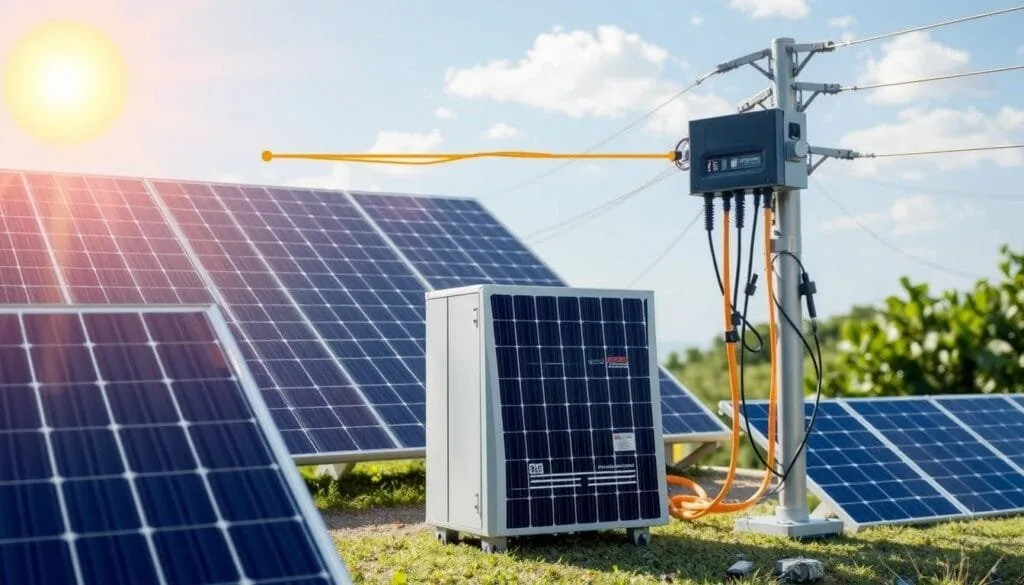
When you size a solar system, understanding how your utility compensates exported power is essential. Net metering lets homeowners send excess electricity back to the grid in exchange for credits, but the value and treatment of those credits vary widely by state and utility.
In some states—like parts of New Jersey and Florida—net metering still provides credits near the full retail rate, which makes extra solar panels much more financially valuable. Where retail-rate credits apply, an oversized system that produces excess output can shorten payback time because you effectively receive full value for exported power. By contrast, utilities that use net billing or lower export rates reduce the financial benefit of excess production.
Policy changes happen frequently. For example, North Carolina has revised net-metering rules recently (see the EnergySage summary), and states periodically move from retail net metering to net billing or time-of-export crediting. These shifts directly affect whether adding more panels makes sense.
| State/PolicyCredit SystemAverage Payback Period | ||
| New Jersey (Net Metering) | Full Retail Rate | 4-5 years |
| California (Net Billing 3.0) | Lower-value export credits / net billing | Payback reduced vs. old net metering |
| Florida (Net Metering) | Full Retail Rate | Competitive |
To take advantage of net metering or to avoid unpleasant surprises:
- Check your utility’s tariff and the state public utility commission website for current rules.
- Ask your installer for a modeled account of expected exported energy and how it will be credited under local rules.
- Consider batteries or load-shifting if export credits are low—storage can increase the usable value of excess solar output.
Net metering and export tariffs are among the biggest variables in deciding whether to oversize your solar panels. Before you increase system size, confirm your utility’s policies, model expected daily kWh exports, and factor in how much value you’ll actually receive for that output.
Should I Get More Solar Panels Than I Need?
When planning a solar system, one key decision is whether to size your array to meet current energy use or to install extra capacity now for future needs. Oversizing can provide benefits—especially if you can use or store the extra output—but it also raises upfront costs and can reduce short-term financial returns. Evaluate efficiency, roof space, incentives, and how you’ll use excess power before adding capacity.
Benefits of Excess Solar Panel Capacity
Extra panels can pay off when you can monetize or use the surplus energy. In markets with SRECs or generous net metering, excess solar output can shorten payback and improve long-term returns. Higher-efficiency panels (higher watts per panel) let you fit more output into limited roof space, and a larger array may raise home resale value. If you plan to add an EV, heat pump, or other high-usage equipment, oversizing can avoid costly system upgrades later.
Drawbacks of Overestimating Solar Panel Needs
Installing more panels increases upfront cost and may lengthen your payback period if you can’t use or sell the extra energy. Typical installation amounts cited in surveys vary—confirm current local cost per watt for precise budgeting—because a quoted $19,000 average could reflect a particular system size or region. Also, incentives like SRECs are regional; they aren’t available everywhere and can change, so count on verified local data before assuming extra income.
| ConsiderationBenefitDrawback | ||
| Financial return from incentives | Can be substantial with high energy production in incentive-rich areas | Upfront cost may outweigh returns if incentives or export credits are low |
| Home value | Can increase resale appeal and value | Benefit drops if you move before payback completes |
| Energy production | Maximizes output on sunny days and during peak sun hours | Excess output may be wasted without batteries or favorable export rates |
Practical next steps: get a local quote that models current daily kWh usage and projects future usage (add EV charging or heat pump estimates). Ask the installer for a comparison: size to current needs vs. size +20% (showing expected payback and export amounts). If you expect to stay in the home long-term or plan big energy additions, oversizing plus battery storage can make sense; otherwise, prioritize matching system size to present energy needs and available roof space.
Assessing the Financial Implications of Larger Solar Investments
When evaluating whether to size solar system capacity above current needs, run the numbers on upfront cost, incentives, and expected electricity savings. The right number of optimal solar panels should cover your energy usage while delivering acceptable payback and return on investment.
National averages vary by system size and region, but many residential installs fall in a broad range. Typical installed costs often translate to total project amounts in the ballpark of $10,000 to $18,000 for common system sizes; confirm local $/W pricing for an accurate estimate. A larger array can increase your home’s resale appeal and, in aggregate studies, has been associated with several-percent gains in property value. It can also displace a high percentage of household electricity, reducing monthly bills.
| AspectImpact | |
| Upfront Cost | $10,000 to $18,000 (typical ranges—check local $/W) |
| Average Property Value Increase | ~4% (varies by market) |
| Electricity Coverage | Up to ~96% for well-sized systems (depends on usage and location) |
| Potential Return on Investment | Strong long-term ROI (example models cite multi-hundred percent over 20–25 years depending on incentives) |
Key financial levers: the federal tax credit (historically 30% for qualifying years), state incentives, and local programs. These reduce net cost and improve ROI—use resources like DSIRE or your state energy office to confirm current incentives. Also ask your installer for a modeled cash-flow: show net cost after incentives, annual electricity savings (kWh × local electricity rate), and payback period (months/years).
Example sensitivity check: if electricity rates rise, system ROI improves; if export credits or incentives fall, payback lengthens. Before increasing array size, request two quotes from installers: one sized to current daily kWh usage and one sized with a planned buffer (for an EV or battery). Compare modeled annual output, expected exported kWh, and the net present value of each option to decide whether the additional panels justify the extra cost.
The Impact of Oversizing on Solar Panel Efficiency
Many homeowners and businesses consider oversizing a solar array to increase long-term energy output and to plan for future increases in demand. Oversizing can improve total annual production, but it also interacts with inverter capacity and real-world losses—so the net efficiency and value depend on system design and how you use the extra output.
Maximizing Energy Production with Oversizing
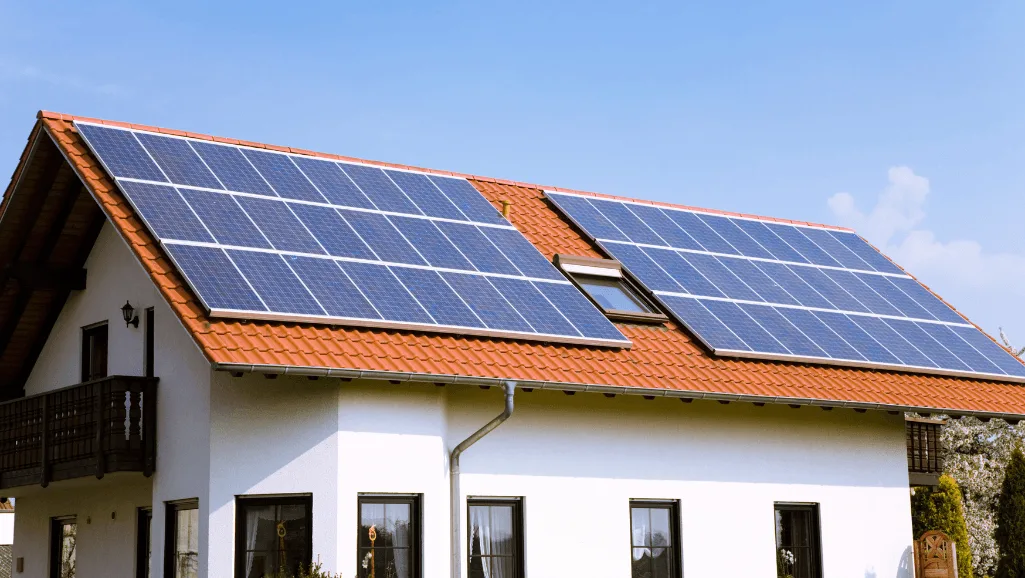
Adding extra panels captures more sunlight during peak sun hours and shoulder periods, which raises total annual kWh output. That extra output can be especially valuable in locations with high electricity rates or when you anticipate future loads (EV charging, heat pumps). Oversizing also helps offset long-term panel degradation: the larger the array, the more cushion you have as panels lose a small percentage of output each year.
Understanding the Phenomenon of Energy Clipping
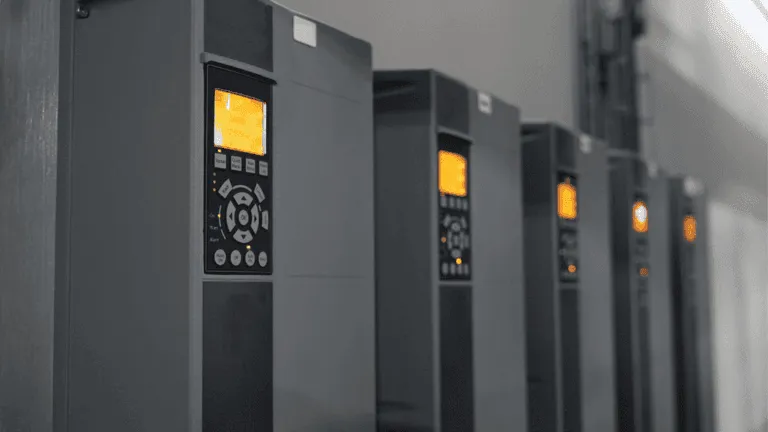
Energy clipping occurs when the DC power produced by the solar panels exceeds the inverter’s AC capacity; the inverter trims the excess, which wastes potential output during the sunniest hours. Clipping is expected at modest levels and isn’t always a problem, but excessive clipping reduces the benefit of added panels.
Minimizing clipping requires choosing appropriate inverter sizing and panel-to-inverter ratios. Many installers target a DC:AC ratio between roughly 1.1 and 1.4 depending on the inverter brand and local peak sun hours—this lets you oversize the DC array without severe clipping. Pairing microinverters (e.g., Enphase) or power optimizers (e.g., SolarEdge) with higher-watt panels can also reduce clipping and improve per-panel output under partial shade.
Rule of thumb: If you expect significant exported energy and export credits are low, keep the DC:AC ratio conservative; if you plan to pair the system with batteries or you get full retail export credits, a higher DC:AC ratio is often justified.
| System SizeExpected Lifetime Efficiency LossInverter Capacity (W)Cost Increase per Additional Panel | |||
| Standard | 10-20% | 7,600 | $0 |
| Oversized by 3 Panels | 8-18% | 7,600 | $3,750 |
In practice, moderate oversizing can raise lifetime output even after accounting for some clipping—especially where there is room on the roof and you can use or store the extra energy. Ask your installer for modeled output with specific panel wattages and your local peak sun hours so you can see expected annual kWh, clipped energy, and net exported or stored output before you decide.
Interconnection Challenges with Oversized Solar Systems
Installing an oversized solar system can trigger additional scrutiny from your utility during the interconnection process. Utilities often evaluate proposed system size against historical on-site usage and established interconnection limits, so simply sizing a system far above past usage can complicate approvals or require extra studies and upgrades.
Some projects stall or withdraw because of utility size limits, queue delays, or interconnection upgrade costs. These issues have been reported across multiple states and by various project types, showing that interconnection rules can materially affect whether a larger array is feasible or economical in your location.
Regulators and utilities in many states are updating interconnection rules to streamline the process, but timelines and requirements differ. In some jurisdictions, large or non-standard systems can face long waiting periods and significant interconnection costs, which can materially change the project economics. Other utilities—by contrast—have processed many connections successfully, demonstrating that careful planning and the right technical choices can overcome hurdles.
Practical steps to reduce interconnection risk:
- Contact your utility early and request the interconnection handbook—review size limits, export rules, and study requirements.
- Ask your installer to model the proposed system against your historical kWh usage and to include any required protection or upgrade costs in the quote.
- Consider staged system builds or adding battery storage to limit exported power if export caps or penalties apply.
- Request the estimated interconnection timeline and any potential upgrade costs in writing before signing a contract.
Before committing to an oversized system, talk with experienced local installers and confirm utility rules for your location. That due diligence helps align your solar system sizing with practical interconnection requirements, reduces delay and unexpected costs, and ensures the final array meets both your energy needs and utility standards.
Exploring Solar Energy Calculations for Optimal System Size
Getting the right size solar system is essential to minimize cost and match your household electricity usage. Start by estimating your current daily kWh usage and the space available on your roof—those two inputs drive the system size and number of panels you’ll need.
Calculating Your Specific Energy Needs
Step 1: Find your monthly kWh from utility bills and convert to daily kWh (monthly kWh ÷ 30). Step 2: Look up your location’s average peak sun hours (peak sun hours). Step 3: Compute required system kW = (daily kWh) ÷ (peak sun hours × system derate). Step 4: Divide required kW by panel kW (panel watts ÷ 1000) to get the number of panels, then add a safety margin (10–20%) for future needs.
Worked example (estimate): If your home uses 900 kWh/month → 30 kWh/day. In a location with 5 peak sun hours and assuming a 0.8 system derate: required kW = 30 ÷ (5 × 0.8) = 7.5 kW. Using 350W panels (0.35 kW each): number of panels ≈ 7.5 ÷ 0.35 = 21.4 → round up to 22 panels. Add a 10% buffer if you expect future EV charging or higher usage.
Typical example ranges used by installers: a 1,500 sq ft home might average ~630 kWh/month while a larger 2,500 sq ft home might use ~840 kWh/month—these are illustrative, not universal. Panel counts (e.g., 17–30 panels) vary with panel watts, available roof space, and peak sun hours. Always confirm with local data and a site assessment.
Forecasting Future Energy Requirements
Account for planned changes: EV charging, heat pumps, or more occupants add daily kWh that should be included in your solar system need. For instance, add expected EV kWh/day to your baseline daily kWh before repeating the sizing math above. If roof space is limited, prioritize higher-watt panels or consider batteries to capture excess output.
Practical next steps: collect 12 months of kWh bills, lookup peak sun hours for your location, and run the calculation above. Ask installers for a modeled output table showing monthly kWh production, expected exported kWh, and required roof space for the chosen panel wattage. If you want, download a simple spreadsheet or calculator to test “size solar” scenarios (current needs vs. future needs) before committing.
Electric Vehicles and Solar: Planning for Future Consumption
Electric vehicles (EVs) are becoming more common, and that changes your home’s energy needs. If you plan to buy an EV, include its charging demand when you size solar system capacity so you don’t need an expensive upgrade later. Proper planning links your solar array size, daily kWh usage, and available roof space to future EV charging needs.
Estimate EV load using this quick method: choose your average miles driven per day, divide by the vehicle’s efficiency (miles per kWh) to get kWh per day, then add that to your household daily kWh before running the sizing math (see calculation block). For example, a car that gets 3.5 miles/kWh and is driven 30 miles/day requires about 8.6 kWh/day (30 ÷ 3.5 ≈ 8.6). In many locations that translates to roughly 2–3 additional panels (350W class) depending on peak sun hours and system derate.
Practical charging and sizing guidance:
- If you plan daytime charging (at home while panels produce), you can size the solar array to cover a significant portion of EV use directly and reduce exported energy needs.
- If you charge overnight, pair solar with battery storage to shift daytime solar output to nighttime charging and maximize on-site use.
- When estimating panels for EV charging, factor in your location’s peak sun hours and panel wattage—this affects how many panels you need to meet the added daily kWh.
Checklist before you size solar for an EV: estimate miles/day, convert to daily kWh, choose expected panel wattage and local peak sun hours, then add the EV kWh to your baseline daily usage and recalculate required system size. That approach keeps your solar system and roof space optimized for both current household loads and future EV charging needs.
FAQ
Is it a good idea to oversize my solar panel system?
What determines my solar panel requirements?
How should I match the quantity of solar panels with my usage patterns?
How does net metering affect my decision to install more solar panels than I need?
What are the financial implications of installing a larger solar panel system?
How can I maximize solar energy production while considering oversizing?
Can an oversized solar system lead to interconnection challenges?
How should I go about calculating my specific energy needs for solar panels?
Should I factor in future energy requirements like electric vehicles when sizing my solar panel system?