Solar Panel Sizing: many homeowners ask whether it makes sense to oversize a solar system to save more money or reach energy independence. Oversizing can help in some situations, but it isn’t always the best choice — the right number of panels depends on your current and future energy usage, local utility rules, roof space and orientation, and the upfront cost of the system.
Net metering often lets you earn credits for surplus electricity fed back to the grid, but those credits are usually account credits rather than cash payouts and their value and longevity depend on your utility’s rules. An oversized solar panel array can delay your payback if you can’t use or monetize the extra production, so think about how you’ll use that excess power before adding more panels than you need.
Key Takeaways
- Oversizing a solar panel system doesn’t always maximize savings because utility export limits and crediting practices can reduce financial benefits.
- Local policies on excess solar production and net metering heavily affect whether a larger system makes sense.
- Larger systems mean higher upfront costs for the same roof and may lengthen the time it takes to recoup your investment.
- Careful determining of solar panel requirements helps you choose a system size that fits current and future energy needs.
- Oversizing can be beneficial if you plan home upgrades or electric vehicle use in the future.
- Follow the NEC “120% Rule” and your utility’s interconnection guidelines to avoid rejected permits or connection delays.
- Incentives such as SRECs and the federal tax credit can shift the math toward a larger system in some markets.
Understanding the Basics of Solar Panel Sizing
Solar panel sizing determines how well your PV system meets your energy needs and your budget. For homeowners and small businesses, choosing the right number of panels—and the correct panel wattage and array size—reduces wasted capacity and shortens payback time. Good sizing blends your historical electricity usage, local sunlight (insolation), panel efficiency and roof constraints into a single practical design.
What Determines Your Solar Panel Requirements?
Your required system size depends primarily on: monthly electricity usage (kWh), average peak sun hours at your location, and the wattage and rated efficiency of the panels you choose. Roof area, orientation, shading and your future energy goals (EV charging, heat pumps, battery storage) also affect how many panels you can and should install. Remember system losses—often modeled with a derate factor (~0.75–0.85)—when converting panel nameplate watts to realistic annual production.
Matching Solar Panel Quantity with Usage Patterns

To match panels to daily usage, convert monthly kWh to daily kWh, divide by peak sun hours to get required array kW, then divide by panel wattage (adjusted for derate) to find the number of panels. Higher-efficiency panels (for example, SunPower® Maxeon®) produce more watts per square foot so you’ll need fewer panels for the same annual production.
Example calculation: A home that uses 900 kWh per month → 30 kWh per day. If your site gets 5 peak sun hours per day, you need a 6 kW array (30 ÷ 5 = 6). Using 300 W panels with a 0.80 derate factor: effective panel output ≈ 240 W, so 6,000 W ÷ 240 W ≈ 25 panels.
Typical assumptions used in the tables below: 250 W standard panels and 370 W higher-efficiency panels; remember to adjust counts for location, system losses and installation details.
| Home TypeMonthly Energy Usage (kWh)Required Number of 250W PanelsRequired Number of 370W SunPower Panels | |||
| Small Home (Temperate Climate) | 200 | 10 | 7 |
| Average Home (U.S. Standard) | 900 | 25 | 17 |
| Large Home (Warm Climate) | 2000 | 55 | 37 |
Also consider roof area: most modern panels occupy roughly 17–22 sq ft each (varies by wattage). Before finalizing your array size, verify usable roof space, tilt and structural capacity so your planned panel count fits without excessive shading or awkward layouts.
Considering Net Metering and Utility Policies

When you evaluate solar panel installation considerations, understanding net metering and utility rules is critical. Net metering lets homeowners export excess electricity to the grid and receive credits, but the credit type and value vary widely by state and utility — in many places credits are account bill reductions rather than cash payments and may be subject to expiration or reduced valuation.
Some states and utilities still offer full retail-rate net metering, which materially improves the economics of adding extra panels or a larger system. For example, utilities in parts of New Jersey and Florida have historically provided retail-rate credits, which can shorten payback on a residential solar installation. However, payback estimates (for instance, claims of ~4–5 years in some New Jersey scenarios) typically assume available state incentives, SRECs, and the federal investment tax credit — verify whether figures are presented before or after rebates.
Policy changes can reduce the value of exported electricity. California’s shift to Net Billing (e.g., successor programs to classic net metering) significantly reduced export credit value for many customers — in some implementations export credits were worth roughly a fraction of retail rate (often reported around 20–30% of retail in initial proposals), which materially lengthens payback compared with full retail net metering. See the linked EnergySage article for an example of how state-level rule changes can affect savings.
| State/PolicyCredit SystemAverage Payback Period | ||
| New Jersey (Net Metering) | Full Retail Rate | 4-5 years (with strong incentives in some cases) |
| California (Net Billing 3.0) | Lower export value (~20–30% of retail in practice for many customers) | Payback reduced significantly vs. full retail |
| Florida (Net Metering) | Full Retail Rate in many utilities | Competitive (varies by utility) |
To see how net metering changes your payback, run a simple example: if your system produces 5,000 kWh/year and you export 1,000 kWh with a retail rate credit of $0.18/kWh, that’s $180/year in bill credit; if export credit is $0.05/kWh under net billing, that export is worth only $50/year — a $130/year swing that adds years to the payback. Adding a battery to use exported energy on-peak can increase the value of your system where export credits are low.
Bottom line: check your utility’s current net metering or net billing tariff, confirm how exported energy is valued, and include SRECs/state rebates and the federal tax credit when modeling payback. These policy details often determine whether oversizing a solar panel array makes financial sense for your home.
Should I Get More Solar Panels Than I Need?
Deciding whether to install more solar panels than your current load requires means weighing future needs, incentives and how you’ll use the extra energy. Oversizing can boost long-term production and SREC or incentive income in some markets, but it also increases upfront cost, demands more roof space, and may create export or interconnection complications if your utility limits credit value.
Benefits of Excess Solar Panel Capacity
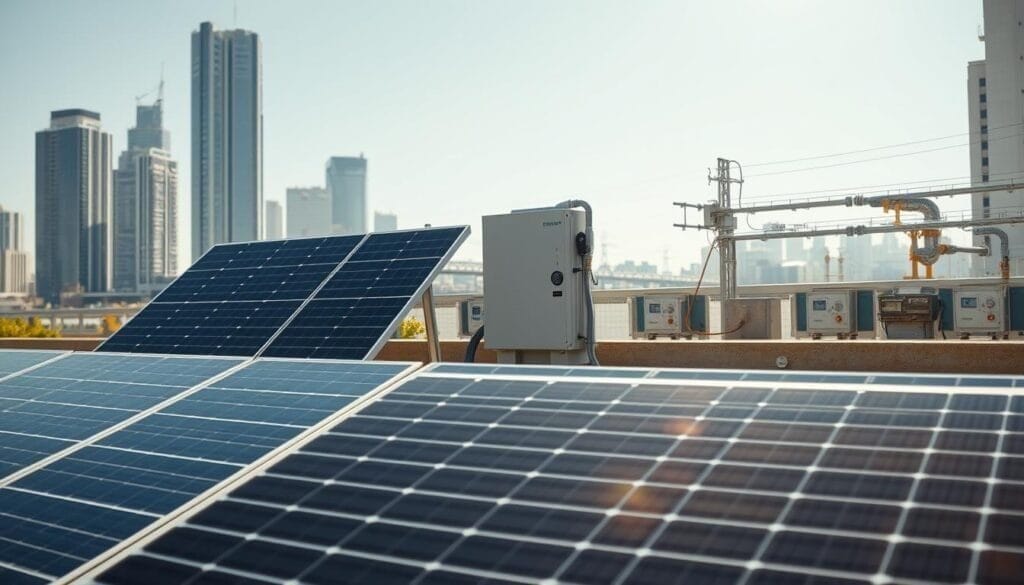
Extra panels can pay off when local programs reward energy production (SRECs or favorable net metering), or if you plan significant future loads like EV charging, heat pumps or home additions. Studies and market analyses also show solar installations can increase home value — figures vary by region and study, but many reports find measurable percentage uplifts in resale value when high-quality solar panels are installed. In sunny climates, additional capacity takes advantage of abundant peak sun hours to produce surplus energy on bright days.
Drawbacks of Overestimating Solar Panel Needs
Oversizing raises the initial investment. Nationwide average installation costs vary by system size and local labor, but using ranges (for example, small residential systems to larger 8–10 kW systems) is more accurate than a single figure; incentives and tax credits also change net cost. If you don’t plan to stay in the home long-term, or if your utility severely discounts exported electricity, the extra panels may never deliver the expected returns. Physical constraints (available roof space, shading, structural capacity) also limit feasible panel counts and may increase installation complexity and time.
| ConsiderationBenefitDrawback | ||
| Financial return from incentives | Can be substantial with high energy production and SRECs | Upfront costs and regional variation in incentives may reduce ROI |
| Home value | Can increase resale value when high-quality panels are installed | Value capture depends on local market and selling timeline |
| Energy production | Maximizes output on sunny days and future-proofs for new loads | Excess production may be exported at low credit rates or clipped by inverter limits |
Decision checklist — consider oversizing if you: plan to keep the home long-term, expect EV or appliance load growth, have room on the roof and favorable local incentives. Avoid oversizing if you: plan to move soon, face restrictive utility export rules, or lack roof space. For a tailored recommendation, run a simple example (calculate current kWh, forecast future use, convert to required array watts and panel counts) or get a custom estimate from a vetted installer. This helps ensure the panel count, panel size (watts) and array layout align with your goals and budget.
Assessing the Financial Implications of Larger Solar Investments
When weighing a larger solar system, focus on net cost after incentives, expected annual energy production, and how long you plan to keep the home. Bigger systems increase gross production and can improve long-term savings, but they also raise upfront cost and may lengthen payback unless local incentives or export policies make extra production valuable.
Installation costs vary widely by system size, equipment quality and region. Instead of a single number, use ranges: small residential installs often start in the mid five-figures before incentives, while larger 8–10 kW systems typically cost more. Incentives (state rebates, SRECs) and the federal tax credit reduce net cost substantially — verify whether quoted cost figures are before or after incentives when comparing offers.
| AspectImpact | |
| Upfront Cost | Varies by system size, equipment and location — use a cost range rather than a single figure |
| Average Property Value Increase | Studies commonly report a positive uplift in resale value when high-quality solar panels are installed; the percent varies by market |
| Electricity Coverage | Well-sized systems can cover the majority of household kWh needs; exact coverage depends on annual kWh and array production |
| Potential Return on Investment | Long-term ROI depends on assumptions: net cost after incentives, electricity price inflation, system degradation and maintenance |
How to estimate payback (simple model):
- 1) Calculate annual production (kWh/year) for your planned array size and local peak sun hours.
- 2) Multiply by your current electricity rate ($/kWh) to get annual savings.
- 3) Subtract annual operation/maintenance costs and any lost incentives.
- 4) Divide net installed cost (after tax credit and rebates) by annual net savings → payback years.
Example (illustrative): a system producing 8,000 kWh/year at $0.18/kWh yields $1,440 gross annual savings. If net installed cost after incentives is $12,000 and annual O&M is $100, payback ≈ ($12,000) ÷ ($1,340) ≈ 9 years. Adjust assumptions (energy price inflation, battery costs, degradation) to see how ROI shifts.
Financing matters: loans, leases and PPAs change cash flow and effective payback. A loan spreads the upfront cost but adds finance charges; a lease or PPA reduces or removes upfront cost but often lowers incentive capture and long-term ROI. When considering more panels, compare financed scenarios side-by-side.
Finally, match your planned array size to realistic production and usage. If you expect future increases in kWh use (EV charging, heat pumps) a larger system may be sensible. If not, focus on optimizing panel count and panel wattage to maximize returns for your actual consumption.
The Impact of Oversizing on Solar Panel Efficiency
Some homeowners and businesses deliberately install more solar panels than their current load suggests to increase lifetime energy production or prepare for future power needs. Oversizing can improve annual output and help offset panel degradation over time, but it also introduces trade-offs—most notably the risk of energy clipping when the array produces more than the inverter can accept.
Maximizing Energy Production with Oversizing

Adding extra panels increases the array’s rated capacity, letting the system capture more sunlight during long, bright days and around peak hours. In regions with many peak sun hours or rising electricity rates, a larger array can generate useful surplus production and improve long-term savings. Oversizing can also future-proof a system for added loads like EV charging or heat pumps.
Understanding the Phenomenon of Energy Clipping
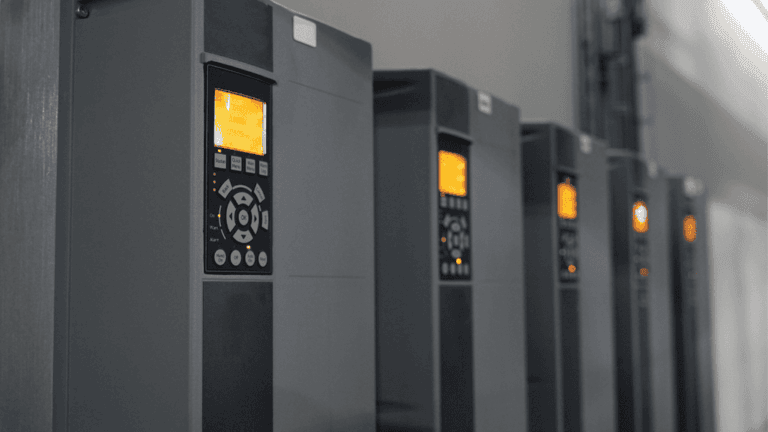
Energy clipping occurs when the PV array produces more instantaneous power than the inverter’s AC capacity, so the inverter limits (clips) the output to its maximum. For example, a 7.6 kW inverter tied to a 9 kW DC array will clip at times of very high irradiance—some DC power is lost even though the panels could produce more. Clipping reduces marginal production during peak sun but often has a small effect on annual generation if managed correctly.
Manufacturers and designers commonly use a PV-to-inverter ratio (DC/AC ratio) between about 1.1 and 1.3 to capture extra daytime production while keeping clipping acceptable. Smart inverter platforms (like select SolarEdge or Enphase solutions) and appropriately chosen microinverters help reduce wasted output and can make oversizing more effective.
Practical pairing example: a 290 W microinverter (Enphase IQ7+ example) typically pairs well with 320–350 W panels to maintain high per-panel efficiency and keep clipping low; similarly, a SolarEdge HDWave 7.6 kW inverter can be paired with a modestly oversized array to increase annual yield while staying within recommended DC/AC ratios.
| System SizeExpected Lifetime Efficiency LossInverter Capacity (W)Cost Increase per Additional Panel | |||
| Standard | 10–20% | 7,600 | $0 (baseline) |
| Oversized by 3 Panels | 8–18% | 7,600 | Varies by panel wattage — example shown as incremental install cost |
Best practices when considering oversizing:
- Target a DC/AC ratio in the ~1.1–1.3 range unless manufacturer guidance suggests otherwise.
- Model expected clipping (hourly production) to estimate annual lost kWh — small amounts of clipping are often acceptable if annual yield increases sufficiently.
- Consider batteries or smart-charging loads (EVs) to consume surplus generation instead of exporting low-value credits.
- Pick inverter and panel pairings supported by manufacturer specs to preserve warranties and performance guarantees.
In short, oversizing can raise annual production and better match future energy needs, especially in high-irradiance locations, but success depends on correct inverter selection, sensible DC/AC ratios and strategies to use or store excess production.
Interconnection Challenges with Oversized Solar Systems
Installing an oversized solar system can trigger extra interconnection reviews and limits from utilities. Many utilities set connection rules based on historical electricity usage and site capacity, so a proposed array that far exceeds past consumption may face more scrutiny, higher interconnection study costs, or outright limits on accepted panels or array size.
Reports have shown a meaningful share of larger community solar proposals drop out of interconnection queues because of rule complexity or cost barriers. These problems vary by state and utility: some jurisdictions have long queue backlogs, while others process applications quickly. In certain areas the interconnection process can add months or even years to deployment timelines and become a sizable part of project cost.
Regulators in many states are updating rules to streamline interconnection and reduce barriers for bigger systems. Large utilities (for example, Xcel Energy and others) have successfully integrated substantial amounts of distributed solar, but success usually requires careful planning: the right inverter selection, accurately sized arrays for the local grid, and early engagement with the utility.
Practical steps to reduce interconnection risk:
- Check your utility’s interconnection rules and online queue status before finalizing array size.
- Ask installers about recent local interconnection outcomes and typical timelines.
- Choose inverter types and panel layouts that meet utility technical requirements to avoid extra studies.
- Factor potential interconnection costs and wait times into your system budget and schedule.
Working with experienced installers who understand local interconnection processes helps ensure your proposed array and roof layout match utility expectations and reduces delays in getting a working system online.
Exploring Solar Energy Calculations for Optimal System Size
Getting the right size for your solar system is essential to maximize savings and avoid wasted capacity. Start by assessing current household energy use, available roof space, and how your needs might change — then convert that into a practical panel count and array size.
Calculating Your Specific Energy Needs
Begin with your monthly electricity usage (kWh) from utility bills. Convert monthly kWh to daily kWh, then divide by your location’s average peak sun hours to estimate required system kW. Finally, divide by chosen panel wattage (adjusted for system losses) to get the number of panels.
Example step-by-step:
- Monthly usage = 900 kWh → Daily = 900 ÷ 30 = 30 kWh/day.
- Assume 5 peak sun hours/day → Required array = 30 ÷ 5 = 6 kW.
- Choose 300 W panels and apply a derate factor of 0.80 → effective panel output = 300 × 0.80 = 240 W.
- Panels needed = 6,000 W ÷ 240 W ≈ 25 panels.
Typical home-size examples can help, but adjust for behavior and climate. A smaller home might use ~630 kWh/month while a larger home might use ~840+ kWh/month — these are illustrative averages, not guarantees. Depending on usage and panel wattage, many homes need roughly 17–30 panels to cover their load.
Cost and regional examples vary: average installed costs depend on system size and equipment. For instance, some regional reports show a typical 10 kW system costing in the low-to-mid tens of thousands after incentives in certain states; always confirm whether quoted figures are before or after tax credits and rebates.
Forecasting Future Energy Requirements
Factor in expected future loads like electric vehicles or heat pumps when sizing your array. If you plan to add an EV, battery storage, or expand the home, increase the target kW accordingly or plan for an oversized array within interconnection and inverter guidelines. A battery can store daytime surplus so you use more of your own production instead of exporting it at low credit rates.
Quick checklist:
- Gather 12 months of kWh bills to calculate average monthly usage.
- Find your local peak sun hours (solar insolation) from a reliable source.
- Select panel wattage and apply a derate factor (0.75–0.85) for realistic output.
- Decide whether to size for current use or include future loads (EVs, batteries).
- Confirm roof area per panel (typically ~17–22 sq ft depending on wattage) to ensure panels fit.
Use this formula and checklist to produce a draft system size, then ask a trusted installer for a site-specific production estimate and a detailed quote that accounts for roof layout, shading, and local incentives.
Electric Vehicles and Solar: Planning for Future Consumption
Electric vehicles (EVs) are becoming more common, and that affects home energy needs. If you plan to own an EV, include its charging demand when sizing your solar panels so you won’t need costly upgrades later. Many EV drivers prefer to charge with renewable electricity, so planning now can make your system more cost-effective long-term.
Estimate EV energy use before deciding how many panels you’ll need. For example, if a vehicle averages about 3.5 miles per kWh and you drive 40 miles per day, you’ll use ~11.4 kWh/day (40 ÷ 3.5). Over a month that’s roughly 342 kWh (11.4 × 30). To supply that with solar you might need 7–12 panels depending on panel wattage, local peak sun hours and system losses.
Worked example (typical assumptions):
- Daily EV need = 40 miles → 11.4 kWh/day.
- Assume 5 peak sun hours/day → required EV-dedicated array = 11.4 ÷ 5 ≈ 2.28 kW.
- If you use 300 W panels and apply a derate factor of 0.80 → effective panel output ≈ 240 W.
- Panels needed ≈ 2,280 W ÷ 240 W ≈ 9.5 → you’ll need about 9–10 panels to cover that driving load.
That 7–12 panels range arises from variations in miles driven, panel wattage (higher-watt panels reduce count), and local sunlight. If you drive less per day or have higher-efficiency panels, you’ll need fewer panels; if you drive more or have fewer sun hours, you’ll need more.
Ways to integrate EV charging efficiently with solar:
- Use time-of-use charging to align charging with daytime solar production.
- Add a battery to store midday surplus for evening charging or to smooth demand.
- Install a smart charger that prioritizes solar production before drawing grid power.
- Plan your array size and inverter capacity to accommodate both home loads and EV charging without excessive clipping.
Including EV charging in your sizing plan ensures your system and array support both daily life and future transport needs. Talk to your installer about realistic kWh estimates for your driving patterns and how many panels you’ll need for your specific situation.
FAQ
Is it a good idea to oversize my solar panel system?
What determines my solar panel requirements?
How should I match the quantity of solar panels with my usage patterns?
How does net metering affect my decision to install more solar panels than I need?
What are the financial implications of installing a larger solar panel system?
How can I maximize solar energy production while considering oversizing?
Can an oversized solar system lead to interconnection challenges?
How should I go about calculating my specific energy needs for solar panels?
Should I factor in future energy requirements like electric vehicles when sizing my solar panel system?