
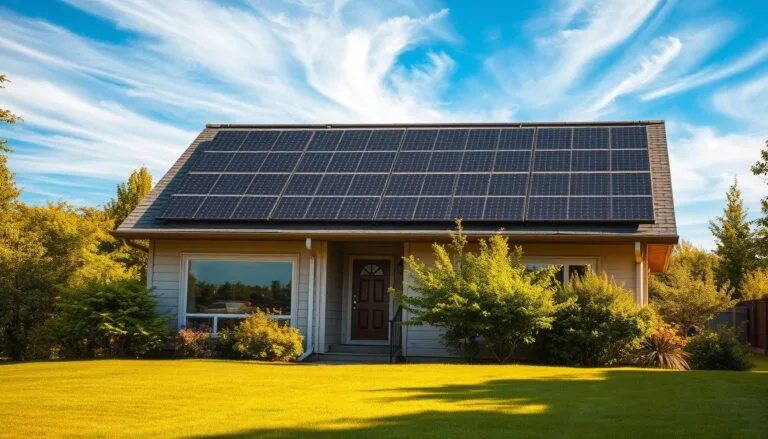
Are home solar panels worth it?
This guide answers that question with clear numbers and practical steps. For many U.S. homeowners, a properly sized solar panel system typically pays back in about 7–10 years and then delivers lower-cost electricity for 25+ years under manufacturer warranties and service guarantees. Typical lifetime savings often range from roughly $34,000 to $120,000 over 25 years, depending on system size, local utility rates, and incentives. Rising electricity prices (commonly modeled near a 2.8% annual increase) make future savings more valuable today. Ongoing upkeep is modest—industry surveys report typical maintenance around $140–$180 per year—and modern panels generally degrade at roughly 0.5% per year. Solar panels can also boost resale value. Multiple analyses report resale premiums near 6–7% (about $3–$5 per installed watt) in many markets. For example, after applying the federal tax credit, a competitively priced 12 kW system priced at $2.55–$3.15 per watt gross would sit near $20,700 net on marketplace listings (gross price less applicable credits and incentives). Check NREL, SEIA, and the IRS for the latest regional prices and tax-credit rules. This buyer’s guide explains the factors that drive value, current costs and incentives (including the federal tax credit), how to calculate payback and return on investment, financing options, resale effects, and when installing panels may make less sense. Quick next steps: get 2–3 local quotes, check federal and state incentives for your ZIP code, and confirm your roof’s suitability to decide with confidence. Key Takeaways Are home solar panels worth it? For many homeowners who pay average or higher electricity rates and have a usable roof, yes — solar is often a sensible investment. Most properly sized systems reach payback in under a decade and then reduce household electricity costs for 25+ years. Expected lifetime savings frequently fall in the five-figure range, though results vary by location, system size, and incentive stack. Rising utility rates increase long-term value from day one. Low maintenance, long warranties, and modest degradation make solar a durable clean-energy investment. Compare multiple quotes and confirm incentives to maximize return on investment. What you’ll learn: how to estimate your payback, which local rules and roof factors matter most, financing choices that preserve incentives, and practical steps to get accurate, comparable quotes. Get 2–3 quotes & check incentives for your ZIP code — a quick ZIP-code check will show state and utility rebates, net metering rules, and whether the federal tax credit applies to your installation. Buyer’s snapshot: Are solar panels worth it for most U.S. homeowners today? Quick verdict: For many U.S. homeowners who pay average or higher electricity bills and have a usable roof, installing solar panels is financially sensible — most buyers now break even in roughly seven years under typical 2025 market conditions, with lifetime savings often reaching the tens of thousands of dollars. Why that happens: Upfront installation costs are offset by decades of lower electricity bills plus incentives (notably the federal tax credit), which shorten payback. For context, a household that otherwise would spend roughly $65,000 on utility bills over 25 years (using common escalation assumptions) can meaningfully lower that total with a well‑sized, competitively priced panel system. Site factors matter: roof orientation, shading, and available space change annual production and therefore the break‑even timeline. A short site evaluation or production estimate from an installer will set realistic expectations for your home. How to decide in 3 quick steps Collect 12 months of electric bills to calculate your annual kWh use and current electricity cost. Request production estimates from 2–3 local installers (kWh/year) for your roof and compare per‑watt costs, equipment, warranties, and workmanship. Confirm local incentives and net‑metering rules and include the federal tax credit when estimating net cost. One‑line example: If your annual bill is $2,400 and an installer estimates your system will cut that by $1,800 Get a free estimate & check incentives by ZIP code — use a ZIP-code incentives tool to verify rebates, metering policies, and whether the federal tax credit applies to your installation before signing any contract. Key factors that determine if solar panels are worth it for your home Local electricity rates, roof fit, and policy rules usually decide the outcome. Start by pulling your last 12 monthly electric bills: higher retail rates and larger usage produce bigger monthly savings and a faster payback for a residential solar panel system. 1) Electricity rates and your bill Why your bill matters: Every kWh your panels produce replaces grid electricity. In high-rate states (for example, many areas of Massachusetts or California), that replacement value is higher and systems often reach break-even faster. Low-rate states can still make sense—especially for large users, EV owners, or where incentives are strong—but expect a longer payback. Quick example: A household that uses 10,000 kWh…