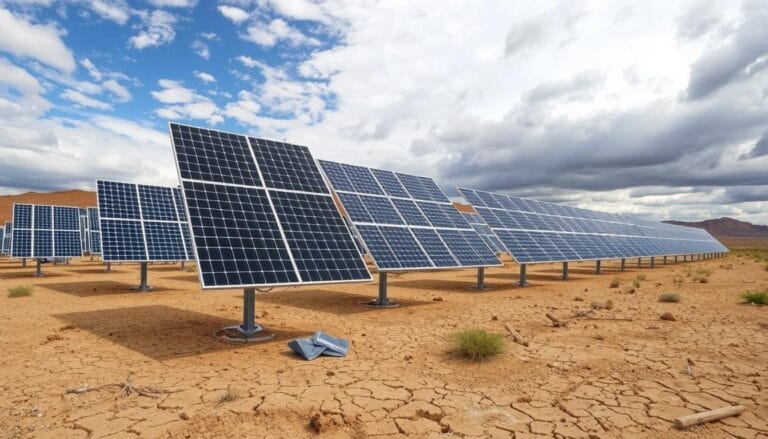
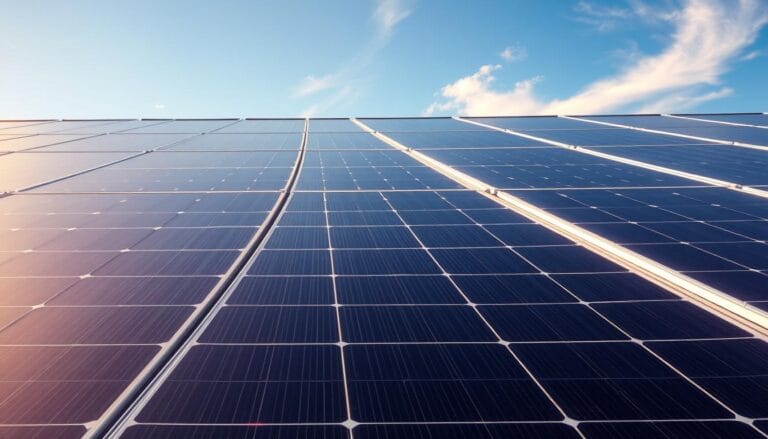
The quest for clean, sustainable energy has pushed us to harness the sun’s power. Scientists estimate that the Earth receives more than enough sunlight that, in a relatively short time, it could supply global energy demand for a year — a commonly cited figure that depends on how you convert solar flux to usable energy. This enormous sun energy potential has driven technologies that convert solar radiation into usable electricity, a cornerstone of renewable energy progress worldwide. Photovoltaic (PV) systems sit at the center of this transition. PV panels convert sunlight into electrical power and are increasingly common — from rooftop arrays on homes to utility-scale solar farms. Understanding how solar energy creates electricity helps homeowners, businesses, and policymakers make better decisions about energy systems and investment. Efficiency and flexibility matter because solar resource strength varies by location and season. That variability affects how PV cells and solar systems perform, so planners match technology and system design to local conditions. Advances in materials, inverters, and storage are steadily making solar power more reliable and practical as a core energy source. Technology and grid integration are narrowing the gap between intermittent sunlight and steady energy supply. Read on to learn how photovoltaic cells transform sunlight into direct current, how inverters make that electricity usable in homes and on the grid, and what role storage and policy play in scaling clean energy. Key Takeaways how solar energy creates electricity. How solar energy creates electricity: photovoltaic (PV) cells convert sunlight into direct electrical current, which inverters then make usable for homes and the grid. Solar panel technology harnesses solar radiation and offers vast potential to help meet global energy demand when deployed at scale. Photovoltaic systems are central to solar power electricity generation — typical commercial systems have an operational lifespan of 25+ years, depending on conditions and maintenance (see manufacturers’ warranties and degradation rates). The photovoltaic effect was first observed in the 19th century (Edmond Becquerel, 1839) and remains the foundational principle behind modern solar electricity. Panels produce electricity even on cloudy days, though output is reduced; system siting and design optimize production across seasons and weather. Countries such as China and the United States currently lead in installed solar capacity, demonstrating how national investment and policy can accelerate deployment. Solar farms show the scalability of solar power — utility-scale arrays can deliver significant energy to communities and feed power into regional grids. Advances in inverter technology, net metering, and energy storage are critical to integrating solar power with the grid and increasing the share of clean energy in electricity mixes. Understanding Solar Radiation and Its Potential The heart of solar energy conversion is an understanding of solar radiation basics. Solar radiation — the sunlight that reaches Earth — is the primary driver of renewable energy electrical generation: it fuels photovoltaic panels, concentrating solar systems, and many solar-driven applications. Grasping how sunlight varies and how much energy it provides is essential for siting systems and estimating production. The Infinite Power of Sunlight Sunlight is an enormous energy source. Rather than using an astrophysics detail that can be confusing, a practical way to think about it is the solar constant: the Earth receives roughly 1,366 watts per square meter at the top of the atmosphere, and total incoming solar energy far exceeds global electricity consumption. That energy is available wherever the sun shines; the challenge is capturing it efficiently through the solar energy conversion process. Variability of Solar Radiation Across the Globe Solar radiation reaching the ground varies widely by location, season, and weather. For example, modeled solar resource data show that insolation in Denver can be roughly three times higher in June than in December, which affects seasonal production for rooftop and utility-scale systems. LocationJune Solar Radiation (kWh/m2)December Solar Radiation (kWh/m2) Denver, Colorado 7.5 2.5 Note: kWh In practice, installers use these maps and local weather data to match technology (panels, tracking, storage) to regional conditions and to decide where solar farms or rooftop systems will be most effective. The Science Behind Photovoltaic Systems The core of photovoltaic system energy conversion is simple in concept: sunlight hits a material that can convert photons into an electrical charge. Photovoltaic (PV) cells — most commonly made from silicon — are the technology that does this at scale. Silicon remains dominant because it strikes a balance between cost, durability, and performance for residential, commercial, and utility applications. Practical silicon PV cells date back to Bell Labs in 1954, and since then solar technology has advanced rapidly. Research now spans conventional crystalline silicon modules to alternative approaches like thin-film and III‑V cells. Each class of cell targets different tradeoffs between cost, weight, durability, and efficiency. New solar tech explores materials such as cadmium telluride (a thin-film option used in low-cost utility arrays) and high-performance III‑V semiconductors (used where weight and efficiency justify higher cost, such as satellites). These technologies extend the reach of solar energy into new systems and applications. Type of Solar CellMaterial UsedCommon ApplicationsEfficiency (typical/commercial) Silicon PV Cells Monocrystalline or polycrystalline silicon Residential and commercial rooftop and utility systems Commercial modules typically 15–22% (lab cells higher; some recent cells exceed 25%)…