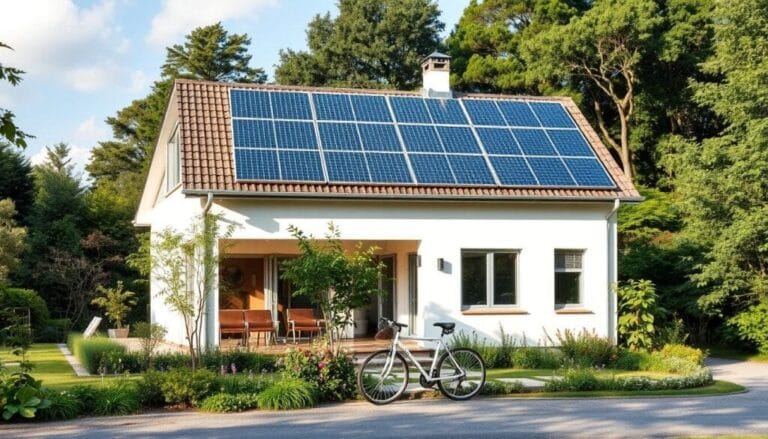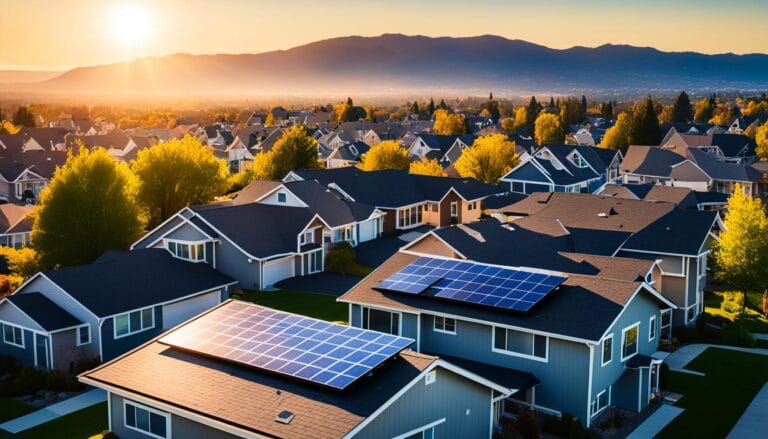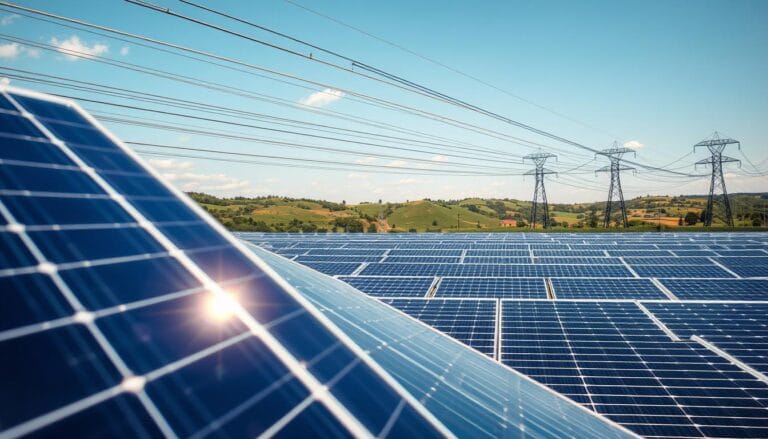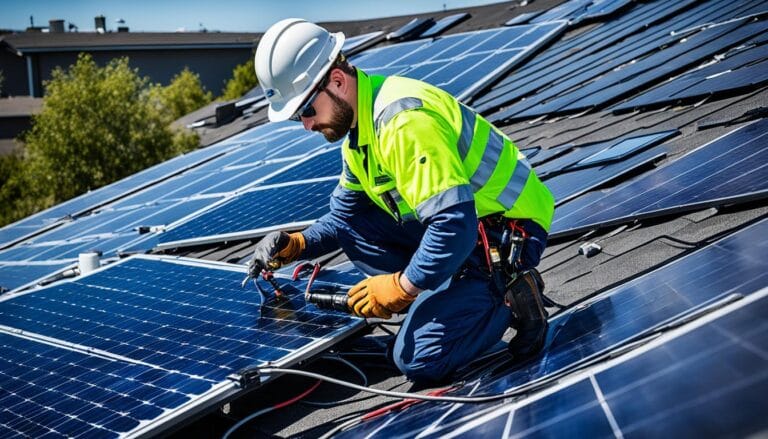
Solar Energy: practical green solutions for homes & businesses. The search for green technology in energy has accelerated real-world, eco-friendly energy solutions that lower bills and cut carbon. Green Power Energy provides end-to-end solar services—from design and permitting to installation and ongoing maintenance—helping homeowners and businesses switch to a cleaner energy source with confidence.
Choosing solar energy means using the sun as an abundant energy source to generate electricity and reduce reliance on fossil fuels. Green Power Energy installs high-quality solar panels and system components tailored to each site so customers save energy and money while increasing energy independence and long-term resilience.
Key Takeaways
- Adopting solar energy and other green technologies supports sustainable living and advances energy independence.
- Custom solar systems maximize efficiency and lower operating costs for both homes and businesses.
- Investing in solar power aligns environmental responsibility with tangible financial benefits.
- Comprehensive services—from site assessment to maintenance—make the transition to solar straightforward and stress-free.
- Reputable providers like Green Power Energy build trust through experience, warranties, and clear customer support.
Embracing Green Energy Solar for Efficient Power
The global push for renewable energy continues to accelerate, and solar power is at the forefront. Advances in solar technology and falling equipment costs have made solar energy easier to install and more effective at converting sunlight into useful electricity, helping homes and businesses adopt cleaner power today.
Market & Policy Trends
Adoption is rising worldwide: more households across the Caribbean and other sun-rich areas are turning to solar because it often delivers enough power to cut utility bills. National targets have boosted deployment—India set ambitious solar targets in the 2010s and continued expansion into 2022 and beyond—and globally the cost of many solar technologies fell dramatically during the 2010s (module and system costs declined substantially between 2010 and 2020, depending on the region and measure).
Government support plays a large role. Incentives such as tax credits, grants, and low-interest loans reduce upfront costs and stimulate local clean energy investment, which in turn strengthens local economies and reduces dependence on imported fuels.
Integration with Emerging Technologies
Solar pairs naturally with electrification trends—most notably electric vehicles (EVs). As more drivers switch to EVs, rooftop and community solar systems provide a local, low-carbon source of charging power, helping lower transportation emissions and energy costs. This combination of solar, storage and EVs supports resilient, decentralized energy use.
Beyond environmental benefits, the solar sector is creating jobs across manufacturing, installation, operations and maintenance—demonstrating that solar can deliver both cleaner air and broader economic opportunity for communities around the world.
Customized Solar Solutions: Tailoring to Your Energy Needs
Moving to clean power starts with a clear, step-by-step site assessment: site survey → system design → permitting and interconnection → installation → commissioning and monitoring. Every property has a unique solar resource, roof geometry, shading profile and energy profile, so a tailored solar energy system delivers the best performance and return on investment.
Assessment and Personalization of Solar Energy Systems
Experts begin with a detailed energy audit that records hourly consumption, roof orientation and tilt, shading from trees or nearby buildings, and available installation area. This lets designers size the PV array and select the right solar panels, inverters, and balance-of-system components to match your goals—maximizing daytime self-consumption, reducing bills, or targeting near-complete grid independence.
Typical assessment checklist (examples):
- Annual and hourly electricity use profile (kWh)
- Roof condition, area and orientation
- Shading analysis across seasons
- Local incentives, net metering and interconnection rules
- Desired backup or storage capacity (hours of autonomy)
Maximizing Efficiency with Tailored Design Options
Design is where PV array layout, module selection (solar cell type), mounting hardware and electronics come together. Choices such as panel tilt, string vs. microinverter architecture, and whether to add trackers or bifacial modules affect energy yield. Tools like PV system monitoring and smart Energy Management Systems capture real-time data so you can use sunlight more efficiently.
Key components and their impacts:
| FeatureDescriptionImpact | ||
| Solar Batteries | Store excess daytime production for evening use | Improves reliability and increases energy independence |
| Solar Charge Controllers | Manages charging and protects battery health | Extends battery lifespan and safety |
| Mounting Systems | Roof or ground supports, adjustable tilt options | Optimizes panel positioning for higher annual output |
| Solar Trackers | Mechanisms that follow the sun across the sky | Boosts annual yield—especially for ground-mounted arrays |
| Energy Management Systems | Monitors consumption and controls storage/loads | Maximizes self-consumption and cost savings |
Example (typical): a 5 kW rooftop system in a sunny area commonly produces ~6,000–8,000 kWh/year depending on orientation and shading—enough to cover a large portion of many households’ annual use. Exact production should be modeled during the assessment.
Design also considers aesthetics and property fit. Providers that offer custom module housings and integrated mounting can deliver systems that blend with architecture while delivering high performance.
Schedule a free site assessment to get a tailored estimate based on your roof, use pattern and goals—so you can see expected production, payback and which solar energy technologies make the most sense for your home or business.
Renewable Energy: A Proven Track Record in Sustainability
Renewable energy and sustainable energy solutions have moved from niche projects to major power sources worldwide. Large manufacturers and developers—like Canadian Solar—illustrate how industrial-scale planning, finance and technology deployment drive reliable clean energy at scale, including large solar farms and utility-scale plants.
Canadian Solar attracted attention with its Green Samurai green bond (JPY 18.5 billion), a financing move that won Environmental Finance’s Green Project Bond of the Year—evidence of how capital markets are supporting clean-energy projects and accelerating deployment.
| YearProjectInvestmentAward by Environmental Finance | |||
| 2018 | Gunma Aramaki | JPY 5.4 billion | Green Project Bond of the Year |
| Recent | Green Samurai | JPY 18.5 billion | Green Project Bond of the Year |
On the technology and deployment side, Canadian Solar reports global module shipments and development pipelines measured in gigawatts (GW) and battery storage capacity in gigawatt-hours (GWh). For general readers: GWp (gigawatt-peak) refers to installed solar capacity under standard test conditions, and GWh measures stored or delivered energy over time.
Reported figures from company disclosures describe large-scale activity—hundreds of MW to multi-GW projects and growing battery storage pipelines—demonstrating how integrated solar-plus-storage plants can support grid reliability and increase the role of clean energy in regional systems.
- Solar power projects and development pipelines show the sector’s growing scale and maturity.
- Battery energy storage pipelines indicate how solar-plus-storage plants can firm variable generation.
- Public listings and access to capital (e.g., NASDAQ) enable large developers to fund expansion and innovation.
What this means for buyers and communities: when established companies deliver at scale, buyers gain confidence in long-term performance, warranties, and supply chains—important factors when choosing solar farms, rooftop arrays, or utility plant partners for large commercial projects.
Premium Solar Panels and Battery Storage Technology
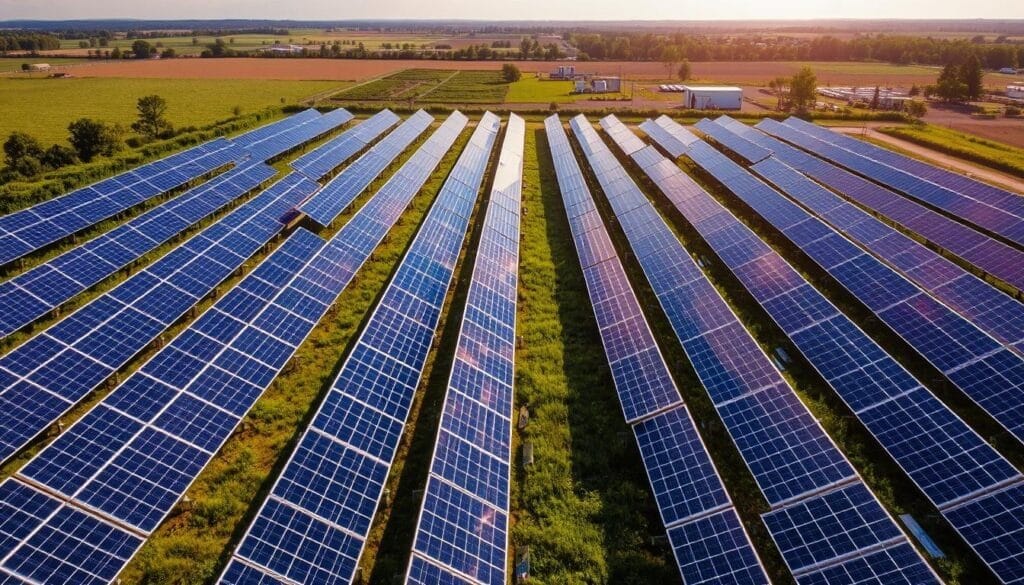
Investing in premium solar panels and modern storage solutions is one of the most effective ways to make solar a reliable, year-round energy source. High-quality panels paired with storage smooth out variability from changing sunlight and sun hours, keep critical loads powered during outages, and help both homes and businesses shift consumption to lower-cost times.
Innovative Solar Power Storage Solutions
Battery energy systems—most commonly lithium-ion today—store excess daytime production for evening use or backup power. Typical residential storage systems range from ~5 kWh to 20+ kWh (for example, common home systems offer ~10–13.5 kWh usable capacity), while commercial arrays scale much higher. Lithium-ion batteries provide higher energy density and longer lifespans than older lead-acid types, though at a higher upfront cost. When paired with smart inverters and energy management, storage increases self-consumption and overall system value.
The Advantages of High-Quality Solar Panels
Top-tier solar panels (higher-efficiency solar cells and robust materials) deliver more kWh per square meter and better performance in low-light or high-heat conditions. That improved yield means faster payback and more reliable production across seasons. Combined with storage and a smart Energy Management System, premium panels let you shift electricity use, reduce peak demand charges, and lower lifetime costs.
| Battery TypeEnergy DensityLifespanCost | |||
| Lithium-ion | High | Long (8–15+ years typical) | Higher initial |
| Lead-acid | Low | Short (3–7 years) | Lower initial |
When to consider adding storage:
- Frequent outages or unreliable grid service
- High time-of-use electricity rates or strong peak demand charges
- Desire for greater energy independence or EV charging onsite
- Commercial incentives or programs that reward load shifting
Quick ROI example (illustrative): a household with a high daytime tariff that installs a 6 kW solar array plus ~10 kWh of storage may reduce grid purchases during peak rates and shorten payback by several years versus solar alone—exact figures depend on local rates, incentives and sunlight hours.
Manufacturers and installers (for example, finance programs from large providers) now offer options like low-down-payment plans and warranties that make high-quality panels and storage accessible to more customers. Ask your provider for modeled production for your roof and a cost/benefit comparison of systems with and without storage.
By choosing the right solar technologies, materials and system design—matching panel type, array layout and storage—you maximize both environmental and financial returns over the system’s lifetime.
Financial Benefits: Understanding Solar Power Savings
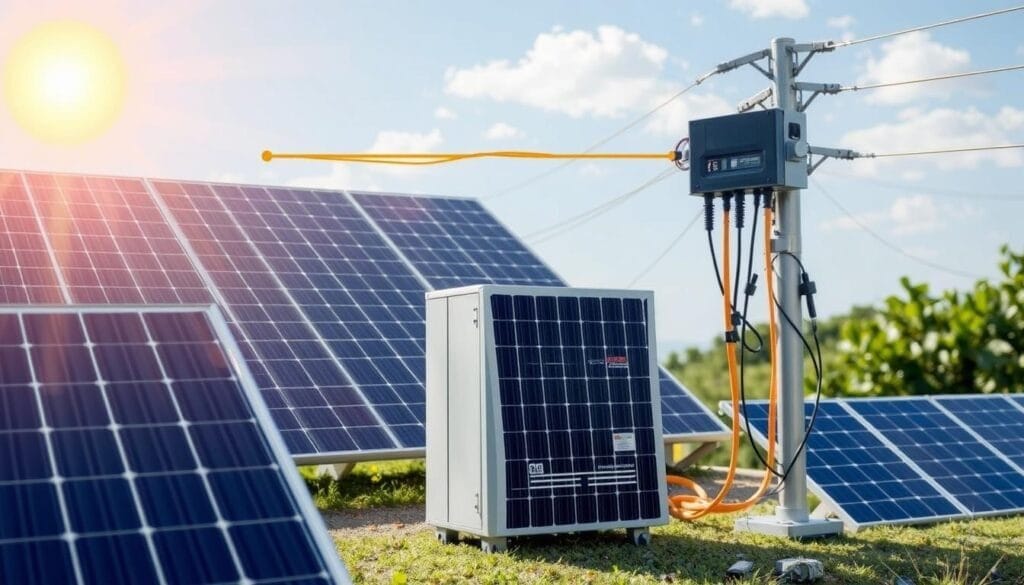
Switching to solar energy delivers clear financial advantages: lower utility bills, protection against rising rates, and long-term savings for both homeowners and businesses. Understanding how solar power reduces costs—and which incentives apply—helps you decide whether a solar upgrade makes sense for your site.
How Solar Energy Reduces Monthly Utility Bills
Well-designed solar panels reduce the amount of grid electricity you buy. The typical U.S. household consumes roughly 10,791 kWh per year (regional variation applies), so a properly sized rooftop system can offset a large share of that use. Solar also hedges against utility price inflation—electricity prices in many areas have risen several percent annually over the last decade—so every kWh produced by your array is a kWh you don’t buy from the grid.
High-efficiency modules from leading manufacturers perform better in low-light and high-heat conditions, increasing year-round production and helping you save more on electricity costs today.
Financing & Incentives: Long-Term Economic Benefits
Federal and local incentives substantially improve the economics of going solar. In the United States, the federal investment tax credit (ITC) has historically reduced installation costs by a significant percentage (verify current percentage for your project year). Combined with state rebates, utility incentives and net metering policies, incentives often bring the effective upfront cost down dramatically.
Common financial figures (illustrative): typical residential system installed costs have ranged widely—many recent projects fall between roughly $10,000 and $18,000 before incentives depending on size, equipment and region—while solar panels commonly carry production warranties around 25 years. Actual payback periods typically vary from 1–10 years depending on local electricity prices, incentives, and system size; model your specific site for accurate numbers.
Homes with installed solar systems often see increased resale value, and studies have shown premiums on sale prices in many markets—another financial upside to installation.
In short, when you account for reduced utility bills, tax credits, rebates and higher home value, solar power frequently represents a strong long-term financial investment.
Installation and Maintenance: A Hassle-Free Experience

Although installation and upkeep once seemed intimidating, many providers now deliver an effortless experience—handling site assessment, permitting, installation and post-install maintenance so you can focus on benefits, not logistics.
Professional maintenance services include scheduled inspections, inverter and module checks, cleaning as needed, and remote monitoring that detects underperformance early. These services extend system life and maximize energy production so your initial investment continues to pay off over the years.
Financing options such as low (or $0) down payment plans, leases, and loan programs—combined with available tax credits—make systems more affordable up front. Warranties from reputable manufacturers and installers further protect your investment.
Before you sign, use a trusted incentives lookup and a production model for your address to estimate payback, savings and expected lifetime energy production. That way you can compare scenarios (solar only vs. solar with storage) and choose the best path for your homes or businesses.
| FeatureBenefit | |
| 24/7 Customer Support | Immediate assistance and peace of mind |
| Experienced Electricians | High-quality installation, ensuring system reliability |
| Modern Technology and Warranties | Long-term savings with less worry |
| Remote Monitoring | Proactive maintenance, efficient operation |
Choosing a provider that combines quality panels, strong service and clear financing makes adopting solar a practical, affordable step toward cleaner, cheaper energy.
The Role of Solar Energy in Eco-Friendly Energy Consumption
Adopting solar energy is a practical step toward cleaner, more sustainable energy systems. By replacing fossil-fuel generation with solar-driven power, homes, businesses and utilities reduce air pollution, cut greenhouse gas emissions, and support broader climate goals while diversifying their energy mix.
Beyond emissions reductions, solar helps lower local environmental impacts associated with extraction and transport of nonrenewable fuels—making it an important energy source for communities seeking long-term resilience.
Environmental Impact of Switching to Solar Power

Switching to solar power yields clear environmental benefits. Solar panels convert sunlight directly into electricity without combustion, so they do not emit air pollutants during operation. As more rooftops and solar farms come online, demand for oil and gas declines, helping nations move toward targets such as those in the Paris Agreement.
To put scale into perspective: global installed photovoltaic (PV) capacity expanded dramatically in the 2010s—growth measured in tens to hundreds of gigawatts—showing how rapidly solar has become a major part of the world’s energy mix.
Solar Energy: Bridging the Gap to a Cleaner Future
Technical advances and falling costs have made solar an increasingly affordable clean energy option for many areas. Utility-scale plants and distributed rooftop arrays together strengthen grids and provide low-carbon electricity in regions with strong sunlight or where developers site large solar farms.
| YearInstalled PV Capacity (MW)Installed CSP Capacity (MW)Emission Reduction Potential (Gt) | |||
| 2010 | 40,334 | 1,266 | – |
| 2020 | 709,674 | 6,479 | 13 |
| Projection 2050 | – | – | Move toward net-zero |
Between 2010 and 2020, PV capacity rose from the tens of thousands of MW to the high hundreds of thousands of MW—a reflection of rapid adoption worldwide. For practical context, one MW of solar capacity typically produces roughly 1,200–1,800 MWh per year depending on location, which offsets a meaningful amount of fossil-fuel generation and associated emissions (site-specific factors apply).
In short, solar energy—paired with complementary sources like wind and grid flexibility measures—plays a central role in decarbonizing power systems, expanding clean energy access, and helping communities transition to a lower-impact, more resilient energy future.
Responsive Support and Maintenance Tailored to Your Needs
Reliable support and ongoing care keep your solar energy system producing at peak performance. Expert teams provide end-to-end services for both homeowners and businesses so systems deliver expected energy and protect your investment over the years.
How responsive support works in practice:
- Regional projects (for example, large installations in New York and Southern California) rely on scheduled service and fast fault response to preserve output.
- Corporate buyers—companies such as Google and Microsoft—pair performance targets with service contracts to ensure long-term delivery from utility-scale plants.
- Socially minded organizations like PRIDE Industries illustrate how well-managed projects can combine environmental and community benefits.
What to expect in a comprehensive maintenance plan:
- Inspection intervals (visual and electrical) and cleaning schedules to maintain panel output
- Remote monitoring and SCADA alerts with defined response times (e.g., initial diagnostics within hours)
- Planned upkeep (DC checks, inverter health, balance-of-plant) to prevent failures
- Corrective action procedures and spare-parts management to minimize downtime
| ServiceTypical SLA/Benefit | |
| Planned Maintenance | Regular inspections and preventive care — increases system longevity |
| Corrective Maintenance | Fault diagnosis and repair — reduces lost production hours |
| Consulting & Optimization | Performance tuning and capacity planning — improves yield and ROI |
Good service teams combine local field crews, 24/7 monitoring, and clear reporting so you know system status and production relative to expectations. For U.S. customers, ask providers for grid-interaction expertise and documented response times in your state or region.
Request a tailored maintenance plan to see proposed inspection cadence, SLA response hours, and estimated uptime for your system—this ensures your panels and system continue delivering clean power when you need it.
Green Energy Solar as a Step Towards Energy Independence
Solar energy is a practical pathway to greater energy independence—it reduces reliance on imported fuels and nonrenewable generation while giving households and communities more control over their power and costs.
When homes and businesses install rooftop arrays and pair them with onsite storage and smart controls, they can shift consumption away from peak grid hours, support local grid resilience, and lower bills in many areas. This is especially valuable in regions with high electricity prices or frequent outages.
Reducing Reliance on Traditional Energy Sources
Adopting solar power helps cut demand for fossil fuels and the emissions that come with them. Adding a residential battery (for example, common commercial products used for backup and time-shifting) means you can store surplus daytime production for evening use—reducing grid imports and increasing self-sufficiency.
Fostering Self-Sufficiency Through Solar Power
Solar panels do more than lower monthly bills: they enable practical, local energy solutions. For instance, pairing a modest rooftop array with a 10–13 kWh battery can provide several hours of backup for critical loads and reduce peak-period grid purchases—useful for EV charging, heating/cooling management, and keeping essential circuits online during outages.
Distributed solar and storage, combined with other renewable sources like wind or small turbine installations where appropriate, form a diversified local energy portfolio that strengthens community resilience and supports long-term economic benefits.
Estimate your level of independence with a simple production and storage calculator to see how much of your annual energy use a system could cover and whether a solar-plus-storage design suits your homes or business needs.
Conclusion
The journey through the world of sustainable power solutions leads to a clear conclusion: solar energy is central to a cleaner, more resilient future. It delivers environmental benefits, long-term economic value, and new opportunities across communities and industries.
Typical high-quality solar systems carry production warranties of 25 years or more, and payback periods commonly range from a few years to a decade depending on local incentives and electricity prices—see local data for precise estimates. Over their lifetime (often 25–30 years), systems can meaningfully offset grid electricity purchases and associated impacts.
As deployment scales up, thoughtful siting and community-focused planning are important to avoid negative impacts to wildlife and ecosystems; using previously disturbed land or integrating solar farms with agriculture are strategies that balance energy production and land stewardship.
Solar also creates jobs, supports critical services, and reduces pollution-related health burdens. Pairing solar with complementary options—small wind turbines, geothermal where suitable, and fair financial policies like net metering—strengthens local energy portfolios and broadens access to clean energy benefits.
Get a local quote or use an incentives lookup tool to see how solar and storage could work for your site—small individual choices add up to large community and global gains.
FAQ
What are the main benefits of solar energy?
How does solar power contribute to energy efficiency?
Can solar systems be customized?
How does solar impact the environment?
What maintenance is required?
Are there incentives for adopting solar?
What is involved in installation?
How does solar promote energy independence?