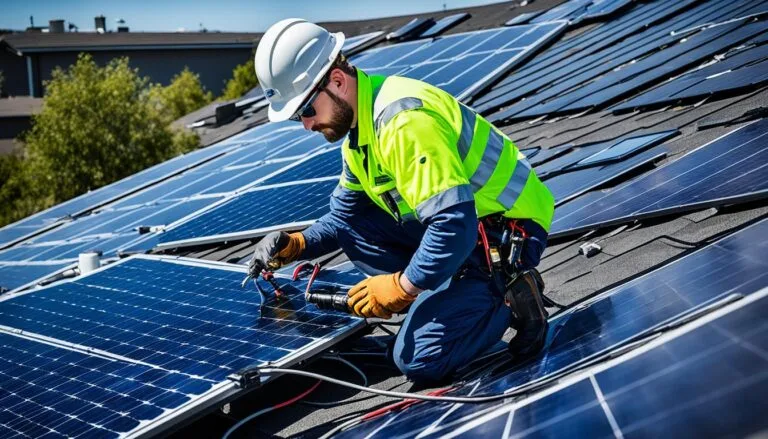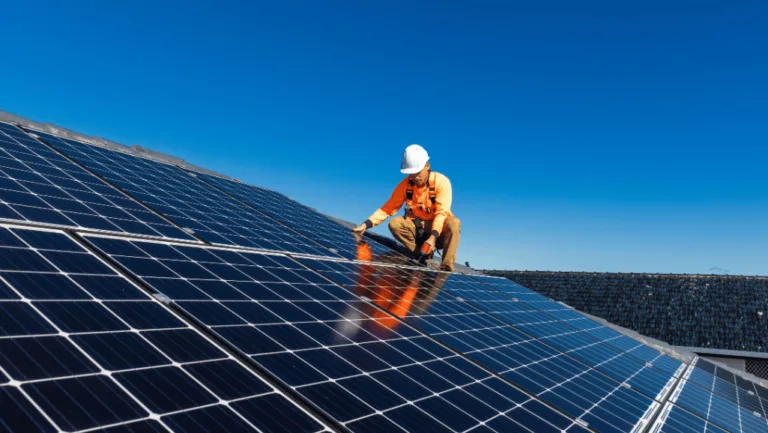

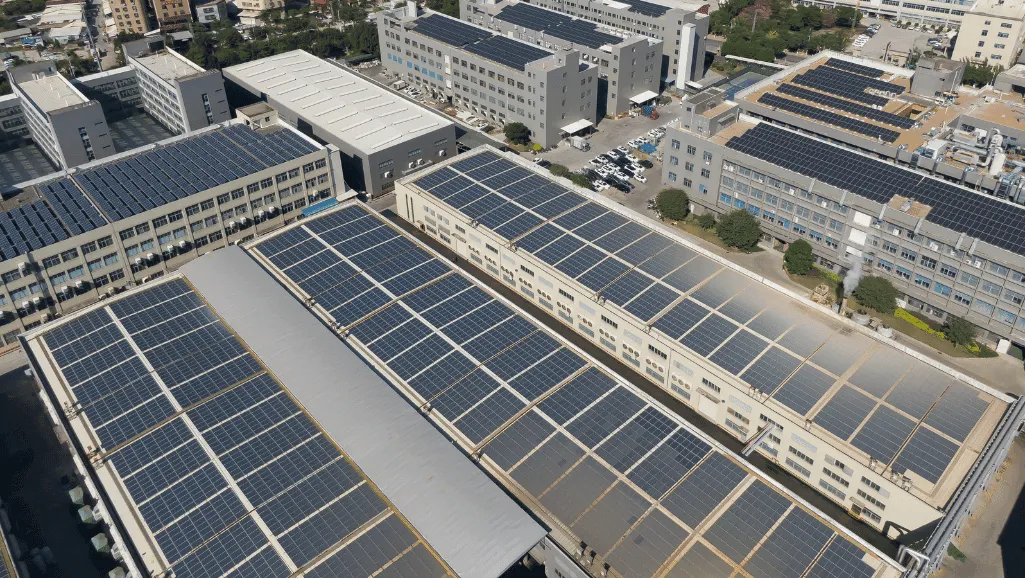
Amid a global pivot toward sustainability, the integration of industrial solar power solutions is reshaping the renewable energy landscape and driving the sustainable energy transition. Industrial facilities use a large share of national energy—U.S. industry alone accounts for roughly one-third of total energy consumption—so widescale solar adoption can materially reduce emissions and operational impact while improving energy resilience.
Facing both tighter environmental rules and rising energy prices, companies are turning to solar technology as an innovative, cost-effective strategy. As more businesses deploy solar systems, the cumulative effect on grid demand, energy costs, and corporate sustainability targets becomes increasingly significant.
Recent progress goes beyond basic electricity generation: initiatives like the Solar Energy Technologies Office’s (SETO) funded research, advances in solar-thermal and hybrid systems, and improved storage solutions are expanding how industrial sites harness sunlight. This article explains how industrial-scale solar systems cut costs, increase resilience, and scale across sectors.
Key Takeaways
- Reduces greenhouse gas emissions and cuts operational electricity costs—industrial solar can lower on-site energy spend by a measurable margin when paired with storage.
- SETO-funded R&D and private innovation are improving panel efficiency and driving down costs, supporting faster commercial solar installations.
- Federal and state incentives shorten payback periods, accelerating solar installations and making projects financially attractive for businesses.
- U.S. solar capacity additions reached tens of gigawatts annually (recent years), and planned solar installations target terawatt-scale growth by 2030, underscoring the scale-up of solar energy.
- Agrivoltaics and dual-use projects expand the benefits of solar by combining food production and energy generation on the same land.
Agrivoltaics expansion unveils the dual potential of agriculture and solar power in the industry.
The Rise of Industrial Solar Power in Modern Energy Management
The industrial sector is increasingly deploying solar power as a strategic response to rising energy prices and tighter environmental rules. Industrial-scale solar installations deliver measurable reductions in operational costs and greenhouse gas impact, while helping companies stabilize on-site energy supply and reduce dependence on volatile grid electricity.
Solar power plants now play a central role in corporate sustainability strategies: they produce clean electricity, support emissions targets, and can be paired with storage to shave peak demand charges. For example, several manufacturing facilities report electricity bill reductions in the range of 20–40% after installing on-site solar and battery systems (site-specific results vary by size and load profile).
- 2023 global additions: ~32.4 GW of new solar capacity (annual) — a recent-year benchmark for deployment scale.
- 2030 target: international initiatives and industry roadmaps point toward terawatt-scale cumulative capacity (1 TW) by 2030 in various global scenarios.
- Typical commercial ROI: many projects see payback windows of about 3–5 years depending on incentives, energy prices, and system size.
- Panel efficiency improvements: modern commercial modules commonly exceed 22%–25% in real-world deployments, boosting annual energy production per installed kilowatt.
Policy support — from tax credits and rebates to feed-in tariffs and net metering — continues to accelerate solar installations worldwide. The International Solar Alliance (ISA) and national programs provide explicit installation targets and funding streams that lower upfront barriers for companies considering solar projects.
Beyond reducing emissions and costs, innovations such as floating solar and hybrid solar-thermal systems increase usable production in constrained sites and deliver ancillary benefits (for example, water evaporation reduction). As industrial adopters scale their deployments, solar power’s contribution to efficient, resilient energy management grows more tangible and actionable.
Understanding Industrial Photovoltaic Systems and Their Benefits
Industrial photovoltaic systems are a foundational component of modern renewable energy solutions, delivering scalable power and tailored solar panel installations for diverse industrial operations. From rooftop systems on small manufacturers to multi-megawatt ground-mounted arrays at large facilities, these systems are engineered to match operational load profiles and maximize annual energy production.
Scalability of Photovoltaic Solutions for Diverse Industrial Needs

Photovoltaic systems scale horizontally and vertically: installers can combine modular panels to grow capacity incrementally or deploy large utility-style arrays to meet high demand. Rooftop installations save land and reduce transmission losses, while ground-mounted systems allow easier maintenance and expansion. Choose grid-tied systems for cost savings with net energy export or islanded configurations with battery backup where resilience is critical.
Technological Advancements in Photovoltaic Efficiency and Storage
Recent technology gains have pushed commercially available solar panels into the low- to mid-20% efficiency range for mainstream monocrystalline modules, with high-performance products approaching ~25% under practical conditions. Energy storage advances — Battery Energy Storage Systems (BESS) sized from hundreds of kWh to multiple MWh — let facilities capture peak-hour production and discharge during demand peaks, improving capacity utilization and lowering demand charges.
Financial Case: Payback, Incentives, and Lifespan
Photovoltaic systems typically offer 20–30 years of useful service; warranties and degradation rates vary by manufacturer. Incentives like the Solar Tax Credit and MACRS depreciation materially reduce upfront equipment and installation costs, shortening payback periods. For many industrial projects, installations reach breakeven within a few years depending on local incentives and electricity rates — a core reason businesses consider solar an attractive capital investment.
In practice, specify system size and expected production (kWh/year) when evaluating proposals, and confirm equipment ratings in watts per module (per watt) to compare offers transparently. Well-designed industrial photovoltaic systems combine the right panels, inverters, and BESS to maximize return on investment while delivering reliable, low-carbon power.
Advantages of Transitioning to Solar Energy Infrastructure
Adopting solar energy infrastructure is more than swapping fuels—it’s a strategic shift that lowers long-term cost, strengthens energy resilience, and advances corporate sustainability. For industrial sites, on-site solar reduces exposure to volatile utility prices while delivering measurable environmental and financial benefits.
Long-term Cost Reduction and Financial Savings
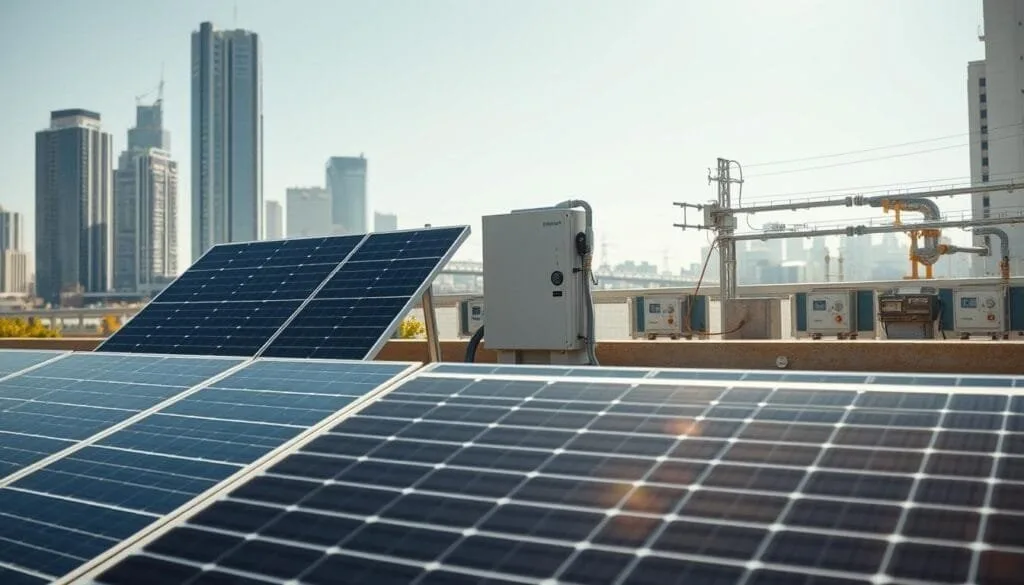
Although upfront costs for commercial-scale installation can be substantial, solar systems typically pay back through lower electricity bills and incentive capture. Industrial projects often see electricity savings that reduce operating expense by double-digit percentages annually; payback commonly falls in the 3–7 year range depending on local incentives and energy rates. Use this quick ROI formula to estimate returns: (Annual energy savings × project life) − (Initial cost − incentives) = Net benefit.
Solar assets also tend to increase property value and can provide additional revenue streams through net metering or SRECs where available. While some studies report average residential property premiums (e.g., up to ~$15,000), asset-value uplift for industrial properties varies with site size and local market conditions—treat that figure as an illustrative upper range rather than a guaranteed outcome.
Contribution to Environmental Sustainability Goals
Switching to solar reduces greenhouse gas emissions by displacing fossil fuel generation and helps companies meet public energy and climate targets. Community and shared solar models broaden access to renewables, letting smaller businesses and tenants participate and earn value from system output. In addition to direct emissions reductions, solar adoption improves supply-chain resilience and strengthens brand reputation among customers focused on sustainability.
| BenefitDetail | |
| Reduction in Electrical Bills | Lower grid purchases; potential 20–40% bill reduction after deployment (site dependent). |
| Increased Property Value | Potential uplift—varies by market; illustrative residential studies cite up to ~$15,000. |
| Longevity and Maintenance | Commercial panels typically last 25–30 years with low O&M needs; warranties vary. |
| Energy Resilience | On-site generation and storage reduce grid dependency and exposure to price spikes. |
| Incentive Earnings | State and federal incentives lower initial cost and can shorten payback; revenue streams include SRECs and net metering. |
Takeaway: run a site-specific feasibility study (production estimate, incentives, equipment costs) to quantify expected energy costs reduction and payback. Contact a qualified commercial installer or energy consultant to get a tailored assessment and a free site audit.
Industrial Solar Power: A Key Player in Renewable Energy Solutions
Integrating solar energy technology into industrial applications has become central to strengthening grid resilience and improving on-site energy independence. Well-designed commercial solar and industrial systems help companies reduce peak demand on the grid, lower exposure to volatile fuel prices, and provide reliable power during outages—benefits that matter to both operations and customers.
When industries adopt cutting-edge solar energy technology within commercial solar projects, they boost economic and environmental performance. Coupling arrays with advanced storage (for example, lithium-ion BESS) extends the value of solar installations by enabling time-shifting of generation, reducing demand charges, and improving overall system reliability even during low-sun periods.
To illustrate economic viability, the table below summarizes a representative commercial system financial profile—assumptions: 250 kW system, average retail electricity price, and prevailing incentives. Adjust these assumptions for project-specific proposals.
| ParameterDetailsImpact | ||
| System size (representative) | 250 kW | Baseline for financial examples |
| Initial Investment Cost | $100,000 – $500,000 | Scale and equipment choices drive range |
| Payback Period | 3-7 years | Rapid ROI when incentives and high energy prices apply |
| Lifespan | 25-30 years | Long-term savings and asset value |
| Annual Savings Post-payback | $48,000 (example) | Reduced operational energy expenses |
| Total Benefits over 25 years | $810,000 (example) | Net financial gain after breaking even |
| Federal Tax Credit (example) | 26% (applied to year of reference) | Substantially lowers upfront cost |
Notes and assumptions: the financial ranges above are illustrative—project economics depend on local electricity price, system orientation, production (kWh/kW), incentive eligibility, and O&M costs. Confirm the current tax credit rate and program rules for the applicable year; many companies combine federal incentives with state programs to optimize returns.
For industrial decision-makers: request system-level proposals that include modeled annual production, assumed escalation of electricity rates, and a clear summary of incentive impacts. That transparency helps companies evaluate commercial solar systems against other capital projects and communicate payback and lifecycle benefits to stakeholders and customers.
Solar Panel Installations: Custom Solutions for Industry-Specific Requirements
In today’s industrial landscape, solar panel installations play a central role in meeting diverse energy demands. Tailored custom solar solutions — from rooftop arrays on distribution centers to large ground-mounted campuses — let companies optimize site resources and capture long-term financial and operational value.
Facility managers should evaluate roof condition, available roof space, shading, and local interconnection rules when selecting the right approach. Rooftop systems maximize unused building area and minimize land use, while ground-mounted arrays provide simpler scalability and maintenance for larger capacity needs.
Case Studies: Success Stories in Various Industries
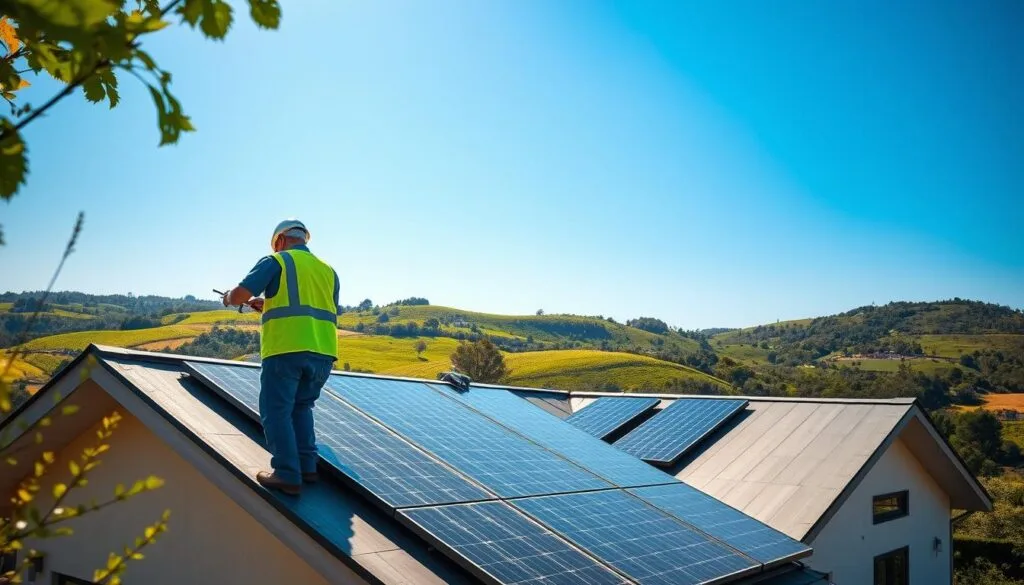
Large retailers and manufacturers have demonstrated solar’s viability: major brands like IKEA and Walmart have deployed extensive rooftop and ground-mounted arrays to reduce electricity costs and meet corporate sustainability goals. For example, a typical large retail rooftop installation of several hundred kW can offset 20–50% of site electricity use depending on load and location.
Rooftop vs. Ground-Mounted Solar Installations: Comparing Options
Use this quick checklist to guide the rooftop vs. ground-mounted decision:
- Rooftop: best when usable roof area is high, structural condition is sound, and land is scarce; minimizes transmission losses and uses existing building assets.
- Ground-mounted: best when large contiguous land is available, rapid expansion is likely, or trackers are desired to increase annual energy yield.
- Hybrid: combine rooftop for distributed generation with ground-mounted for bulk capacity and storage to optimize production and resilience.
| CompanyStateInstalled Capacity (kilowatts) | ||
| AUI Partners | Texas | 310,270 |
| Sunshine Solar | Georgia | 270,839 |
| Standard Solar | Maryland | 134,746.45 |
| Nexamp | Massachusetts | 110,992.40 |
| ACE Solar | Massachusetts | 78,541.53 |
Note: the capacity figures above should be checked for units and project dates when used in procurement documents (values may represent kW or kW-DC and often reflect portfolio totals). For a site-specific evaluation, request a proposal showing expected kWh production, percentage of on-site demand met, and equipment specifications (module watts per panel) to compare options across vendors.
Commercial Solar Projects: Navigating the Complexities and Opportunities
Launching commercial solar projects combines technical complexity with significant opportunity: properly executed systems lower long-term energy costs, hedge against utility price volatility, and support corporate sustainability goals. To capture these benefits, businesses must evaluate financing, permitting, technology choices, and operational impacts up front.
Financing and Incentives
Federal and state incentives materially improve project economics. The Investment Tax Credit (historic reference: ~26% in 2023) and state rebates, plus mechanisms like PACE financing and SRECs, reduce upfront installation barriers and compress payback timelines. Confirm current tax credit rates and program rules for the applicable year when modeling project returns.
Expected Savings and Payback

Project-specific results vary, but commercial sites commonly achieve substantial electricity bill reductions; some systems offset 50%+ of on-site consumption depending on size and usage. Typical payback windows range from 3–7 years when incentives and high retail rates apply. Use conservative assumptions (production, degradation, escalation of utility rates) when forecasting lifetime savings.
How to Evaluate a Commercial Solar Project
- Site assessment: roof condition, usable roof space, shading and structural limits for rooftop; land availability and access for ground arrays.
- Production modeling: vendor-provided kWh/year estimates, performance ratio, and hourly production profiles.
- Financial model: upfront installation cost, incentives, O&M, net present value (NPV), and internal rate of return (IRR).
- Procurement options: cash purchase, loan, PPA, or lease—each affects savings, ownership, and tax benefits.
- Interconnection and permits: timeline and costs for utility interconnection, local permits, and grid upgrade requirements.
Technology & Ongoing Management
High-efficiency monocrystalline and bifacial modules, coupled with smart inverters and energy management systems, improve yield and operational control. For many commercial projects, integrating Battery Energy Storage Systems (BESS) can increase value by reducing demand charges and enabling time-shifted exports. Plan for monitoring, preventative maintenance, and warranty management as part of total lifecycle costs.
| YearInitial InvestmentYear 1 Benefits20-Year Savings25-Year Net Benefit | ||||
| 1 | $250,000 | $150,500 | $960,000 | $810,000 |
Note: the table above is illustrative—models should specify the assumed system size, local electricity price, incentive values, and production estimate. For commercial solar installations, request multiple vendor proposals, ensure transparent assumptions, and include sensitivity analysis on energy price escalation and incentive changes.
Bottom line: well-structured commercial solar projects provide durable reductions in operating energy costs and can deliver strong returns while advancing corporate green initiatives. Engage finance, facilities, and sustainability stakeholders early to align project objectives and procurement approach.
Utility-Scale Solar Farms: Their Role in Supporting Industrial Power Needs
As demand for sustainable energy solutions grows, utility-scale solar farms increasingly supply bulk power to industrial customers. These large systems supplement traditional generation, provide long-duration production capacity, and help decarbonize energy-intensive operations by delivering low-cost renewable electricity at scale.
The Architecture of Large-Scale Solar Power Plants
Utility-scale plants are engineered for high annual yield and operational reliability. Typical elements include thousands of photovoltaic systems/panels, single- or dual-axis tracking to maximize sun exposure, central or string inverters, step-up substations, and transmission tie-ins. Sites often span hundreds of acres and are optimized for energy density and maintenance access to maximize watts produced per acre.
Critical Infrastructure and Connection to the Grid
Grid connection is essential for utility-scale viability. Key infrastructure components include collection wiring, substations, transmission lines, and interconnection equipment; project stages range from permitting and land acquisition to construction and final interconnection testing. Robust planning for transmission capacity and interconnection timelines is crucial for delivering reliable power to industrial offtakers.
| StatisticDetail | |
| Typical operational footprint | Hundreds of acres per large plant; thousands of panels |
| Grid & transmission | Substation and transmission upgrades often required for interconnection |
| Manufacturing & supply | Domestic and global module/systems supply affects project timelines |
| Environmental benefits | Low lifecycle CO₂ emissions per kWh compared with fossil fuels |
How industrial buyers contract utility-scale power: offtake options include physical power purchase agreements (PPAs), virtual PPAs (vPPAs), and long-term supply contracts; each structure affects how companies realize price certainty, renewable attribute ownership, and customer-facing claims. For industrial procurement, evaluate contract tenor, credit terms, delivered price, and whether the contract includes renewable energy certificates.
Actionable checklist for industrial buyers: confirm interconnection status and required transmission upgrades, review projected annual kWh production and curtailment risk, verify counterparty creditworthiness, and model delivered price versus on-site generation alternatives (commercial solar installations or behind-the-meter systems). Utility-scale projects can be a foundational component of an industrial energy strategy when paired with careful commercialization and grid-integration planning.
Boosting Industrial Energy Efficiency with Advanced Solar Systems
Industries pursuing greater energy efficiency can achieve meaningful reductions in consumption and emissions by deploying advanced solar systems. These integrated systems combine high-performance modules, smart control software, and storage to streamline operations, lower operating costs, and improve resilience to grid disruptions.
Modern solar technology now couples smart inverters, energy management systems, and Battery Energy Storage Systems (BESS) to create a flexible on-site systemenergy needs, reduce peak demand charges, and export excess power when beneficial.
Key hardware and sizing guidance
- High-watt panels: contemporary industrial modules commonly produce ~400–500 watt per panel, reducing area and installation labor compared with older lower-watt models.
- BESS sizing: typical guidance is 0.5–2 MWh of storage per MW of solar for commercial/industrial use—choose sizing to meet load-shifting, backup, or demand-charge reduction goals.
- Control systems: real-time energy management (EMS) coordinates PV production, storage dispatch, and grid interactions to maximize value for operations and customers.
Practical system choices
Compare inverter architectures (central vs. string vs. module-level) based on site size, shading, and O&M preferences. Larger plants often use central or string inverters for cost-effectiveness; distributed inverters or MLPEs (module-level power electronics) help where partial shading or module-level monitoring matters.
Actionable tip: request vendor proposals that include modeled hourly production, recommended BESS sizing (MWh), and clear assumptions for grid export rules and interconnection—these details clarify how the systems will meet your specific operational needs.
Sustainable Energy Transition: How Solar Contributes to Industrial Sector Evolution
The drive toward a sustainable energy transition is accelerating as solar becomes a practical backbone for industrial decarbonization. Solar integration supports corporate climate commitments, lowers long-term energyrenewable energy portfolios—making it a strategic choice for companies seeking both environmental and economic gains.
Policy Impacts and Incentives Encouraging Solar Adoption
Public policy has been a primary enabler of this shift. Tax incentives, grants, and state rebates have helped reduce up-front installation barriers and compress payback timelines for commercial projects. As policymakers refine incentive schedules, companies should monitor current program rules and model their projects using up-to-date tax credit assumptions to capture available value.
Aligning Solar Power Solutions with Corporate Sustainability Initiatives
For many companies, adopting commercial solar is now part of standard sustainability planning: on-site systems, PPAs, and virtual offtake arrangements enable corporations to meet renewable targets and demonstrate progress to stakeholders. Integrating solar into capital planning allows firms to lock in lower delivered energy prices and manage exposure to future fuel and carbon price risks.
Actionable next step: corporate sustainability and facilities teams should commission a site audit and high-level financial model (production, incentives, and projected energy
Government Incentives and Policies in Promoting Industrial Solar Solutions
Government incentives and policy frameworks are a primary driver for industrial solar adoption. Programs that offer tax credits, grants, and rebates reduce the upfront barrier to installation and improve project returns, making renewable investments accessible to more companies and accelerating deployment of commercial solar projects.
Federal vs. State: What to know
Different programs apply to residential and commercial projects—know which applies to your site. The federal Investment Tax Credit (ITC) has historically provided a substantial percentage off eligible system costs (refer to current IRS guidance to confirm the rate for the applicable tax year). States add value through targeted incentives: property tax exemptions, sales tax exemptions, and state-level tax credit programs that vary by jurisdiction. Confirm state eligibility and program timelines before finalizing project economics.
Common incentive mechanisms
- Investment Tax Credit (ITC) — federal tax benefit for eligible systems; check current percent and applicability for commercial projects.
- Accelerated depreciation (MACRS) — shortens tax recovery periods for businesses, improving cash flow.
- Net energy metering (NEM) — credits for exported electricity; terms differ by state and utility.
- State tax credits & rebates — many states offer additional credits; availability and rates vary (confirm state-specific programs).
How to claim and document incentives (quick checklist)
- Collect all invoices and equipment specifications (module kW, inverter model, BESS capacity) for tax filings.
- Confirm system commissioning date and documented production where required for incentive qualification.
- Work with an installer experienced in commercial solar projects to compile required paperwork for ITC, state rebates, and utility interconnection.
- Retain records of ownership structure (PPA, lease, direct purchase) since incentive eligibility can depend on ownership.
Practical guidance: consult authoritative sources (IRS for federal tax credits, your state energy office for state incentives, and local utility for interconnection and NEM rules) and model project economics with current tax credit assumptions. Businesses that align incentives with procurement strategy reduce net installation costs and improve long-term return on commercial solar installations.
Real-world Implementations: Global Shift Toward Solar-Integrated Industries
The global movement toward solar-integrated industries is reshaping traditional energy use across manufacturing and commercial sectors. By embedding on-site solar systems into production facilities and corporate power strategies, businesses both lower operating costs and advance corporate climate and sustainability goals.
The Impact of Solar Power on Traditional Manufacturing Processes
Major manufacturers and retailers have integrated large-scale solar installations into their operations, shifting solar from a supplemental source to a core energy supplier in some facilities. Falling equipment prices and higher module efficiencies have enabled broader adoption: solar module costs declined dramatically in the 2010s, and recent years saw the U.S. add roughly 17 GW of new capacity in a single year—contributing to cumulative national capacity in the triple-digit gigawatt range. These trends translate to lower energy costs, more predictable long-term pricing, and reduced fossil-fuel dependence for businesses.
Collaborative Efforts and Partnerships Driving Solar Innovations
Cross-industry partnerships—between tech firms, utilities, manufacturers, and project developers—are accelerating innovation and driving down the delivered price of solar power. Collaborations help scale manufacturing of modules and balance-of-system equipment, advance financing models, and support grid-integration research that benefits industrial customers and local communities alike.
Conclusion
The adoption of industrial solar power marks a strategic evolution: it is both an environmental imperative and a sound business decision. Industrial solar projects—from rooftop installations on manufacturing buildings to utility-scale projects—deliver measurable savings, reduce exposure to volatile energy markets, and strengthen corporate sustainability credentials. For businesses, the transition to solar can reinforce brand trust among customers while contributing to broader renewable energy and climate objectives.
Next steps for businesses: commission a site feasibility study, model expected annual production and financial outcomes, and compare on-site options versus off-site projects (including PPAs or virtual PPAs). A clear procurement plan and stakeholder alignment will position companies to capture the long-term value of solar investments.
FAQ
What are the benefits of industrial solar power solutions for sustainable energy transition?
How do solar power plants and solar energy infrastructure lead to cost savings and positive environmental impact?
Can photovoltaic systems be scaled to fit different industrial needs?
What are the long-term financial benefits of transitioning to solar energy infrastructure for industries?
How does solar technology contribute to grid resilience in industrial operations?
What are the options for solar panel installations within industrial applications?
How do financial incentives contribute to the viability of commercial solar projects?
What role do utility-scale solar farms play in supporting industrial power needs?
How do collaborations and partnerships drive solar innovations?