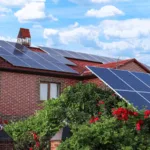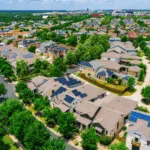
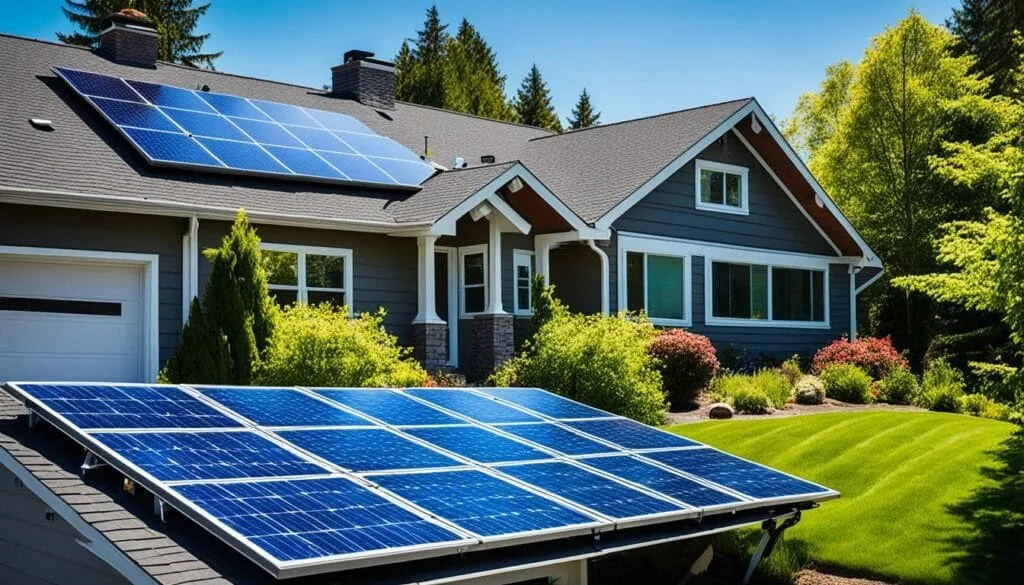
Homeowners across America are increasingly choosing affordable solar panels to cut electricity bills and gain long-term energy independence. More households are investing in economical solar power systems as a practical step toward sustainability. Brands such as Silfab, Panasonic, and Q Cells are notable for delivering cost-effective solar solutions that balance quality and price.
In 2024, advances in module design and manufacturing have pushed solar technology into more budget-friendly territory. Popular models from Canadian Solar and SunPower (Maxeon) have been listed in the market with price ranges around $2.70 to $3.74 per watt and high-efficiency cells often exceeding 24% on select panels — though exact figures vary by model and installer. You don’t need a large budget to go solar: typical pre-incentive costs for a 6 kW to 8 kW system commonly fall between $15,000 and $22,500, depending on location and equipment choices. After federal and state incentives, the net price to homeowners can be substantially lower.
Key Takeaways
- affordable solar power.
- Practical, cheap solar energy solutions are widely available for most homes.
- Top-rated, affordable solar panel brands are making sustainable energy more accessible.
- Some offers list costs as low as $2.31 per watt in competitive markets — always confirm with multiple quotes.
- Balance panel efficiency and long-term savings when selecting the best solar panel for your needs.
- Homeowners can use federal tax credits and state incentives to reduce upfront installation costs.
- Comparing several installer quotes helps secure the best deal and expected output.
- Favorable financing options make switching to solar possible without a large amount of upfront money.
- Market trends point to continued improvements in technology and downward pressure on prices over time.
Understanding Solar Power Affordability
The move to renewable options makes a clear grasp of solar costs essential. When evaluating low-cost solar energy options, focus on measures that define affordability: upfront $/watt, payback period (years until savings cover cost), and long-term value (LCOE and resale uplift). Knowing which factors drive price and lifetime value helps homeowners choose the right solar panels and system for their situation.
What Makes Solar Power “Affordable”?
Affordability is driven by higher panel efficiency, lower manufacturing and installation cost, and incentives that reduce net outlay. Production scale and competition have pushed economic solar energy options into mainstream pricing. Studies (e.g., NREL summaries) also show that reducing annual electricity bills through solar improves a home’s value — though the exact uplift depends on regional electricity rates and system output. Always check the original source or local appraisal guidance for precise valuation metrics.
The Transition to Cost-Effective Solar Systems
Choosing value solar energy solutions means balancing performance and price. Typical solar modules are warrantied for 25 to 30 years, and many systems reach payback in roughly 6–10 years depending on local electricity prices, incentives, and system output. Government programs such as the federal tax credit and state rebates further reduce net costs, while financing options (loans, leases, PPAs) let homeowners move to solar without a large upfront payment.
For example: a 7 kW system priced at $3.00 per watt (~$21,000 pre-incentive) with a 30% federal credit reduces to about $14,700. If that system cuts your annual electric bill by $1,800, the simple payback is about 8 years (pre-maintenance and time-value adjustments). This concrete example helps compare offers and choose the best installation route.
Top-Rated Cheap Solar Panels for Your Home
Finding affordable solar power options matters more than ever as utility rates climb and homeowners seek cleaner, cheaper ways to power their home. A successful solar panel purchase balances upfront price and long-term output: you want reliable panels that deliver strong performance year after year without breaking the bank on installation.
Overview of Inexpensive Solar Panel Brands
The market today includes established manufacturers and newer entrants offering discounted solar panels with solid warranties. Names like Silfab and Panasonic are known for quality manufacturing; Q Cells and Canadian Solar deliver competitive performance across varied climates. These brands aim to provide a mix of value and durability so more homeowners can access economical solar systems.
Comparing Efficiency and Costs
When evaluating competitive solar energy solutions, focus on three metrics: price per watt (installer price), panel efficiency (how much sunlight becomes electricity), and warranty length (years of protection). Don’t pick solely on lowest sticker price — a slightly higher-cost panel with better efficiency can produce more electricity over the same roof area, improving lifetime value.
| BrandPrice Per Watt ($)Efficiency (%)Warranty (Years) | |||
| Silfab | 2.40 | 19.4 | 25 |
| Panasonic | 2.60 | 20.3 | 25 |
| Q Cells | 2.50 | 20.1 | 25 |
| Canadian Solar | 2.45 | 19.5 | 25 |
| Trina Solar | 2.55 | 20.0 | 25 |
How to read this table: the price per watt is an approximate installer-level figure (month/year and region affect actual quotes), efficiency indicates the panel’s conversion rate, and warranty shows manufacturer coverage in years. Example: for a 7.15 kW system you would multiply the price-per-watt by 7,150 to estimate the panel cost before labor and incentives.
These brands represent solid options for low-cost solar panel installation, combining reasonable panels cost with dependable energy production. For deeper research, see third-party price-per-watt comparisons like the EnergySage guide. Get multiple quotes to compare true installed prices and expected lifetime output before deciding on the best affordable solar power option for your roof.
Factors Influencing Solar Installation Costs
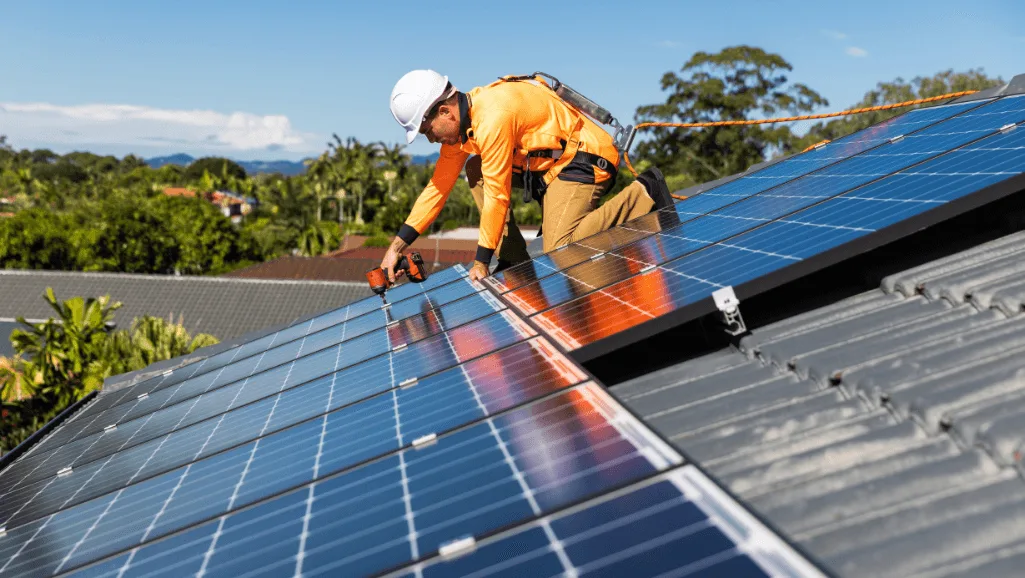
Investigating budget-friendly solar installation makes it clear that many variables affect final pricing. Costs depend on your region, roof complexity, local permitting, the chosen system size, and the specific equipment you select. Understanding these drivers helps homeowners get a realistic estimate and avoid surprises.
The Impact of Home Size and Energy Use on Price
System size is one of the largest factors. Smaller homes with modest demand might need a 5 kW system, while larger households often require 8–10 kW. Example figures (approximate, pre-incentive, installer-level pricing): a 5 kW system could run near $14,300, while a 10 kW system may approach $28,600 — regional prices and labor rates will shift these amounts. Always confirm with local quotes.
Inverters and Batteries: Additional Costs?
Inverters and battery storage add to upfront cost but can boost performance and resilience. Typical ranges (ballpark): string inverters are lower-cost, while hybrid inverters and battery systems (e.g., Tesla Powerwall or comparable units) add several thousand dollars plus installation. Batteries increase your ability to use solar-produced electricity after sundown and may improve economics over time depending on time-of-use electricity prices.
Other installation factors that influence cost include:
- Roof type and pitch — steep, shaded, or complex roofs require more labor and hardware.
- Site access — installations in hard-to-reach locations increase installation time and labor costs.
- Local permitting and inspection fees — municipal requirements vary and can add to total installed cost.
- Balance-of-system components — racking, wiring, meters, and monitoring can change the final price.
Careful planning lets you optimize where to spend (higher-efficiency panels or storage) versus where to save (standard racking or competitive installer bids). Using state and federal incentives — tax credits, rebates, and utility programs — can significantly reduce the net cost. Always check whether quoted figures include or exclude incentives, and request a breakdown of panel cost vs labor and additional equipment from installers.
Cheap Solar Energy Solutions: Navigating Panel Tiers and Warranties

Finding thrifty solar power solutions starts with understanding how manufacturers are ranked and what warranties actually protect. Panel tiers and warranty terms are key indicators of long-term reliability and the real value you’ll get from a solar purchase.
Tier classification generally reflects a manufacturer’s financial strength, global project footprint, and manufacturing scale. Tier 1 firms are large, vertically integrated, and more likely to honor long-term commitments; Tier 2 and later tiers may offer lower up-front prices but carry greater business risk. (BloombergNEF and industry reports are common references for tier lists.)
| CompanyWarranty RankingDetails | ||
| Panasonic | 18 | 25-year warranty, 90% power guarantee at year 25 |
| Maxeon | 16 | 40-year warranty, 90% power output at year 25 |
| REC Group | 12 | 25-year warranty, 90% power output at year 25 |
| Qcells | 11 | 25-year warranty, includes extended power warranty options |
Warranties matter because they cover two different protections:
- Product warranty — covers manufacturing defects and physical failures (can be up to 40 years for some lines).
- Power performance guarantee — promises a minimum power output over time (important because panels degrade each year).
- Labor coverage — sometimes offered by manufacturers or installers to cover replacement installation costs.
Typical degradation rates average around 0.5–0.7% per year, which aligns with many manufacturers’ guarantees; at that rate panels commonly deliver roughly 80–90% of nameplate capacity after 25 years depending on the model. Example: a 1 kW of nameplate capacity producing X kWh in year one will produce about X × (1 – 0.006)^25 kWh in year 25 using a 0.6% yearly degradation assumption — a useful way to estimate long-term output.
What this means for budget buyers: lower up-front product cost can be attractive, but always weigh that against warranty strength, projected lifetime output, and brand stability. Look for transferable warranties if you plan to sell your home, and check whether coverage extends to inverters or racking. For a practical comparison, request the manufacturer warranty document and an amortized output estimate from your installer before signing any contract.
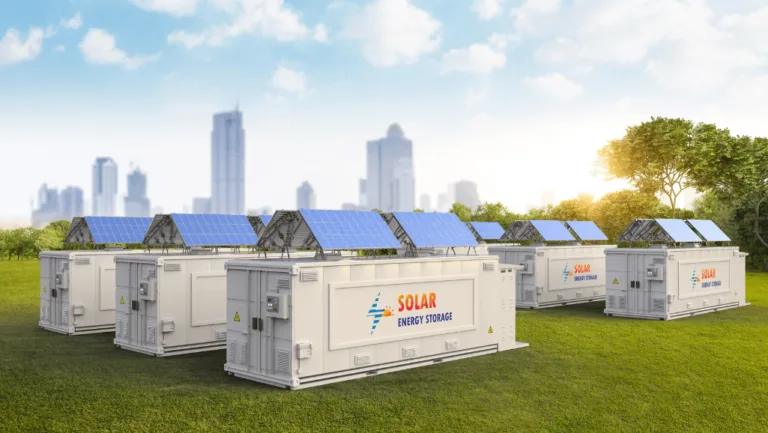
Consider system types such as Grid-Tie Solar Kits for lower initial cost or Battery Backup Solar Kits if resilience is a priority; choose value-priced panels and robust warranties to make solar power both affordable now and protected over time.
Maximizing Savings with Solar Incentives and Credits
Companies offering affordable solar energy are helping make renewable energy accessible to more homeowners. Federal policies and state incentives significantly lower the net cost of going solar, turning what once was a large upfront expense into a viable financial decision for many.
The most impactful federal program is the Investment Tax Credit (ITC). As of 2024 the ITC provides a 30% credit on the qualified cost of residential and commercial solar installation (confirm current IRS guidance for eligibility and any phase-down rules). That credit reduces your upfront cost dollar-for-dollar on your tax return, making a big difference in project economics.
Federal Solar Tax Credit Benefits
The ITC covers both panels and associated equipment and generally applies to battery systems when installed with solar (check IRS rules for standalone storage eligibility). To claim it you must own the system (not available to system lessees in most cases) and follow IRS filing instructions — keep invoices and installer documentation for tax filing.
State and Local Solar Incentives
Beyond the federal credit, many states, utilities, and municipalities offer rebates, performance-based incentives, or additional tax credits. States such as Colorado and Montana, for example, provide programs that further lower net costs or streamline permitting. Availability and amounts vary widely by location, so working with a local installer who knows state and utility programs can maximize your savings.
Practical steps to capture incentives:
- Check federal eligibility and retain documentation (invoices, equipment specs).
- Search state and local incentives (DSIRE, state energy offices, or your utility).
- Ask installers to include incentive estimates in quotes and confirm eligibility for the ITC.
- Confirm whether battery storage is eligible under your local programs and the ITC rules.
Example: a $21,000 pre-incentive system with a 30% federal credit drops to about $14,700 out-of-pocket before any state rebates — a meaningful reduction in the overall price. Tools like Google’s Project Sunroof can also help estimate rooftop suitability and savings potential in your area. Combining federal and local programs makes solar power an even more affordable, high-value path toward cleaner energy and lower electricity bills.
Professional vs. DIY Solar Panel Installation
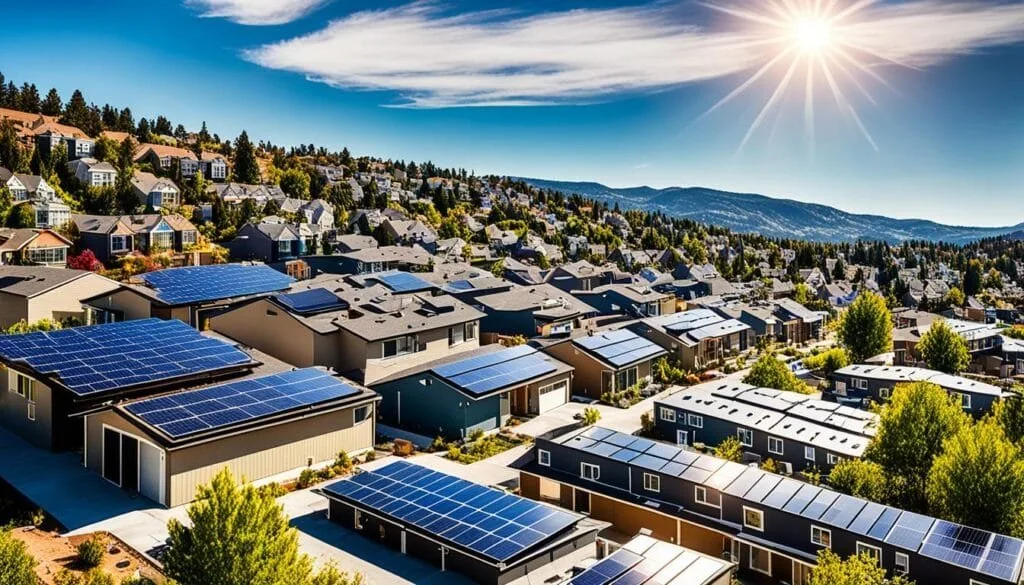
Deciding between professional and DIY installs changes the final price, safety profile, and long-term performance of your solar system. Both routes can be valid depending on your goals — lower upfront cost vs. guaranteed workmanship and streamlined permitting — so weigh the trade-offs before choosing.
The Realities of DIY Solar Installation
DIY can reduce upfront spending because you avoid installer labor and markup. As a rough example (region-dependent), DIY components for a 5 kW setup might total significantly less than a turnkey professional quote, but actual savings vary widely. DIY requires solid electrical knowledge, correct toolsets, strict adherence to local building and electrical codes, and confidence managing inspections and grid interconnection paperwork.
Good candidates for DIY are owners installing off-grid or small auxiliary systems (e.g., a workshop or barn). For grid-tied residential systems, DIY can introduce complications with safety, insurance, and utility interconnection. Buying used panels can lower component costs, but verify their condition and remaining warranty before purchasing — savings up to large percentages are possible, but quality and longevity may be unknown.
When to Choose Professional Installation
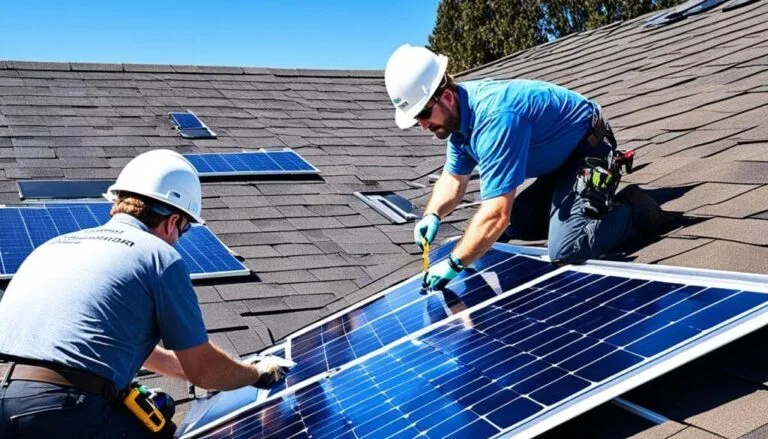
Choose a licensed installer when you want a full-service, installation-backed system with warranties that typically cover workmanship and facilitate manufacturer claims. Professionals handle permit submissions, inspections, and utility interconnection, and they commonly include labor warranties that protect you if installation-related issues arise.
Professionals also optimize system design for roof layout, shading, and expected output, and they can better navigate incentive paperwork to ensure you receive available tax credits and rebates. If long-term reliability, ease of resale, and maximizing incentive capture are priorities, a professional installation is often the better route.
Quick checklist if you’re considering DIY:
- Confirm local building and electrical code requirements and permit process.
- Ensure you have the electrical skills or a licensed electrician to sign off on interconnection.
- Verify component warranties and whether they remain valid after a DIY install.
- Get multiple supplier quotes and compare total installed costs to professional bids.
For a balanced decision, request side-by-side quotes from certified installers and compare those to a detailed DIY budget that includes tools, permits, and your time. That comparison will show whether the reduced up-front money spent on a DIY approach outweighs the benefits of professional expertise and warranty-backed work.
Financing Options for Cost-Effective Solar Installations
Exploring how to pay for a solar system is as important as picking panels. Financing choices let homeowners and businesses access economical renewable energy solutions across different budgets and credit situations. The right option depends on whether you want immediate ownership, the lowest upfront cost, or predictable monthly payments.
Common ways to finance affordable solar electricity options:
- Cash Purchase: Paying cash gives the best long-term return because you avoid interest. You also remain eligible for the federal tax credit and most local rebates, increasing your overall value over time.
- Solar Loans: Loans let you own the system while spreading payments. Secured loans (or home equity lines) typically offer lower rates; unsecured solar loans are also available. Loan payments may be offset by utility bill savings, often resulting in positive monthly cash flow after a short period.
- Solar Leases: Leases require little or no upfront money; the provider owns the equipment and you pay a set monthly fee. You usually do not qualify for tax credits or rebates, since ownership stays with the lessor.
- Power Purchase Agreements (PPAs): Under a PPA you pay only for the electricity produced at an agreed price per kWh. The system owner receives incentives; you avoid hardware costs but also forego some savings tied to ownership.
How to compare: look beyond sticker averages and ask installers for a full breakdown (panels, inverters, racking, labor, permits). Below is a simple comparison of typical structures — actual figures vary by region and system size.
| Financing TypeTypical OutlayTermOwnershipTax Credit Eligibility | ||||
| Cash Purchase | $16,000 – $31,558 (example range for mid-size systems) | N/A | Yes | Yes |
| Secured Solar Loans | Varies by lender & credit | 5–20 years | Yes | Yes |
| Solar Lease | No/low upfront cost | 15–25 years | No | No |
| PPA | No/low upfront cost | 10–25 years | No | No |
Example comparison (mid-size system): a $21,000 pre-incentive system with a 30% federal credit becomes $14,700 out-of-pocket if purchased with cash. The same system on a loan might require smaller monthly payments while preserving tax-credit eligibility; under a lease or PPA you could pay little to no upfront money but will not claim the federal credit. Evaluate monthly payment vs expected electricity bill savings to see which route delivers the best net benefit for your situation.
Decision checklist:
- Do you want to own the system and claim tax credits? Consider cash or a loan.
- Is your priority the lowest early cash outlay? Leases or PPAs may fit, but compare long-term costs.
- Check your credit score and loan terms; secured loans generally have better rates.
- Ask installers to model expected savings, loan payments, and payback timelines for your address.
If you need help choosing, use a financing comparison tool or ask installers for side-by-side scenarios. Proper financing selection can make solar accessible and ensure the system delivers strong long-term value and access to cleaner energy.
How Efficiency Affects the Long-Term Value of Solar Panels
Exploring cost-effective solar power and budget-friendly solar systems shows that panel efficiency is a primary driver of long-term value. A panel’s conversion rate directly affects how much electricity you get from a limited roof area and how quickly the system pays back its upfront cost.
Identifying Quality Panels: Efficiency, Lifespan, and Warranty
Higher-efficiency solar panels convert more sunlight into usable electricity, making them especially valuable when roof space is limited. Modern monocrystalline panels commonly range from roughly 17% up to the mid-20% range on leading models, which improves kWh-per-square-foot output and overall system performance. These higher-efficiency products often come with competitive warranties and stable manufacturer backing.
Polycrystalline panels tend to have lower efficiency—typically in the low-to-mid teens—but they can be more cost-effective where roof space is abundant. Thin-film technologies offer the lowest nominal efficiencies (historically 7%–12%), but they can be useful for specialized or flexible installations and their performance is improving.
Choosing higher-efficiency panels can increase lifetime value because they produce more electricity per installed watt, reduce balance-of-system costs per kWh, and may improve resale value for your home.
Balancing Upfront Costs with Long-Term Savings
When evaluating economical solar solutions, weigh upfront panel price against expected energy production and degradation over time. A slightly higher initial outlay for more efficient panels can translate into lower Levelized Cost of Energy (LCOE) and faster payback, especially in constrained-roof scenarios.
| Panel TypeEfficiency RangeLong-Term Benefits | ||
| Monocrystalline | 17% – 24%+ | High energy output per area, ideal for limited roofs, often longer warranties. |
| Polycrystalline | 12% – 17% | Lower upfront cost, solid performance in many conditions, useful when space isn’t tight. |
| Thin-Film | 7% – 12% | Flexible form factors, low manufacturing cost, improving technology for niche uses. |
Which panel is right for you? Quick guide:
- If roof space is limited or you want maximum output per square foot: favor monocrystalline high-efficiency panels.
- If you have ample roof area and need lower upfront costs: polycrystalline can be a reasonable choice.
- For specialty applications (curved surfaces, building-integrated solar): consider thin-film options.
Example comparison (illustrative): on a 7 kW system, a 20% efficient panel array may produce noticeably more lifetime kWh than a 16% array of the same nameplate capacity due to differences in real-world performance and degradation. Over 25 years, that extra production can materially affect savings and payback. When comparing quotes, ask installers for modeled 25-year output and degradation assumptions (look for terms like “panel degradation” and projected annual % decline) so you can compare true long-term value rather than just short-term price.
Cheap Solar Energy Solutions: Identifying the Best Deals
The market for cost-effective solar energy systems is expanding rapidly as more homeowners seek lower utility bills and cleaner power. Finding the best deal means evaluating more than the sticker price—you should compare expected lifetime output, warranty coverage, installer reputation, and how a package fits your home’s needs.
Evaluating Price vs. Performance
When shopping for value solar energy products, balance the upfront price per watt against panel efficiency and projected energy production. A commonly quoted residential system size is about 7.15 kW, which suits many households — multiply the quoted price-per-watt by 7,150 to estimate panel costs before labor and incentives. Remember: a lower initial sticker price can still be a worse deal if panels deliver less energy over time.
Resilient and Quality Solar Panels at Lower Costs
Look for resilient, well-reviewed panels from manufacturers with solid warranties; brands like Qcells and Canadian Solar frequently appear on value-focused lists because they combine reasonable prices with dependable performance. When you apply federal and local incentives (such as the ITC and state rebates), total project costs can drop substantially — often in the range of roughly 20–30% depending on available programs and eligibility.
Pairing a well-sized system with energy-efficient appliances reduces overall electricity consumption and improves payback from the panels. This approach increases the effective value of each installed watt and reduces reliance on the grid.
Deal checklist for comparing offers:
- Price per watt (ask whether the quote is installer-level or retail).
- Expected 25-year energy output (ask installers for modeled production and degradation assumptions).
- Warranty terms (product, performance, and labor).
- Installer credentials, local reviews, and proof of permits/insurance.
- Whether incentives or rebates are included in the estimate.
Finally, consider local electricity rates and property value effects when evaluating the offer. Some studies suggest solar can increase property value, though the precise uplift (e.g., figures like “up to 4.1%”) depends on local market conditions and should be verified with regional data. For the most accurate picture, request a localized savings estimate from installers and compare multiple quotes to find the best combination of price, performance, and long-term value.
Future of Affordable Solar Power and Market Trends
The outlook for affordable solar power is strong as technological improvements, manufacturing scale, and policy support continue to reduce real costs. These trends are making solar energy more accessible for homeowners and businesses while improving overall system output and value.
The Decrease in Solar Panel Prices Over Time
Over the past decade, installed solar prices and module manufacturing costs have fallen substantially due to economies of scale, improved manufacturing processes, and supply-chain maturation. Broad industry estimates put multi-year declines in the range of tens of percent for many markets (sources vary by metric and geography). At the same time, mainstream module efficiency has climbed: many widely available panels now exceed 20% module efficiency, which boosts energy production per square foot and lowers the effective cost per kWh.
Government Initiatives and Technological Advancements
Public policy plays a central role in future affordability. Programs like the Residential Clean Energy Tax Credit (the federal ITC) continue to reduce net project cost for many homeowners — for example, credits that reduce qualified costs by up to 30% materially lower the amount paid at installation. Additionally, national and state efforts to modernize the grid and incentivize storage increase the value proposition for rooftop systems and paired battery output.
| YearCost per WattEfficiency RateSavings on Electric Bills | |||
| 2000 | $11.00 (approx.) | Below 10% | — |
| 2010 | $6.00 (approx.) | 12–15% | — |
| 2020 | $1.70 (manufacturing benchmark) | ~18% | Up to several hundred $/year (varies by region) |
| 2023 | Further declines projected in many markets | 20% and higher for top models | Increased annual savings vs prior generations (region-dependent) |
Interpreting the timeline: the table gives a high-level view of how module costs and efficiency improved over decades; actual installed price per watt varies by region, installer, and system size, and “savings on electric bills” depend heavily on local utility rates and consumption patterns. As manufacturing continues to scale and innovation (like higher-efficiency cells and improved inverter and storage tech) advances, the per-watt and per-kWh economics of solar should keep improving.
Looking ahead, three dynamics will shape affordable solar power: continued decreases in module and balance-of-system costs, improved panel and inverter efficiency leading to higher system output, and policy incentives that lower net upfront amounts homeowners pay. Together these forces are likely to expand access to cost-effective solar in more communities over the next years.
Conclusion
Affordable solar power is increasingly achievable for many homeowners today. With ongoing improvements in panel design, manufacturing scale, and supportive policies, solar energy is moving from niche to mainstream as a cost-effective electricity source.
Experts expect solar to play a growing role in the overall energy mix as costs continue to fall and output per panel rises. Since the early 2010s, panel and system costs have declined meaningfully, making it possible to install systems with smaller upfront amounts of cash or via financing that spreads payments over many years.
Installing solar not only helps lower utility bills but can also reduce greenhouse-gas emissions and demonstrate a commitment to renewable energy. There are trade-offs — intermittency, lifecycle impacts from manufacturing, and upfront permitting or interconnection steps — but advances in storage and recycling, along with stronger warranties, are addressing many of these concerns.
Choosing the right panel and installer, using available incentives, and matching system size to household needs are the best ways to maximize long-term value. For homeowners interested in taking the next step, consider getting multiple installer quotes and a localized savings estimate to compare real-world payback and lifetime use of the system.
FAQ
What factors contribute to making solar power “affordable”?
How have solar systems transitioned to become more cost-effective?
Which brands offer the top-rated cheap solar panels for homes?
How do efficiency and costs of different solar panel brands compare?
In what ways do home size and energy usage impact solar installation costs?
Are there additional costs for inverters and batteries in a solar installation?
How do solar incentives and credits help maximize savings?
Should I consider DIY solar panel installation to save money?
What are my options for financing a solar installation?
What role does panel efficiency play in the value of solar panels over time?
How do I evaluate the price versus performance of solar panels?